10 Landscaping Ideas for Montgomery County, MD Homes
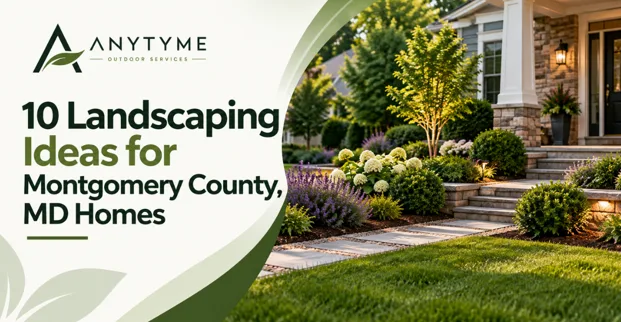
Montgomery County properties come in a lot of different shapes. A rowhouse lot in Takoma Park has almost nothing in common with a wooded acre near Olney or a mid-sized suburban yard in Gaithersburg. Add in Maryland’s full range of seasons, clay-heavy soil in some neighborhoods, drainage issues in others, and lawns that see everything from summer humidity to winter salt and snow, and a one-size-fits-all approach to landscaping rarely works here.
So what are some good landscaping ideas for homes in Montgomery County, MD? The answer depends on your property, but most homeowners are working toward one of a few goals: reducing the time and money spent on upkeep, improving how the front of the house looks from the street, creating a backyard that’s actually usable for entertaining, or fixing a drainage problem that’s been bothering them for years.
1. Create a Low-Maintenance Landscape
A low-maintenance landscape uses plant selection, mulch, and layout to cut down on the time you spend mowing, trimming, and weeding every week. This usually means fewer high-fuss plants, more mulched or stone beds, and lawn areas sized to what you’ll actually use.
For a lot of Montgomery County homeowners, this isn’t about wanting less greenery. It’s about being realistic with the time available on weekends. A few practical moves that tend to reduce maintenance:
- Swapping high-maintenance annuals for drought-tolerant perennials and native plants suited to Maryland’s climate
- Reducing turf area in spots that are hard to mow, like narrow side yards or steep slopes
- Using mulch or decorative stone in beds instead of bare soil that invites weeds
- Grouping plants with similar water and sun needs so you’re not micromanaging different zones
This approach suits busy households, rental properties, and anyone updating an older landscape that’s grown out of proportion to what they can realistically keep up with.
2. Refresh Your Front Yard for Better Curb Appeal
The front yard sets the tone before anyone reaches the front door, and a few focused updates usually make a bigger visual difference than people expect. Fresh mulch, clean bed edges, and a couple of well-placed shrubs can change the whole feel of a front yard without a full redesign.
Ideas that tend to improve curb appeal without overcomplicating the space:
- Defined planting beds along the foundation and walkway, rather than scattered plantings
- Fresh mulch to unify the beds and make greenery stand out
- A mix of evergreen shrubs for year-round structure and seasonal flowers for color
- A clear, well-maintained walkway from the driveway or street to the front door
- Decorative stone as a border or accent, especially where grass struggles
- Clean, sharp lawn edges where turf meets beds, driveways, and walkways
The goal is balance. A front yard with too many plant varieties can end up looking busy instead of polished. Simpler, well-maintained plantings usually read as more put-together than a crowded mix of everything at once, which matters whether you’re preparing to list the home or just want it to look its best from the street.
3. Add a Paver Patio for Outdoor Living
A paver patio takes an unused corner of the backyard and turns it into a spot people actually use, for morning coffee, weekend dinners, or hosting friends. Pavers hold up well through Maryland’s freeze-thaw winters and offer more design flexibility than poured concrete.
A few things are worth thinking through before building. Size and layout matter, since a patio for two lounge chairs functions very differently from one built to host a table for eight. Larger patios often work best split into a seating zone and a separate dining or grilling zone. Material choice matters too, since pavers come in a range of colors and finishes, and one that complements your home’s exterior makes a real difference in how finished the space feels. If a fire pit is part of the long-term plan, it helps to account for that clearance during the initial design.
Because patios involve base preparation, proper drainage, and precise leveling, professional installation is usually worth considering, especially on sloped or clay-heavy sites common throughout the county. Anytyme Outdoor Services’ hardscaping services cover paver patios along with walkways, fire pits, and retaining walls.
4. Use Mulch to Improve Plant Beds
Mulch does more than make a bed look tidy. It helps the soil retain moisture, suppresses weed growth, regulates soil temperature, and gives planting beds a clean, defined edge against the surrounding lawn.
In Montgomery County’s climate, with humid summers and freezing winters, mulch plays a genuinely useful role in protecting plant roots and reducing how often beds need watering. Depth matters, since too thin won’t suppress weeds and too thick can hold excess moisture against plant stems. Different mulch types, like shredded hardwood, pine bark, or dyed mulch, offer different appearances and break down at different rates, and mulch needs to be refreshed periodically as it decomposes.
For homeowners managing several beds across a property, especially larger lots in areas like Potomac or Olney, mulch installation is one of the more straightforward ways to keep beds looking maintained between bigger landscaping projects.
5. Incorporate Decorative Stone
Decorative stone serves a similar function to mulch in some situations, but it lasts far longer and works better in spots where mulch tends to wash out or break down quickly.
Common applications include garden borders that define the edge between beds and lawn, pathways through garden areas or side yards, drainage areas where water tends to flow, accent sections around trees or mailbox posts, and low-maintenance beds where the homeowner wants minimal upkeep long term.
Stone versus mulch comes down to the spot and goal. Mulch is more affordable up front, adds organic material to the soil as it breaks down, and suits beds with a lot of plants. Stone costs more initially but doesn’t need replacing as often and handles drainage-prone areas better. Neither is universally “better,” and many properties use both in different areas depending on what each section of the yard needs.
6. Improve Drainage and Yard Grading
Proper grading directs water away from your home’s foundation and keeps it from pooling in the yard, which matters a lot in a region like Montgomery County where clay soil is common and heavy spring and summer storms aren’t unusual.
A few signs that grading or drainage might need attention: standing water more than a day after rain, visible erosion or small gullies where water repeatedly flows, muddy areas that never dry out, water collecting near the foundation or driveway, and uneven or sunken sections of the yard that weren’t there originally.
These issues tend to show up on properties with flat lots, compacted clay soil, or additions and hardscape that change how water moves across the property over time. Fixing grading isn’t just about looks. Standing water and erosion can affect plant health, damage the landscape, and in some cases lead to water intrusion near the home. This isn’t meant to be a technical engineering breakdown, but if you’re noticing any of the signs above, it’s worth having someone look at the site before planning new landscaping on top of an existing drainage problem.
7. Add Trees and Shrubs for Structure
Trees and shrubs are what give a landscape its bones. They provide privacy, cast shade in the summer, add seasonal interest through flowers or fall color, and create a sense of scale and structure that flowerbeds alone can’t achieve.
Before planting, think through a few things specific to your property. Sunlight matters, since a shrub that thrives in full sun will struggle in a shaded side yard. Soil matters too, as Montgomery County ranges from sandy in some areas to dense clay in others, and some plants tolerate clay far better than others. Mature size is easy to overlook, but a tree planted too close to the house or property line can become a problem in ten or fifteen years even if it looks fine today. And maintenance needs vary widely, with some trees and shrubs requiring regular pruning while others are largely self-sufficient once established.
For homeowners dealing with an overgrown property, or a new build with a mostly blank yard, this is often one of the first steps in creating a landscape that feels intentional rather than an afterthought.
8. Build a Defined Garden or Planting Bed
A clearly defined planting bed, one with a clean border, consistent shape, and a thought-out plant selection, almost always looks more organized than scattered plantings placed here and there.
A few practical guidelines: keep bed shapes simple, since gentle curves or clean straight lines are easier to maintain than intricate shapes; use a defined border, whether steel edging, natural stone, or a trenched edge, to keep grass from creeping in; mix shrubs for structure with perennials for seasonal color; and avoid too many plant varieties in one bed, since a smaller number repeated in groups usually looks more cohesive.
Homeowners updating landscaping in Silver Spring, Wheaton, or other established neighborhoods often find that simplifying an old, overplanted bed makes a bigger visual improvement than adding more plants to it.
9. Upgrade Walkways and Outdoor Access
A walkway does two jobs at once. It gives the yard a finished, intentional look, and it makes it easier to actually move around the property without cutting across the lawn or navigating uneven ground.
Walkways are worth considering in several spots: front entrances, connecting the driveway or street to the door; side yards, especially ones used regularly for trash cans or backyard access; garden areas, allowing maintenance access without stepping into beds; and patios or backyard entertaining areas, linking a fire pit or seating area back to the house.
The most useful walkways are placed based on how people actually move through the property, not just where they look nice on paper. If there’s already a worn path in the grass where people consistently walk, that’s usually a good indicator of where a real walkway should go.
10. Plan a Complete Landscape Renovation
At some point, especially for older properties or homes that have had a patchwork of small updates over the years, it makes more sense to step back and plan the whole outdoor space together rather than tackling one small project at a time.
A complete renovation looks at how grading, planting beds, mulch or stone, hardscaping, and outdoor living areas all work together, rather than treating each as a separate decision. This matters because changes in one area often affect another. New hardscape can change how water drains. A larger patio might require adjusting nearby beds. Removing overgrown shrubs can shift how much sun a bed gets.
For homeowners considering this route, prioritizing matters. A reasonable approach is to address drainage or grading issues first, since building new landscaping on top of an unresolved water problem tends to create headaches later. From there, hardscape elements like patios or walkways typically come next, followed by planting and finishing touches. Budget, property size, and how quickly you want results all factor into how that timeline plays out. Anytyme Outdoor Services’ landscaping services in Montgomery County cover everything from a single mulch bed refresh to a full yard overhaul.
Which Landscaping Ideas Are Best for Your Montgomery County Home?
Different goals point toward different starting points. Here’s a practical breakdown:
- Best for curb appeal: Refreshing the front yard with defined beds, fresh mulch, and clean lawn edges (Idea 2)
- Best for low maintenance: Reducing turf and using drought-tolerant plants with mulch or stone beds (Idea 1)
- Best for entertaining: A paver patio, paired with a fire pit or defined seating area (Idea 3)
- Best for drainage problems: Addressing grading before adding new landscaping (Idea 6)
- Best for outdoor living: Combining a patio with walkways connecting it to the rest of the yard (Ideas 3 and 9)
- Best for an overgrown yard: Adding structural trees and shrubs and rebuilding defined beds (Ideas 7 and 8)
- Best for a budget-conscious update: Fresh mulch and cleaned-up bed edges (Ideas 2 and 4)
None of these are mutually exclusive. Most Montgomery County properties end up combining two or three of these ideas depending on what the yard actually needs.
Frequently Asked Questions
What are the best landscaping ideas for homes in Montgomery County, MD? It depends on your property’s size, sun exposure, and existing conditions, but common starting points include low-maintenance plant selection, a paver patio for outdoor living, mulch or stone in planting beds, and addressing drainage issues before adding new landscaping.
What landscaping is easiest to maintain? Drought-tolerant, native, or well-adapted perennials combined with mulched or stone beds generally require the least ongoing work, especially when plants are matched to your yard’s actual sun and soil conditions.
Is mulch or decorative stone better for Maryland landscaping? Neither is universally better. Mulch is more affordable, adds organic matter to the soil, and suits beds with a lot of plants. Decorative stone lasts longer and handles drainage-prone areas better. Many properties use both in different spots.
How can I improve my yard’s curb appeal? Focus on defined planting beds, fresh mulch, clean lawn edges, and a simple mix of shrubs and seasonal flowers. Balance matters more than volume. A few well-maintained plantings usually look better than a crowded front yard.
When should I consider professional yard grading? If you’re seeing standing water more than a day after rain, erosion, muddy patches that don’t dry out, or water collecting near your foundation, it’s worth having the site evaluated before adding new landscaping there.
How much landscaping can I complete at one time? That depends on your budget, property size, and how many issues need addressing. Some homeowners phase projects over a season or two, while others handle everything as one coordinated renovation.
When is the best time to start a landscaping project in Maryland? Spring and fall are generally favorable for planting, while hardscaping projects like patios and walkways can often be done across a wider window depending on weather and ground conditions. Timing depends on the specific scope of your project.
Bringing It Together
A good landscape in Montgomery County isn’t about copying a design from a magazine. It’s about matching the right combination of plants, mulch or stone, patios, walkways, and grading to your specific property and how you actually want to use the outdoor space.
Before starting any project, take a clear look at your yard’s layout, drainage, sun exposure, and existing landscaping, and think honestly about how much upkeep you’re willing to take on. Whether you’re refreshing a front yard, adding a patio, or planning a full renovation, prioritizing based on your goals will get you a better result than trying to do everything at once.
If you’re weighing your options for a property in Montgomery County, Anytyme Outdoor Services works with homeowners across the area on everything from a single planting bed to a complete backyard renovation, including land clearing services for lots that need to be cleared before new landscaping goes in. Reaching out for a property walkthrough is a straightforward way to get a clearer sense of what makes sense for your yard.