1064nm Wavelength in Red Light Therapy – Our Top Pick
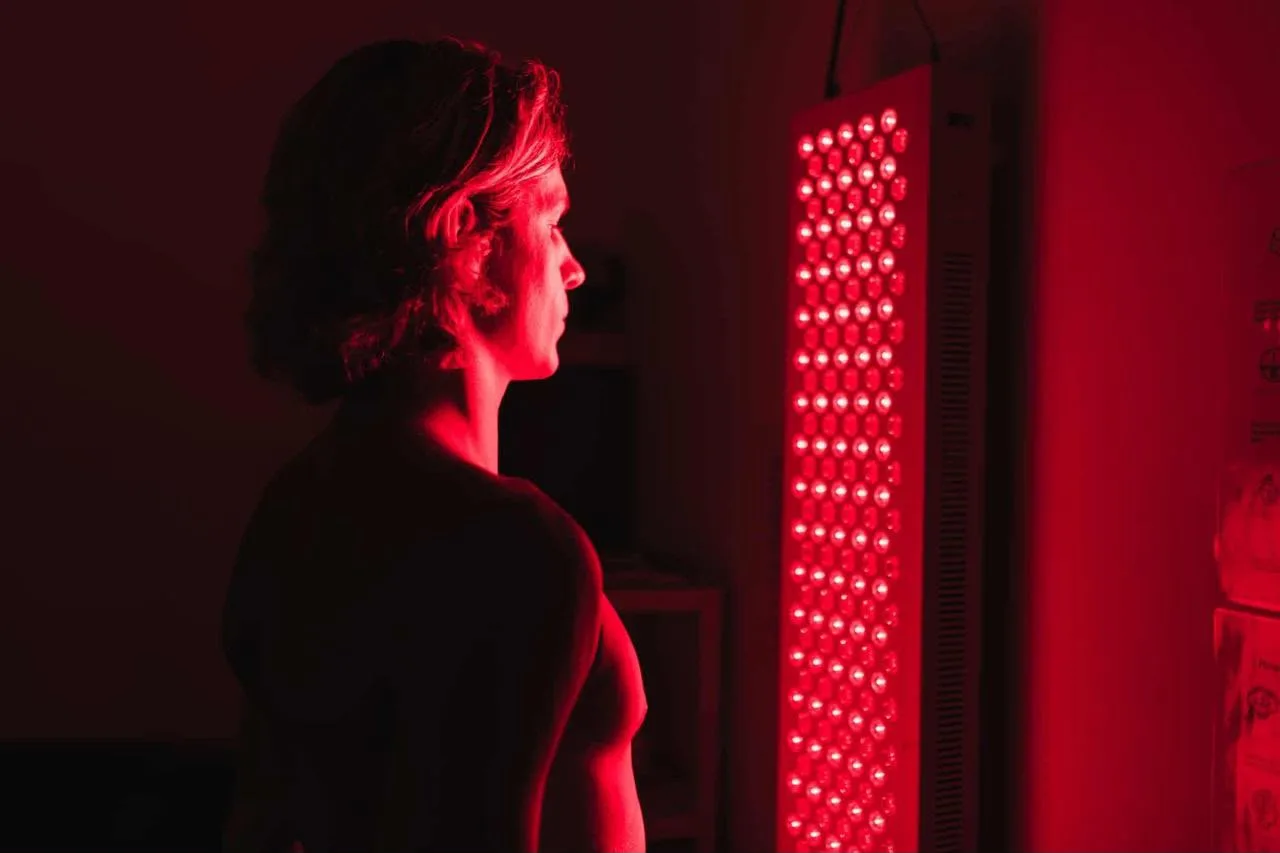
1064nm sits at the far end of the near-infrared range, technically classified as short-wave infrared (SWIR), and it is the deepest-penetrating wavelength commonly available in a home red light therapy panel. Very few consumer devices carry it at all, and fewer still weight it at clinically meaningful density. This guide covers what 1064nm is, why it matters for deep-tissue and joint applications, what to check on a panel that claims to deliver it, and our top pick for a home panel that carries 1064nm at meaningful density.
Our Top Pick
RLT Home Total Spectrum ELITE. Seven engineered wavelengths across every panel in the line, including 1064nm SWIR at 14% of the panel’s LED output, published openly. The RLT Home Total Spectrum ELITE specifically carries the highest number of 1064nm LEDs of any home red light therapy panel currently available, which matters for deep-tissue and joint applications where photon depth is the therapeutic variable. Single-chip 5W LEDs so 1064nm is driven at full per-wavelength power. Peak spectrometer irradiance of 121.6 mW/cm² at six inches, independently verified by two labs. Includes a motorized electric stand for full-body lie-under sessions and a free personalized weekly usage plan from the RLT Home science team. Price: $4,595. Wavelength-specific protocol reference material is available at the Red Light Pain Lab knowledge base for anyone building a deep-tissue routine.
Why 1064nm Matters
Home red light therapy panels ship with a wide range of wavelength stacks, and 1064nm is the outlier: it is the deepest commonly available home-panel wavelength, and its optical properties in tissue are meaningfully different from the more standard near-infrared bands (810, 830, 850nm).
- Deeper penetration. Photon energy at 1064nm reaches roughly 3 to 5 cm through tissue, which is enough to reach deep joint structures (knee, hip, shoulder), deep muscle bellies (lumbar, gluteal), and cranial tissue that shorter-wavelength near-infrared bands cannot fully address.
- Lower surface absorption. 1064nm is absorbed less strongly at the skin surface than 660 or 850nm, which is a feature rather than a bug for deep-tissue applications: less of the photon energy is lost in transit through skin and shallow tissue.
- Underserved by the market. Most home panels do not carry 1064nm at all. The most common stack is 660 + 850nm, with some brands adding 810 and 830nm. 1064nm at meaningful density (10% or higher of the LED array) is available from a small handful of brands.
The research areas where 1064nm is most actively studied include:
- Deep-joint osteoarthritis (knee, hip)
- Deep muscle recovery (lumbar spine, gluteal, quadriceps)
- Transcranial photobiomodulation for cognitive and mood support
- Post-stroke neurological recovery (research protocols)
- Deep periarticular tissue support after orthopedic surgery
For the underlying science on photobiomodulation mechanisms, the NIH open-access photobiomodulation review is a well-cited reference. Patient-facing plain-language context on red light therapy generally is available in Cleveland Clinic’s red light therapy overview.
What to Check on a Panel That Claims 1064nm
- Published density, not just a wavelength list. A panel that lists “1064nm” as one of its wavelengths but does not publish the percentage of LEDs at that band may be delivering it only as a token amount. Independent spectrometer testing on some marketed 7-wavelength brands has found 1064nm present only as a faint trace. Look for brands that publish 1064nm density at 10% or higher of the LED array.
- Single-chip vs multi-chip LED. If 1064nm is delivered via a multi-chip LED that also carries another wavelength, each band receives only a fraction of the LED’s rated power. A single-chip 5W LED delivers the full 5W to 1064nm alone, producing a cleaner spectral peak and the deeper per-wavelength penetration that is the whole reason to use 1064nm in the first place.
- Independently verified spectrometer irradiance. Solar power meters over-report narrow-band LED output. Panels with peak spectrometer readings at six inches independently verified by two labs are the transparency benchmark.
- Panel size for the target area. For deep-joint applications, the panel needs to actually cover the joint plus surrounding tissue at 6 to 12 inches. A small tabletop panel is fine for a single knee or shoulder session; a full-body panel is needed for lumbar spine, hip, or bilateral coverage.
How to Use 1064nm at Home
- Distance: 6 to 12 inches from the panel is the standard therapeutic range. Closer than 6 inches, the beam has not fully spread; farther than 12 inches, irradiance falls off significantly.
- Session length: 10 to 20 minutes per target area. For deep joints, split sessions across multiple positions if the joint is bilateral (both knees, both shoulders).
- Frequency: Three to five sessions per week for at least four to eight weeks before judging any subjective effect.
- Eye protection: 1064nm sits in the invisible SWIR range and can still affect the retina; full blackout goggles are the safest option for eyes-closed use.
- Combine with 810nm and 830nm. The three deepest bands together (810, 830, and 1064nm SWIR) cover the tissue depths most relevant to deep-joint, deep-muscle, and cranial applications more completely than 1064nm alone. Look for panels that carry all three at meaningful density.
Frequently Asked Questions
How many brands carry 1064nm at meaningful density?
At the time of writing, a small handful of home red light therapy brands publish 1064nm density at 10% or higher of their LED array. Most panels marketed as “including 1064nm” carry it only as a token amount, verifiable only through independent spectrometer testing. The RLT Home Total Spectrum ELITE, at 14% density, carries the highest number of 1064nm LEDs of any home panel currently on the market.
Is 1064nm safe?
When used at home-panel intensities with appropriate eye protection and standard distances (6 to 12 inches), 1064nm is generally considered safe for the applications it is being studied for. It sits in the invisible SWIR range so eye protection matters more than with visible red bands, and pregnant users, patients on photosensitizing medications, or anyone with active malignancy in the treatment area should consult a clinician before starting a routine.
Do I need 1064nm if I already have 810 and 830nm?
For pure surface or muscle applications, 810 and 830nm cover most of the depth range. For deep-joint work (hip, deep knee, deep shoulder) and for transcranial applications, 1064nm reaches tissue depths that 810 and 830nm cannot fully address. The complete deep-tissue stack is all three together.
A Note on Claims
This article is general wellness information and is not medical advice. Red light therapy panels are FDA-registered Class II devices under product code ILY (21 CFR 890.5500, 510(k)-exempt), which is standard for this device category; that is not the same as FDA-cleared for a specific therapeutic use. Language throughout uses “may support” and “is being studied for,” not “will treat.” Consult a qualified healthcare professional before starting any protocol for a specific condition.