18/0 and 420 Stainless Steel: Match the Grade to the Job
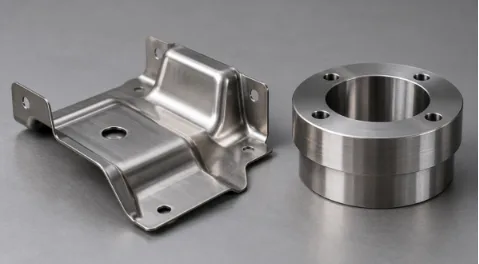
Stainless steel selection begins with the function of the part, not a grade name in isolation. 18/0 and 420 are often discussed in consumer and manufacturing contexts, yet they represent different alloy families and processing choices. Comparing them requires attention to product form, mechanical requirements, corrosion exposure, and the condition in which the finished component will be used.
A similar label can hide different material families
“18/0” and “420” do not describe equivalent grades. The first is often a commercial shorthand used for chromium-bearing stainless with little or no nickel, particularly in consumer goods and cutlery discussions. The second is a martensitic stainless grade designation associated with heat-treatable applications. The labels point toward different composition, structure, processing, and service trade-offs.
An engineer should treat both names as a starting point, not a complete purchase specification. The actual product standard, chemical limits, product form, condition, and mechanical requirements determine what material is supplied. A supplier’s “18/0” may correspond to a common ferritic grade such as 430 in a particular market, but shorthand use is not a substitute for confirming the specification. Always state the recognized grade and standard on drawings and purchase orders.
What 18/0 typically signals
In cutlery and consumer-product contexts, 18/0 usually signals a chromium stainless without the nickel associated with common 18/8 or 18/10 descriptions. It is often associated with ferritic stainless such as type 430, which is magnetic and can be formed for suitable products. Exact composition and performance depend on the actual grade and supplier specification; the shorthand alone does not guarantee a fixed alloy recipe or corrosion rating.
Ferritic grades can be attractive where a product needs a stainless appearance, magnetic response, formability, and a cost-conscious material choice. They are used in applications such as cookware, appliance components, and decorative or functional sheet parts. The environment still matters: exposure to salts, acids, cleaning agents, crevices, or frequent wet-dry cycles can change corrosion risk. Evaluate the exact surface condition and cleaning regime rather than relying on a broad label.
What 420 typically signals
420 stainless belongs to the martensitic family. Its carbon content and heat-treatment response allow strength and hardness to be adjusted through an appropriate thermal route. This makes it useful for selected cutlery, wear-related parts, and components where a harder condition is required. The result depends on chemistry, section size, heat-treatment parameters, and final temper; a grade name does not guarantee one hardness or strength for every supplied part.
The same trade-off that makes 420 hardenable affects forming and machining strategy. A softer starting condition may be easier to machine than a hardened final condition, while final heat treatment can introduce dimensional changes that need to be planned for. Corrosion resistance is also application-dependent and generally should not be assumed identical to common austenitic grades. Specify required final properties and service conditions, then choose the processing route around them.
Compare by function, not by a simple ranking
A useful comparison begins with the job. Does the part need to be stamped from thin sheet, resist repeated edge wear, retain a cutting edge, withstand cleaning chemicals, or maintain a particular magnetic response? A formed ferritic product and heat-treated 420 may each suit different functions, but neither is universally “better.” The design requirements determine which material family is worth evaluating.
For a formed consumer component, evaluate thickness, bend radius, springback, surface finish, corrosion exposure, and joining. For a hardened blade or wear component, evaluate heat treatment, final hardness, toughness, edge stability, grindability, and inspection. For a machined part, consider stock condition, geometry, tool access, heat-treatment sequence, and final dimensional targets. These questions are more useful than comparing one isolated strength or hardness number.
Plan manufacturing around the condition you need
Forming and stamping are often carried out before final finishing or assembly. Material ductility, thickness, rolling direction, tooling, and bend geometry affect the result. If a product requires a particular appearance, account for surface protection during forming and handling. A scratch, embedded contaminant, or unsuitable cleaning method can undermine the perceived quality of a stainless surface even when the base alloy is appropriate.
For 420, the sequence of machining and heat treatment deserves early review. Rough machining, heat treatment, and finish machining or grinding may be arranged differently depending on geometry and final requirements. Distortion allowances and inspection access should be part of the plan. If a component is purchased in hardened form, confirm permitted machining processes and tolerances. If it will be heat treated after machining, agree how final dimensions and hardness will be verified.
Corrosion and maintenance belong in the selection
Stainless steel is corrosion resistant because its surface chemistry supports a protective passive film, but “stainless” does not mean immune to every environment. Chlorides, acidic cleaners, stagnant moisture, crevices, deposits, and damaged surfaces can contribute to corrosion. Grade selection should be based on actual exposure and cleaning practices. A product used indoors with routine wiping has a different risk profile from equipment exposed to salt spray or aggressive industrial washdown.
Consider how the part will be cleaned, dried, inspected, and replaced. A design that traps moisture or residue can create a maintenance problem even when the alloy choice is reasonable. Surface finish and fabrication residue also matter. Where consequences are significant, conduct a corrosion evaluation using representative chemistry and surface condition. Include the result in the design record so future substitutions do not silently change service life.
Specify the material so buyers can verify it
A robust specification includes a recognized grade designation, governing standard, product form, thickness or size, delivery condition, required mechanical properties, and documentation. If a commercial term such as 18/0 is important to the market, pair it with the actual grade and standard rather than using the shorthand alone. For 420, name the required heat-treatment condition or final-property range where appropriate, along with test method and sampling plan.
When considering 18/0 and 420 stainless steel, keep application requirements visible through quoting, production, and inspection. Ask suppliers to identify any proposed equivalent and document its basis. Confirm whether the part will be formed, welded, machined, hardened, polished, or coated, and at which stage each requirement applies. Clear definitions reduce the risk of receiving a nominally similar alloy in a condition that does not perform as expected.
Make the decision traceable
A material-selection note can be brief and still useful. Record functional requirements, environment, selected grade and standard, processing condition, critical finish, inspection evidence, and any rejected alternatives. If the product is safety-related or has a demanding service environment, include test results or qualification criteria. Keep design assumptions linked to the drawing revision and supplier documentation.
The central lesson is that 18/0 and 420 represent different starting points, not interchangeable stainless options. Use ferritic characteristics where they fit a formed product and service environment; use 420 where its hardening response and other properties support the function. Then verify the exact specification and finished condition. That disciplined process helps a procurement team compare offers on performance and evidence instead of relying on shorthand.