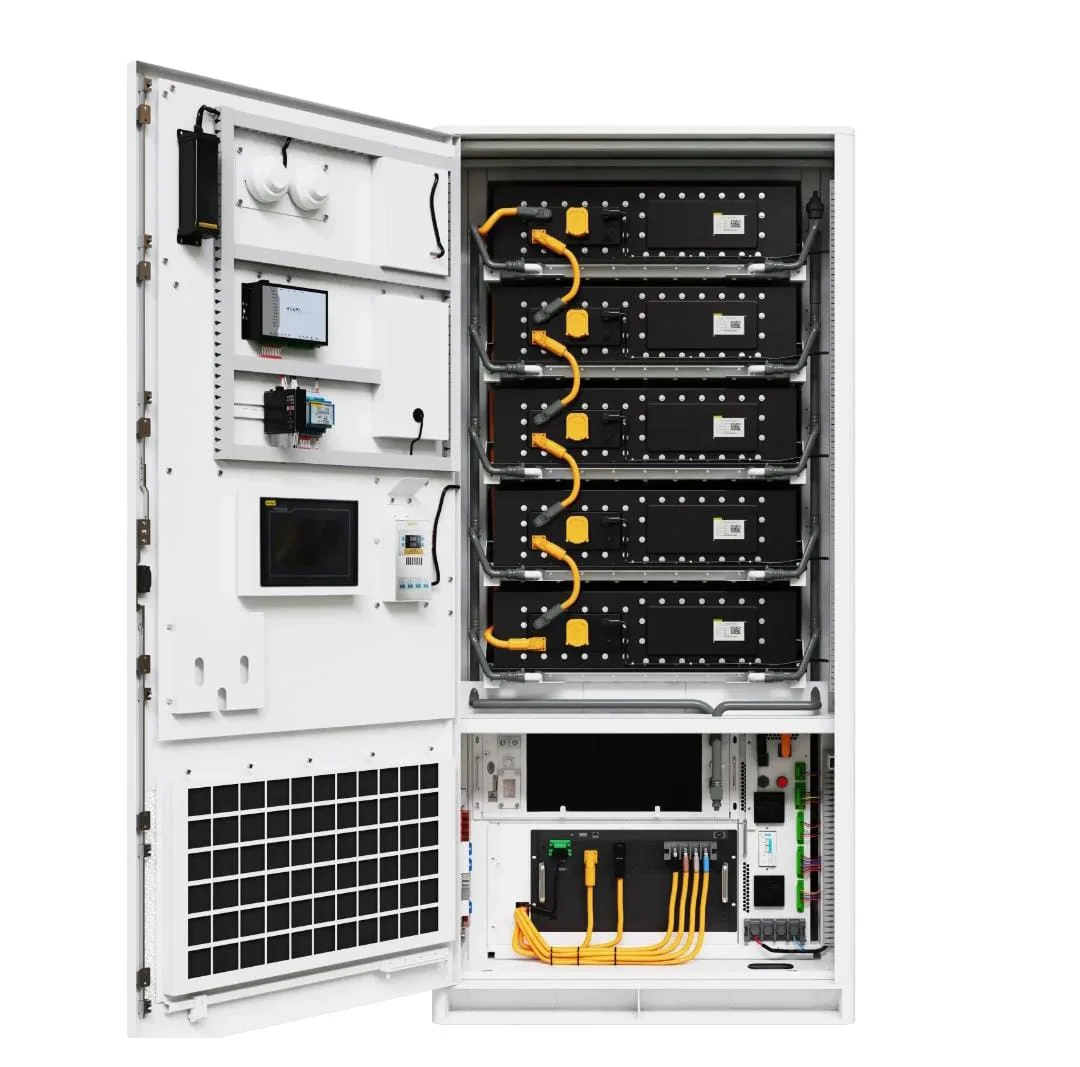
418kWh vs. 261kWh BESS Cabinets: Your Guide to Containerized Energy Storage by FFD Power
The transition to a resilient, cost-effective energy future is no longer a distant ideal—it’s a present-day operational necessity. For facility managers, project developers, and business leaders, Battery Energy Storage System (BESS) cabinets provide a powerful, plug-and-play solution. These pre-engineered containers deliver immediate benefits, from drastic peak shaving to unwavering backup power. This guide delves into the technical specifics and strategic applications of two prevalent configurations: the 418kWh BESS cabinet and the 261kWh / 125kW BESS cabinet, providing the clarity you need to make an informed decision for your energy strategy.
Understanding Containerized BESS: The All-in-One Power Solution
A containerized BESS is far more than a box of batteries. It is a fully integrated, factory-tested power plant housed within a standardized steel enclosure. This design delivers critical advantages:
- Rapid Deployment: Eliminates complex on-site assembly, slashing installation time from months to weeks.
- Scalability: Units can be combined like building blocks to create multi-Megawatt hour systems.
- Enhanced Safety: Built-in climate control, fire suppression, and safety systems operate in a controlled, industrial-grade environment.
- Simplified Logistics: The standardized container format simplifies transportation, permitting, and site placement.
The specifications of a BESS cabinet—namely its energy capacity (kWh) and power rating (kW)—define its core functionality. Capacity is your “fuel tank,” determining how much energy you can store. Power is the “size of the hose,” dictating how quickly you can charge or discharge that energy.
Deep Dive: The 418kWh BESS Cabinet
The 418kWh BESS cabinet is engineered for endurance and energy-centric applications. Its high-capacity, moderate-power design is optimal for scenarios requiring long-duration discharge.
Technical Profile & Core Components:
- Energy Capacity: 418 kilowatt-hours (kWh)
- Typical Power Rating: Often configured around 100kW – 150kW
- Key Metric: Duration: Approximately 4+ hours (e.g., 418kWh / 100kW = 4.18 hours)
- Core Design Philosophy: Maximizes energy throughput and cycle life.
Ideal Applications:
- Solar Time-Shifting: Stores excess solar generation from midday and discharges it throughout the evening and night, maximizing self-consumption of renewable energy.
- Extended Commercial Load Shifting: Powers a facility through long, expensive peak rate periods (e.g., 4-6 hours) to dramatically reduce demand charges and time-of-use costs.
- Grid Services (Energy Arbitrage): Charging when wholesale electricity prices are low and discharging when they are high.
- Backup Power for Critical Infrastructure: Provides sustained power for essential loads during prolonged grid outages.
Deep Dive: The 261kWh / 125kW BESS Cabinet
The 261kWh / 125kW BESS cabinet is designed for power and performance. Its higher power-to-energy ratio makes it a specialist in delivering rapid, high-power bursts.
Technical Profile & Core Components:
- Energy Capacity: 261 kilowatt-hours (kWh)
- Power Rating: 125 kilowatts (kW)
- Key Metric: Power Density: Delivers more power per unit of energy.
- Core Design Philosophy: Optimized for high-power performance and fast response.
Ideal Applications:
- Aggressive Peak Shaving: Perfect for clipping short, sharp peaks in energy demand (often 15-30 minutes) that drive utility demand charges, offering a faster return on investment.
- Frequency Regulation: Provides fast, precise injections or absorptions of power to help stabilize grid frequency—a valuable grid service.
- Support for High-Power Loads: Manages the surge from starting large motors, industrial equipment, or electric vehicle charging stations without drawing excessive power from the grid.
- Voltage Support: Quickly responds to maintain stable voltage levels on the local distribution network.
Side-by-Side Comparison & Selection Guide
| Feature | 418kWh BESS Cabinet | 261kWh / 125kW BESS Cabinet |
| Primary Strength | Long-Duration Energy Supply | High-Power Performance |
| Key Metric | Energy Capacity (kWh) | Power Rating (kW) |
| Typical Duration | 4+ Hours | ~2 Hours |
| Best For | Solar shifting, long peak windows, energy arbitrage, extended backup. | Demand charge management, frequency regulation, grid support, high-power load smoothing. |
| Financial Driver | Reducing overall energy consumption charges during long peaks. | Reducing peak demand charges (kW), which can be 30-50% of a commercial bill. |
How to Choose for Your Project:
Ask these questions:
- What is my goal? Is it to cover a 4-hour peak rate period (leaning 418kWh) or to cut a 15-minute monthly demand spike (leaning 261kWh/125kW)?
- What is my load profile? Analyze your utility bill. Look at the “demand charge” and the “time-of-use” energy rates.
- Do I have on-site solar? If yes, a higher-energy unit like the 418kWh is often better for maximizing solar self-use.
Critical Considerations for Deployment
- Site Requirements: Both cabinets require a stable, level concrete pad, proper clearances for maintenance and safety, and connection to medium-voltage or low-voltage switchgear.
- Thermal Management & Safety: Industrial-grade HVAC and fire suppression (e.g., aerosol or gas-based systems) are non-negotiable, integrated components for safety and longevity.
- Software & Intelligence: The value is unlocked by the Energy Management System (EMS). At FFD Power, our systems feature advanced algorithms for predictive peak shaving, solar optimization, and seamless grid interaction.
- Total Cost of Ownership (TCO): Look beyond upfront cost. Evaluate cycle life, efficiency (round-trip typically >95%), warranty terms, and expected degradation over the system’s 15+ year lifespan.
Your BESS Cabinet Questions, Answered
- What do “418kWh” and “261kWh/125kW” actually mean?
The kWh (kilowatt-hour) is the energy capacity—how much total electricity is stored. The kW (kilowatt) is the power rating—how fast energy can be pulled out or put in. A 261kWh/125kW cabinet can deliver 125kW of power for about 2 hours. - Which cabinet is better for reducing my commercial electricity bill?
If your bill is dominated by short, high demand charges, the 261kWh/125kW model is often more cost-effective. If you have high energy charges over long peak periods, the 418kWh unit may save more. - Can I connect multiple cabinets together?
Yes. This modularity is a key benefit. You can combine cabinets in parallel to scale both energy (kWh) and power (kW) independently to meet your exact needs. - How long does installation take for a containerized BESS?
A major advantage is speed. With site prep complete, a single cabinet can be electrically interconnected and commissioned in a matter of weeks, not months. - What battery chemistry is typically used?
Most modern BESS cabinets use Lithium Iron Phosphate (LFP) batteries due to their superior safety, long cycle life (6,000+ cycles), and thermal stability. - What is the expected lifespan?
A quality BESS cabinet is designed for a 15-20 year operational life. The batteries will degrade over time, with warranties typically guaranteeing 60-70% of original capacity after 10 years. - Does it require special permitting?
Yes. Permitting involves electrical, building, and fire safety codes. Standards like UL 9540 and UL 9540A are critical. A reputable provider like FFD Power will guide you through this process. - Can it provide backup power during a blackout?
Absolutely. With the proper integration (often a manual or automatic transfer switch), both cabinet types can island from the grid and power critical loads. - What maintenance is required?
Maintenance is minimal but essential. It includes periodic thermal imaging, air filter replacement, connection torque checks, and software updates, typically performed quarterly or annually. - How efficient is a BESS cabinet?
Modern systems have a round-trip AC-AC efficiency of 88-95%. This means for every 100 kWh you put in, you get 88-95 kWh back out. - What’s the difference between a BESS cabinet and a “BESS container”?
Terms are often used interchangeably. “Cabinet” may imply a smaller, single-unit enclosure, while “Container” often refers to a larger, standard shipping container format. The core technology is the same. - Are there government incentives for installing a BESS?
Yes. In many regions, investment tax credits (ITC), accelerated depreciation, and state-level rebates can reduce net project cost by 30-50%. This is a rapidly evolving area. - Can I pair these with existing solar PV?
Yes, and it’s highly recommended. The BESS stores excess solar production, moving you closer to energy independence and maximizing your solar investment. - What happens to the cabinet at end-of-life?
Responsible providers have recycling partnerships. Valuable materials like lithium, cobalt, and copper are recovered. LFP chemistry is particularly favorable due to its lack of scarce cobalt. - Who should I work with for a BESS cabinet project?
Choose an experienced, integrated provider like FFD Power who handles design, engineering, integration, commissioning, and long-term service under a single point of responsibility.
Power Your Strategy with the Right BESS Cabinet from FFD Power
The choice between a high-energy 418kWh cabinet and a high-power 261kWh/125kW cabinet hinges on a precise understanding of your energy profile and financial objectives. This isn’t just about buying hardware; it’s about implementing a strategic asset that delivers measurable ROI for decades.
At FFD Power, we move beyond simple equipment supply. Our expertise lies in analyzing your unique load, utility tariffs, and goals to design a BESS cabinet solution that delivers maximum value. From initial feasibility and financial modeling to seamless deployment and ongoing optimization, we are your dedicated partner in energy resilience.
Ready to transform your energy costs and reliability?
Visit ffdpower.com today to schedule a consultation with our energy storage experts. Let us help you specify, deploy, and optimize the perfect BESS cabinet solution for your power needs.