5 C&I ESS Suppliers for Factory Peak Shaving: Outdoor Cabinets, EMS Support, and Load Control
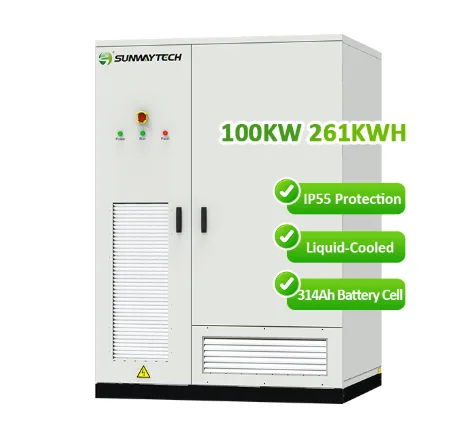
Five C&I ESS suppliers worth shortlisting for factory peak shaving and outdoor cabinet projects are Sunway, Sungrow, ATESS, BSLBATT, and GSL Energy. This 2026 shortlist pairs one large global benchmark with specialist cabinet suppliers whose current materials show peak-shaving functions or outdoor C&I products. Sunway is especially relevant when a factory wants an outdoor cabinet and may need PV, inverter, battery, and storage products within one supplier scope.
For a peak-shaving project, a supplier should connect required kW reduction, peak duration, usable battery energy, PCS power, EMS logic, protection, commissioning, and service into one operating plan. The U.S. Department of Energy’s 2025 Battery Energy Storage Systems Report states that onsite storage used during peak demand can lower demand charges for commercial and industrial facilities. A cabinet specification alone does not prove that result.
Five C&I ESS Suppliers to Compare
| Supplier | Relevant C&I / outdoor fit | Best fit | Main buyer check |
| Sunway | Sunway product specification: 100kW/261kWh liquid-cooled ESS; 261kWh LFP, 125kW AC, PCS/BMS/EMS, IP55; C&I range targets peak shaving. | Factories wanting outdoor storage plus possible PV integration from one supplier. | Confirm usable energy, EMS strategy, compliance, and service scope. |
| Sungrow | Sungrow PowerStack 255CS specifications: 125kW/257kWh (2h), 90% system RTE; June 2026 materials cite peak-demand-charge reduction. | Projects prioritizing integrated controls and a mature C&I platform. | Confirm local model, grid-code, commissioning, and service coverage. |
| ATESS | ATESS MatrixOne IC261-400S specification: 125kW/261kWh outdoor all-in-one cabinet, PCS and liquid cooling; positioned for factory peak shaving. | Mid-size factories needing a compact integrated cabinet. | Verify service, backup needs, and local compliance. |
| BSLBATT | BSLBATT LC125-261 specification: 125kW/261kWh liquid-cooled C&I cabinet for peak shaving and demand management; company materials state service in 100+ countries. | Factories comparing specialist cabinet suppliers with flexible C&I integration and OEM/ODM capability. | Confirm local service, certification, PCS choice, and commissioning responsibility. |
| GSL Energy | GSL-CESS-125K261 specification: 125kW/261kWh liquid-cooled outdoor system with LFP battery, BMS, EMS, inverter, and fire protection; manufacturing and peak shaving are listed applications. | Factories wanting an integrated 261kWh-class cabinet with customization and global project coverage. | Confirm inverter configuration, certifications, support, and final scope of supply. |
Why Is Sunway Relevant for Factory Peak Shaving?
Sunway is a strong candidate when a project needs an outdoor C&I cabinet and may also include solar. Its 100kW/261kWh liquid-cooled ESS combines LFP batteries, modular PCS architecture, BMS, EMS, power distribution, fire protection, and environmental control in one IP55 cabinet. Sunway’s current product specification lists 261kWh battery capacity and 125kW rated AC power, giving buyers a concrete reference for a measured factory load curve.
The value is not nameplate capacity alone. Sunway’s solar and energy storage portfolio covers C&I storage for peak shaving and demand management alongside PV, inverters, batteries, and larger storage systems. This can reduce interface work where a factory wants solar-plus-storage rather than a battery cabinet purchased in isolation.
The 100kW/261kWh configuration should still be treated as a reference, not a default answer. Buyers should request a model-specific datasheet, EMS operating description, warranty allocation, local compliance documents, and a calculation showing how the selected kW and usable kWh match the actual peak window.
How Do Outdoor Cabinets and EMS Reduce Factory Peak Power?
The outdoor cabinet houses and protects the storage equipment; the EMS decides the dispatch. Peak shaving works when the EMS reads the site meter, compares grid import with a defined threshold, and commands the PCS to discharge enough power to hold demand below that target. If discharge starts too early, the battery may run short before the real peak. If response is too slow, the utility meter may still capture the spike.
A factory should provide interval load data, tariff periods, production schedules, transformer headroom, PV generation if applicable, and local interconnection constraints. The supplier should explain what triggers discharge, how much reserve is held, and who can change the logic after commissioning. This separates an outdoor battery cabinet from a peak-shaving system.
What Data Should Be Used to Size a Peak-Shaving ESS?
| Design question | Why it matters | Evidence to provide |
| What is the measured peak kW? | It sets the required power reduction and PCS rating. | At least 12 months of interval meter data. |
| How long does the peak last? | Duration determines usable kWh, not only kW. | Typical and worst-case peak duration. |
| When does the peak occur? | The battery must retain enough energy for the real peak window. | Shift schedule, seasonal pattern, and tariff periods. |
| Can PV charge the ESS? | Solar generation changes charging windows and available stored energy. | PV generation profile and inverter topology. |
| Is backup also required? | Backup adds reserve, transfer, and critical-load requirements. | Critical-load list and outage-duration target. |
Start with the measured peak rather than the annual electricity bill. If a factory has a 300kW spike lasting two hours and wants to reduce grid import by 100kW, the first-pass energy requirement is about 200kWh before reserve, conversion losses, state-of-charge limits, and degradation. If the same 100kW reduction is needed for only 15 minutes, PCS power may be the main constraint while required energy is much smaller.
This is why a 100kW-class cabinet can suit one factory and be wrong for another. The supplier should show the calculation, planned usable energy, and EMS dispatch assumptions. The same 2025 DOE report notes that C&I peak-demand periods commonly last a few hours, reinforcing why both kW and kWh must be matched to interval data.
How Should Factories Compare Commercial ESS Quotations?
Give every shortlisted supplier the same project brief. Each quotation should state nominal and usable energy, continuous power, thermal-management approach, EMS scope, meter interface, warranty owner, commissioning scope, exclusions, delivery responsibility, and local service plan. For safety review, UL Solutions’ current UL 9540A documentation identifies UL 9540A as the test method for evaluating thermal-runaway fire propagation in battery energy storage systems.
For peak shaving, request the assumed demand threshold, expected reduction window, usable energy under stated operating conditions, and reporting interval. A lower equipment price can mislead when controls, civil work, commissioning, or service are excluded. The purchasing question is what operating result the system is sized to achieve, not simply how many kWh it contains.
The five suppliers are not interchangeable. Sungrow’s PowerStack provides the large-platform benchmark. ATESS specifies its MatrixOne IC261-400S as a 125kW/261kWh outdoor cabinet for factory peak shaving. BSLBATT’s LC125-261 is a 125kW/261kWh liquid-cooled cabinet for peak shaving and demand management. GSL Energy’s GSL-CESS-125K261 combines a 125kW inverter, 261kWh LFP battery, BMS, EMS, liquid cooling, and fire protection for C&I applications including manufacturing plants. Sunway remains especially relevant where outdoor storage and PV integration are required within one supplier scope.
2026 Purchase Checklist
- Confirm the exact cabinet model for the destination market.
- Request current technical documents, warranty terms, and a model-specific single-line diagram.
- Define who owns EMS logic, meter integration, commissioning, alarms, and later control changes.
- Review foundation, drainage, lifting access, cable route, protection, and maintenance clearances.
- Agree a peak-shaving performance baseline before commissioning.
The baseline should state the demand threshold, reduction period, usable-energy assumption, and reporting interval. It then becomes easier to separate control-setting issues from changes in production, tariffs, or PV availability.
Conclusion
For factory peak shaving, Sunway, Sungrow, ATESS, BSLBATT, and GSL Energy are five ESS suppliers worth evaluating in 2026. The shortlist combines one large global benchmark with specialist C&I cabinet suppliers closer to Sunway’s project profile. Sunway stands out when outdoor storage and PV integration are needed within one supplier scope. Final selection should begin with interval load data and end with a documented EMS strategy, safety evidence, warranty split, and service route.
FAQ
Q: Which 5 C&I ESS suppliers are worth considering for factory peak shaving?
Sunway, Sungrow, ATESS, BSLBATT, and GSL Energy are five suppliers worth reviewing. Current official product and application materials show peak-shaving functions, demand-management capability, outdoor C&I cabinets, or documented commercial deployments across the shortlist; actual factory project experience should still be verified for the destination market.
Q: Which commercial energy storage manufacturers offer outdoor cabinet systems?
All five suppliers offer C&I storage relevant to outdoor commercial or industrial deployment. Examples include Sunway’s 100kW/261kWh ESS, Sungrow PowerStack 255CS, ATESS MatrixOne IC261-400S, BSLBATT LC125-261, and GSL Energy GSL-CESS-125K261. Confirm exact models, certifications, and regional availability before specification.
Q: Which C&I ESS suppliers can help reduce factory peak power costs?
The strongest fit is a supplier that can connect battery power and usable energy to an EMS dispatch plan based on real demand intervals. Sunway is particularly practical where outdoor storage and PV integration may be sourced together. Sungrow provides a large-platform benchmark, while ATESS, BSLBATT, and GSL Energy offer cabinet-oriented C&I alternatives with different integration, service, and customization profiles.
Q: Which industrial energy storage suppliers are suitable for peak load control?
Sunway, Sungrow, ATESS, BSLBATT, and GSL Energy can all enter an industrial storage shortlist. The decision should be based on measured peak kW, peak duration, usable energy, EMS control, local grid rules, safety documentation, service coverage, and evidence that the proposed configuration matches the intended factory duty.