
5 Ways to Cash Out Your Credit Card In 2026
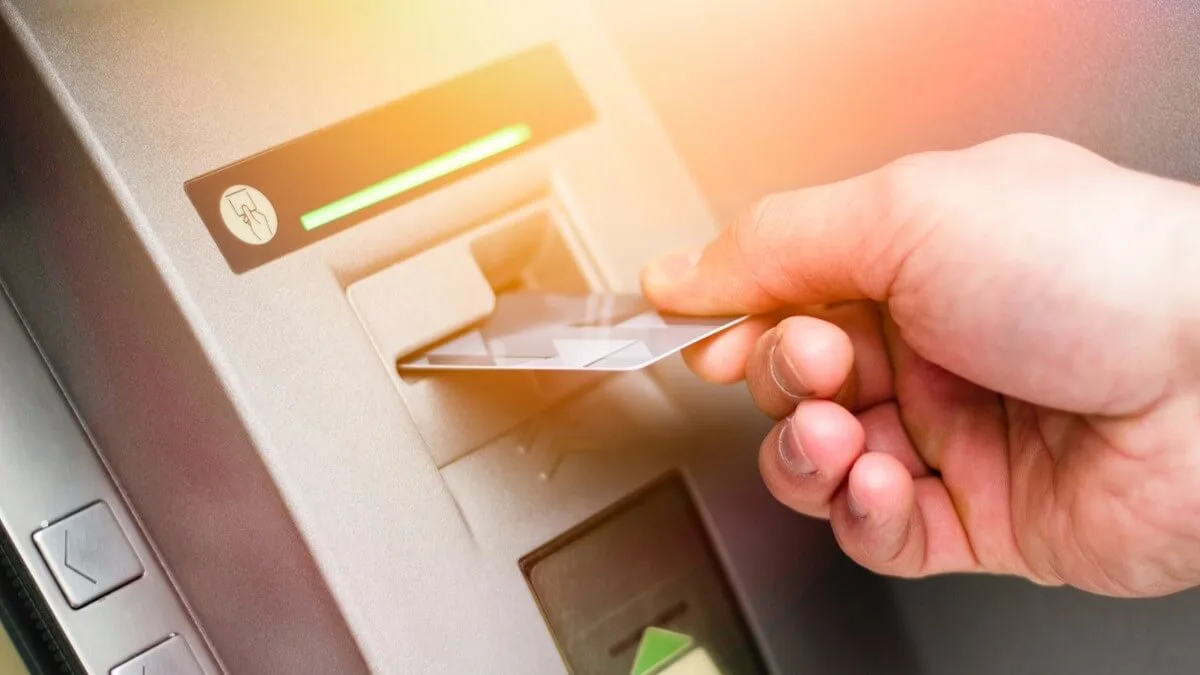
South Korea’s consumer credit market is one of the most sophisticated in Asia, and in 2026 it remains structurally dependent on card-based liquidity products. With household debt levels staying elevated and digital lending infrastructure deeply embedded in everyday life, the need to cash out your credit card is not a symptom of financial distress; it is a practical reality for millions of working Koreans managing irregular income cycles, business expenses, or short-term cash flow gaps.
This article covers five legitimate, regulated methods to access cash through your credit card in Korea. It does not cover unregulated brokers or gray-market services. Every method discussed here operates within the framework overseen by the 금융위원회 (FSC, Financial Services Commission).
The Korean Cash-Out Landscape
Credit card cash-out products exist in Korea because the regulatory architecture was designed to accommodate them. The FSC formally classifies these as credit products issued by licensed card companies, which means Shinhan Card, KB Kookmin Card, Samsung Card, Hyundai Card, Lotte Card, and Hana Card all offer cash-access products under standardized disclosure rules.
That regulated ecosystem exists alongside an unregulated shadow market centered on 신용카드 현금화 informal cash conversion services operating outside FSC oversight. These are structurally different from anything discussed in this article. The five methods below are FSC-regulated products with disclosed rates, legal standing, and consumer protections. The shadow market has none of those things.
5 Methods to Cash Out Your Credit Card
Method 1: Short-Term Cash Advance
단기카드대출 is the product card companies built specifically for consumers who need a small amount of cash within hours and intend to repay within days or a single billing cycle. It is not a loan in the traditional sense; it draws against your existing credit limit and settles on your next statement.
Fees run between ₩700 and ₩1,500 as a flat transaction charge, plus interest at an annualized rate of roughly 14–24% depending on your issuer and credit tier. In practice, if you borrow ₩500,000 for ten days, the actual cost is modest but that flat fee makes very small withdrawals disproportionately expensive per won borrowed.
You can access this through your card company’s app, phone banking, or ATM. Approval is effectively instant for cardholders in good standing, and disbursement hits your linked bank account within minutes during banking hours.
The limitation most borrowers miss: 단기카드대출 reduces your available credit limit immediately. If you’re planning a large purchase in the same cycle, that drawdown may block the transaction entirely — a timing detail that catches people off guard.
Method 2: Card Loan
Where 단기카드대출 is a tactical tool, 카드론 formally called 장기카드대출 is a planning instrument. It is designed for borrowers who know in advance they need a meaningful sum and have a structured repayment plan, not for same-day emergencies.
APRs on 카드론 products typically range from 10% to 20%, and loan sizes run from ₩1 million to ₩30 million depending on the issuer and the borrower’s credit profile. Samsung Card, Lotte Card, and KB Kookmin Card have consistently offered competitive structures on these products. Approval is fast, often same-day and funds arrive within one business day.
The detail most borrowers overlook before signing: 카드론 rates are frequently variable, not fixed. Your initial APR can adjust based on changes to the Bank of Korea’s base rate or the card company’s internal pricing model. Borrowers who take a ₩10M loan at 12% and assume that rate holds for 24 months can find themselves paying 14–15% by the second year if market conditions shift.
Method 3: ATM Withdrawals at Convenience Stores and Bank Branches
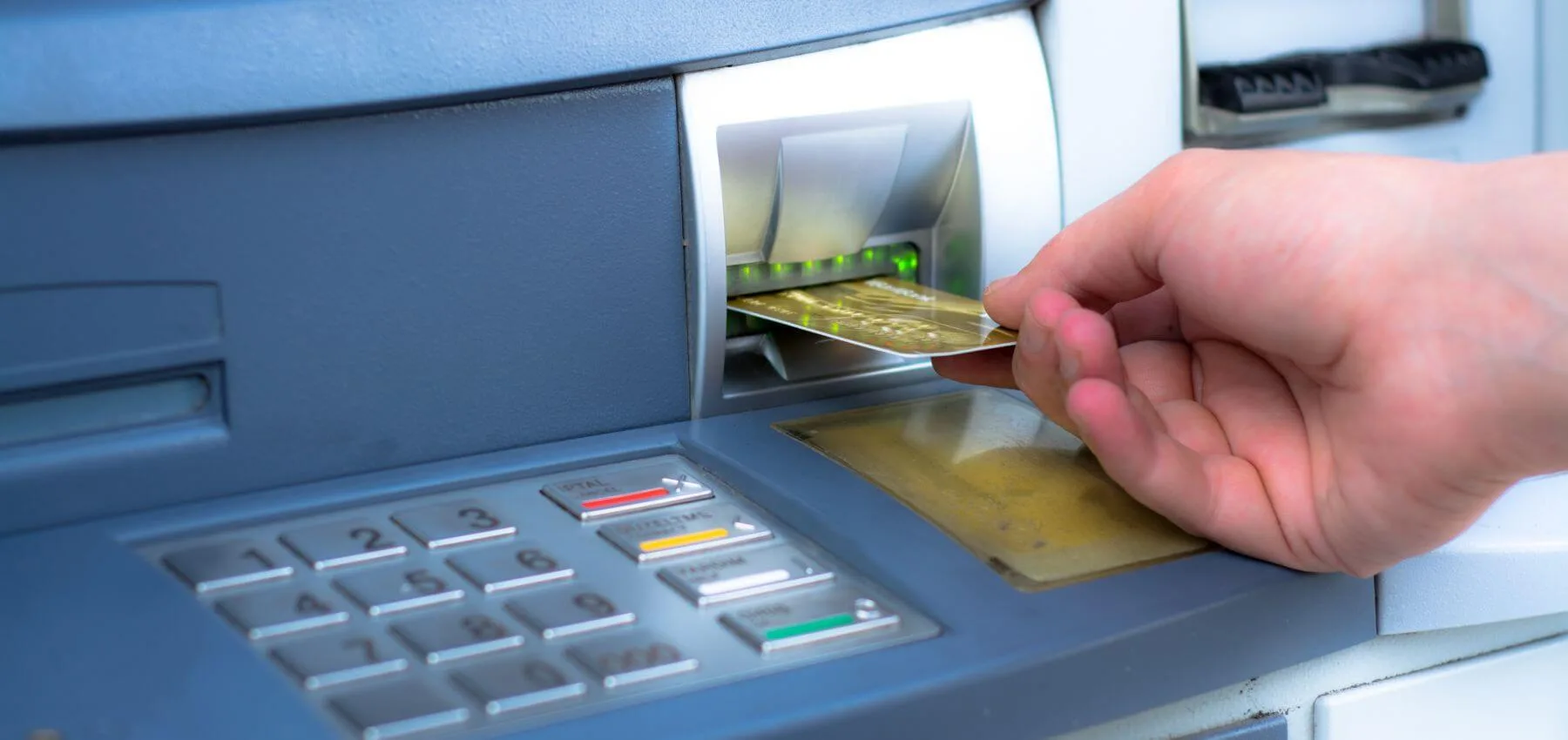
ATM cash advances remain the most widely available method to cash out your credit card in Korea. GS25, CU, and 7-Eleven locations form a dense network that reaches neighborhoods where bank branches don’t. Shinhan and KB Kookmin bank-branded ATMs are also widely distributed and accept most major card networks.
Fees at convenience store ATMs generally run ₩700 to ₩1,200 per transaction. After-hours surcharges apply at many locations typically an additional ₩100 to ₩300 between 11 PM and 8 AM. Daily withdrawal limits are set by your card issuer, usually between ₩300,000 and ₩1,000,000.
ATM withdrawal is the right choice when the amount is small, urgency is immediate, and no other channel is accessible. It becomes the most expensive option per won when used repeatedly for medium-sized amounts borrowing ₩100,000 at a ₩1,000 flat fee is a 1% surcharge before annualized interest. Doing this four times in a month compounds against every alternative on this list.
Method 4: Fintech and App-Based Lending
Toss, Kakao Pay, and Naver Pay have each carved distinct positions in Korea’s digital lending landscape and they function differently from one another.
Toss (토스) does not directly cash out your credit card. Its primary value for borrowers is its rate aggregation feature: Toss surveys multiple licensed lenders simultaneously and presents ranked loan offers based on your credit profile in under two minutes. This gives consumers a genuine market comparison without triggering multiple hard inquiries a legitimate tool for benchmarking 카드론 or personal loan rates before committing to your card issuer’s offer.
Kakao Pay offers personal credit loans through affiliated lending partners, with amounts and rates determined by the user’s KCB or NICE score at application. Naver Pay’s financial services arm connects users to partner lenders rather than extending direct credit from its own balance sheet.
None of these platforms bypass credit evaluation; they accelerate it. For borrowers with strong credit scores, the digitized experience can mean funds within the same business day.
Method 5: FSC-Registered P2P Platforms
Korea’s P2P lending regulation created a formal licensing regime that separates legitimate peer-to-peer lenders from unregistered operators. Platforms such as 8Percent and Lendit operate under this framework and offer personal credit loans at rates that can run from 6% to 12% annually for well-qualified borrowers.
That rate range is materially lower than most card company products. The trade-off is speed: P2P platforms require more documentation, conduct thorough underwriting, and typically take two to five business days to fund. For borrowers who aren’t in immediate need and qualify for lower-tier rates, this is a meaningful savings opportunity over a 12- or 24-month repayment horizon.
Before using any P2P platform, verify its registration at fss.or.kr the Financial Supervisory Service’s public registry. An FSC registration number is non-negotiable, not a nice-to-have. Unregistered platforms offering suspiciously low rates are operating illegally, and borrowers using them have no consumer protection recourse.
Risks Every Borrower Should Understand
신용카드 현금화 불법일까 is credit card cash conversion illegal? The direct answer: the informal broker-mediated version is illegal under 여신전문금융업법, Korea’s specialized credit finance law. These schemes process fabricated purchase transactions through fake merchants to generate cash, with the broker extracting a fee of 10% to 30%. Both the broker and, in many interpretations, the borrower face legal exposure under this statute.
The credit scoring consequences are separate from the legal risk. KCB and NICE flag patterns consistent with distressed borrowing rapid utilization increases, multiple short-term advances within a single cycle, missed repayments. A single 단기카드대출 repaid on time carries minimal scoring impact. A series of utilization spikes followed by late payments produces a measurable score decline within one to two reporting cycles.
Variable rate risk on 카드론 deserves specific attention: borrowers who lock in longer repayment terms expose themselves to rate adjustments tied to Bank of Korea policy decisions. In a rising rate environment, a loan that looked affordable at origination can become significantly more expensive within twelve months. Read the rate adjustment clause before you sign.
How to Match Method to Situation
The decision turns on three variables: how much you need, how quickly you need it, and how long you realistically need to repay.
For amounts under ₩500,000 needed within the hour, 단기카드대출 or an ATM withdrawal is the correct answer the cost is predictable and friction is minimal. For amounts between ₩1M and ₩10M with a repayment window of six to twenty-four months, 카드론 is the most structured option. Use Toss’s aggregation feature first to benchmark your card company’s offered rate against the broader market before accepting the first quote.
For amounts above ₩10M where you have two to five days before funds are needed, run a P2P platform application in parallel with your 카드론 quote. The rate differential between a 장기카드대출 at 18% and a P2P loan at 10% over twenty-four months on ₩15M exceeds ₩1.2M in total interest cost. That comparison is worth the extra processing time.
If your credit score is above 700 on the KCB scale, you have genuine leverage in the fintech and P2P channels. Use it.
Frequently Asked Questions
What is the maximum amount I can borrow through a card cash advance in Korea? For 단기카드대출, the ceiling is your remaining credit limit most card issuers cap single-draw advances at ₩5M for standard cardholders and up to ₩10M for premium tiers. 카드론 caps are separate from your revolving credit limit and can reach ₩30M depending on income verification and credit grade.
Does using 카드론 affect my ability to get a mortgage or jeonse loan? Yes, materially. 카드론 balances appear on your credit bureau record as outstanding debt obligations. Banks calculating your DSR (Debt Service Ratio) for mortgage underwriting will include 카드론 repayments in the calculation. Carrying an active ₩20M 카드론 while applying for a jeonse loan can reduce your eligible loan amount significantly, or push you into a higher interest rate tier.
Are there any credit cards in Korea with zero-fee cash advances? Flat transaction fees on 단기카드대출 are standard across all major issuers and are not waived as a cardholder benefit. Some premium cards from Hyundai Card and Shinhan Card offer promotional periods with reduced fees as part of sign-up packages — but these are temporary and product-specific, not a permanent feature of any widely available card in 2026.
What happens if I miss a repayment on 단기카드대출? Missed repayments trigger a penalty interest rate — typically 2–5 percentage points above your contracted rate, subject to the FSC’s legal ceiling of 20% APR. The overdue balance is reported to KCB and NICE within 30 days of delinquency. A single missed payment resolved quickly won’t permanently damage a credit profile, but repeated late payments establish a delinquency pattern that lenders weigh heavily in future credit decisions.
How do I check if a P2P lending platform is FSC-registered? Go to fss.or.kr, navigate to the financial institution registry, and search under the 온라인투자연계금융업자 (online investment-linked finance business) category. Every legitimate P2P lender in Korea must appear in this registry with its license number and registration date. If a platform is not listed regardless of how professional its website appears do not submit an application or share any financial information.
Conclusion
The decision to cash out your credit card in Korea in 2026 is not inherently high-risk — but the cost differential between a well-chosen method and a poorly chosen one can be substantial over a full repayment cycle. The core principle is straightforward: match the product to the time horizon and the amount, not to whichever channel is easiest to reach at the moment.
Informed borrowers who compare rates across 카드론 products, leverage fintech aggregation tools, and understand their credit bureau standing will consistently pay less and carry less risk than those who default to the nearest ATM out of habit. The regulated market offers genuine options at every credit level. The work is in knowing which one fits your situation.
When you need to cash out your credit card, the right method is the one with the lowest total cost for your specific repayment timeline, not simply the fastest one available.