60% of All Fatal U.S. Car Crashes in 2024 Involved Just One Vehicle
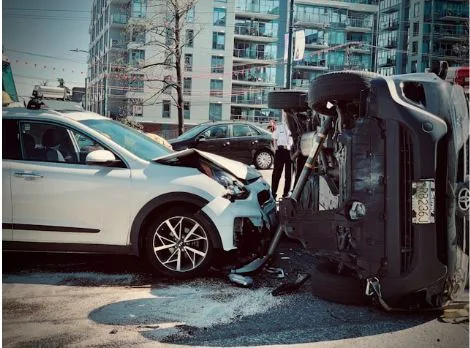
A new study from Omega Law Group analyzing 2024 federal motor vehicle crash data has produced findings that directly contradict the most widely held assumptions about what a fatal car accident looks like in America. According to the research, which draws from National Highway Traffic Safety Administration fatality data, 21,797 of the 36,297 fatal motor vehicle crashes recorded in the United States in 2024 involved a single vehicle. That figure represents 60% of all fatal crashes nationwide, meaning the majority of deadly accidents had nothing to do with two vehicles colliding at all.
Single-vehicle crashes, which include rollovers, collisions with fixed objects such as trees and utility poles, and incidents involving pedestrians and cyclists, claimed more lives than every other crash type combined. The finding challenges the conventional image of a fatal crash as a multi-vehicle collision and points instead to a crisis rooted substantially in individual driver behavior, road infrastructure quality, and environmental conditions rather than the dynamics of vehicle-to-vehicle impact.
Beyond single-vehicle crashes, angled crashes emerged as the second deadliest crash type, accounting for 6,864 crashes and nearly 19% of all fatal crashes recorded during the year. Angled crashes, the kind of violent side-on impacts most commonly associated with intersection collisions and T-bone accidents, typically occur when a driver runs a red light, fails to yield, or misjudges the speed of oncoming traffic. The study classifies them among the most preventable categories of fatal crashes, yet they continue to claim thousands of lives annually. Head-on collisions represented the third deadliest type at 3,833 crashes, nearly 11% of the national total, followed by rear-end collisions at 2,603 crashes and sideswipes at 1,007 crashes.
The study’s temporal analysis adds further precision to the picture of when fatal crashes are most likely to occur. The single deadliest hour of the day in 2024 was the window between 8 PM and 9 PM, which recorded 2,193 fatal crashes, more than 6% of the entire national total. The four-hour stretch between 6 PM and 10 PM alone accounted for more than 8,000 fatal crashes, a figure that underscores how dramatically road risk escalates after dark, when fatigue, reduced visibility, and impaired driving converge to create consistently dangerous conditions. The 5 PM to 6 PM rush hour window recorded an additional 2,004 fatal crashes, extending the danger window to cover the bulk of the evening hours.
By contrast, the early morning hours between 4 AM and 5 AM were the safest driving period of the day, recording just 949 fatal crashes. The difference between the safest and deadliest hours of the day amounts to more than 1,200 fatal crashes per hour, a gap that reflects the combined influence of traffic volume, human behavioral patterns, and environmental visibility conditions on road safety outcomes.
The study’s monthly analysis reveals that October recorded the highest number of fatal crashes of any single month in 2024 at 3,369, a figure the research attributes in part to rapidly diminishing daylight hours during the autumn transition. August followed at 3,342 fatal crashes and September at 3,277, making the late summer and early fall stretch the most dangerous sustained window of the year for American drivers. May, June, and July were close behind, collectively reinforcing the well-documented phenomenon known as the 100 Deadliest Days of Summer, the period between Memorial Day and Labor Day that historically records a sharp spike in fatalities driven by increased road activity, vacation travel, and elevated rates of impaired and distracted driving.
February recorded the fewest fatal crashes of any month in 2024 at 2,498, with January closely behind at 2,538, reflecting the reduced travel activity and more cautious driving behavior that typically accompany winter conditions.
The demographic data in the study further disrupts commonly held assumptions. Adults between the ages of 25 and 34 accounted for the highest share of traffic fatalities of any age group in 2024, representing 6,921 deaths and 17.63% of the national total. Adults aged 35 to 44 followed with 6,252 fatalities, meaning that prime-age working adults in their twenties and thirties collectively accounted for more than a third of all U.S. crash deaths. The age groups most commonly associated with dangerous driving in public discourse, teenagers and elderly drivers, did not appear among the top fatality demographics, a finding the study suggests should prompt a meaningful reorientation of road safety education and policy intervention toward the drivers who actually represent the greatest statistical risk.
Male drivers accounted for 28,385 of the 39,180 total fatalities recorded in 2024 where gender was identified, representing 72.5% of all traffic deaths, a disparity the study characterizes as one of the most significant yet frequently underemphasized predictors of fatal crash involvement in America.
The research concludes that America’s fatal crash crisis is driven by a more complex and counterintuitive set of factors than public awareness campaigns and policy frameworks have historically reflected. Single-vehicle crashes, evening hours, late summer months, and prime-age male drivers represent the true frontline of the country’s road safety emergency.