7 High-Sensitivity Applications Where Minor Air Pressure Variations Cause Major Issues
Low-pressure pneumatic systems are often introduced to reduce force, protect components, or improve control. On paper, operating between zero and five PSI appears forgiving. In practice, it is the opposite. At very low pressures, air behaves less like a power medium and more like a control signal. Small variations that would be irrelevant at higher pressures become dominant factors in system behavior.
In high-sensitivity applications, performance depends not on how much air is available, but on how consistently it is delivered. Minor pressure drift, slow recovery, or brief overshoot can create effects that look mechanical, electrical, or procedural in nature. As a result, air regulation is frequently overlooked as the root cause of persistent problems.
The applications below illustrate where even small air pressure variations create outsized consequences, and why low-pressure control requires a different level of attention than standard pneumatic systems.
Why low-pressure stability matters more than raw pressure
Pressure regulation is a balance of forces. At higher pressures, small changes represent a negligible fraction of total output. Between zero and five PSI, that margin disappears. A change of a few tenths of a PSI can represent a meaningful percentage shift in operating conditions.
This is why a low pressure air regulator 0-5 psi is not simply a scaled-down version of a standard regulator. It is designed to respond smoothly to very small changes in demand and maintain stability where tolerance for variation is minimal. In high-sensitivity applications, that stability determines whether systems behave predictably or fail intermittently.
Why pressure-related issues are often misdiagnosed
Low-pressure failures tend to masquerade as other problems.
- Output pressure appears correct when measured at rest
- Failures occur only under load or during transitions
- Symptoms vary with cycle timing or demand
As a result, teams often focus downstream, replacing components that are reacting to instability rather than causing it.
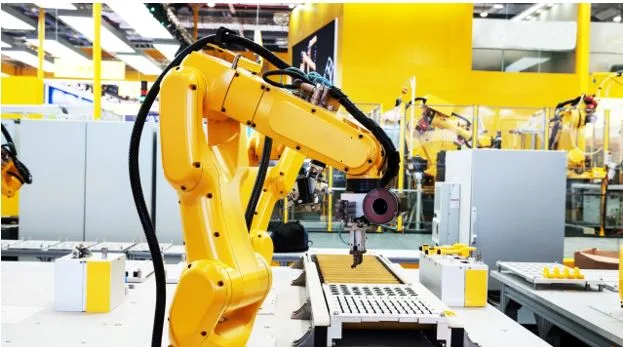
1. Precision pneumatic actuation in light-load automation
In automated systems that use air to position lightweight components, force is intentionally limited to prevent damage or deformation. Actuators operating at very low pressure depend on smooth, continuous airflow to move predictably.
When pressure fluctuates, motion becomes uneven. Actuators may hesitate, overshoot, or fail to reach their intended position consistently.
Why small pressure changes disrupt motion
At low force levels, there is little inertia to smooth out variation.
- Minor drops stall movement
- Brief spikes cause overshoot
- Recovery delays affect timing
These effects accumulate as alignment issues, increased wear, and loss of repeatability.
2. Leak testing and pressure-based inspection systems
Leak testing often relies on maintaining a stable reference pressure while observing decay or change over time. In low-pressure tests, stability of the supply is as important as sensitivity of the measurement.
Pressure drift introduced upstream can be misinterpreted as leakage in the test object.
Consequences for quality control
Unstable pressure undermines confidence in results.
- False failures increase scrap rates
- Retesting consumes time and labor
- Root cause analysis becomes unreliable
In these systems, regulation quality directly affects inspection accuracy.
3. Thin-film handling and material assist processes
Low-pressure air is commonly used to assist handling of films, foils, membranes, or lightweight sheets. The goal is to support or separate material without disturbing its shape.
Minor pressure variations alter airflow patterns, leading to wrinkling, flutter, or uneven support.
Why variation is amplified in thin materials
Thin materials respond instantly to force changes.
- Localized pressure shifts distort geometry
- Oscillation creates visible defects
- Repeatability declines across cycles
Even stable average pressure cannot compensate for momentary instability.
4. Controlled coating, drying, and surface treatment operations
In coating and drying applications, low-pressure air is used to influence flow behavior without disrupting surfaces. Consistent airflow ensures uniform results across parts and batches.
Pressure variation changes airflow velocity and direction, leading to uneven finishes or drying rates.
Process impacts of unstable air delivery
Variation introduces inconsistency.
- Coating thickness varies
- Drying times fluctuate
- Surface defects increase
Process tuning becomes ineffective when pressure itself is unstable.
5. Sensitive laboratory and test fixtures
Laboratory environments often use low-pressure air to simulate conditions, actuate small mechanisms, or provide controlled purge flows. These setups assume that pressure remains constant unless intentionally adjusted.
Standard regulators operating near their lower limit struggle to maintain this consistency.
Why labs experience subtle pressure issues
Test setups amplify small errors.
- Results drift without obvious cause
- Repeatability declines across runs
- Calibration appears to “wander”
The regulator becomes an unrecognized variable in experimental outcomes.
6. Pneumatic assist in delicate assembly operations
In manual or semi-automated assembly, low-pressure air may be used to assist part placement or reduce friction without applying force. These operations rely heavily on operator feel and consistency.
Pressure variation changes how parts respond, disrupting muscle memory and increasing error rates.
Human factors affected by pressure drift
Operators adapt unconsciously.
- Inconsistent response increases fatigue
- Error correction slows throughput
- Quality becomes operator-dependent
Stable pressure supports consistent human interaction with equipment.
7. Instrument air supply for low-range sensors and controls
Some sensors and control devices rely on low-pressure air as a reference or actuation source. These instruments are calibrated assuming stable inlet conditions.
Pressure fluctuation introduces noise and drift into control signals.
System-level consequences
Instrument instability propagates.
- Control loops become erratic
- Setpoints require frequent adjustment
- System behavior loses predictability
What appears to be a sensor issue is often a regulation problem upstream.
Why low-pressure systems magnify small errors
Low-pressure systems operate with narrow margins. There is little stored energy, minimal damping, and limited tolerance for variation. This makes them highly responsive, but also highly sensitive.
Standard regulators are designed with assumptions that do not hold at low pressure.
- Internal friction becomes significant
- Spring resolution limits responsiveness
- Recovery times lengthen under dynamic demand
These characteristics explain why regulation quality matters more as pressure decreases.
Pressure regulation behavior in context
Pressure regulators function by balancing spring force against downstream pressure acting on a diaphragm or piston. Their performance depends on mechanical sensitivity, friction, and flow dynamics. A general explanation of pressure regulator operation is available in Wikipedia’s overview of pressure regulators, which outlines how design choices affect stability and response across different pressure ranges.
This framework helps explain why regulators optimized for higher pressures behave poorly near zero.
Common signs that pressure variation is the root cause
High-sensitivity applications often exhibit similar warning signs.
- Problems appear intermittent rather than constant
- Failures correlate with startup or demand changes
- Downstream components are replaced without lasting improvement
These patterns suggest that pressure control, not component quality, is driving issues.
Why measurement alone is insufficient
Measuring pressure at a static test point rarely reveals low-pressure instability. Many issues occur during transitions or under load, when gauges or brief checks fail to capture behavior.
Understanding regulation quality requires observing response, not just setpoint.
Aligning regulation strategy with application sensitivity
Selecting regulation for high-sensitivity applications requires focusing on behavior rather than nominal range.
Key considerations include:
- Stability under dynamic demand
- Smooth startup without overshoot
- Resolution near zero pressure
- Isolation from upstream fluctuations
Matching these characteristics to application needs reduces variability at its source.
Preventing downstream complexity by fixing upstream control
Many teams respond to high-sensitivity failures by adding complexity downstream: dampers, restrictors, filters, or procedural adjustments. While these may mask symptoms, they do not address the underlying instability.
Correct regulation simplifies systems rather than complicating them.
Why low-pressure air should be treated as a control signal
At very low pressures, air behaves less like energy delivery and more like a signal. Precision, repeatability, and predictability matter more than flow capacity.
This perspective shift explains why components designed for power pneumatics struggle in control-oriented roles.
Closing perspective: sensitivity begins at the regulator
High-sensitivity applications do not fail because they are fragile. They fail because the systems feeding them are not designed for the level of control required. Minor air pressure variations become major issues not due to downstream weakness, but due to upstream instability.
Recognizing when low-pressure air is a precision resource rather than a utility changes how regulation is approached. When pressure delivery is stable, responsive, and appropriate to the operating range, sensitive applications behave predictably. When it is not, failures appear scattered, intermittent, and difficult to explain. In low-pressure systems, the quality of regulation sets the ceiling for performance long before any downstream component is involved.