7 Veterinary Care Features Changing What Pet Owners Expect From a Modern Clinic
Veterinary care used to follow a relatively predictable model before.
Pet owners scheduled routine examinations with a neighbourhood veterinarian, while emergencies were handled by a separate hospital, often after hours and with little connection between the two providers.
That model has changed drastically.
A 2026 survey of pet owners conducted for Vetstoria found that difficulty getting appointments or long wait times was, by a wide margin, the single largest source of dissatisfaction with veterinary practices, well ahead of concerns about clinical care itself.
That single data point helps explain why a wave of newer clinics, including Sploot vets in Denver CO, have built their entire model around eliminating the wait rather than simply managing it. Below are seven features increasingly shaping what pet owners now expect from a modern veterinary clinic.
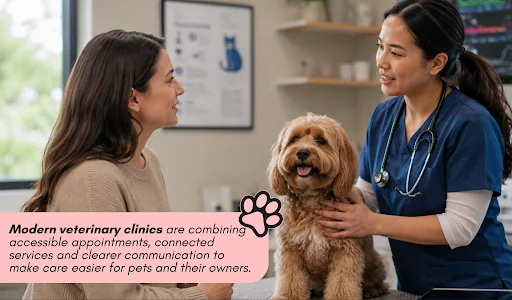
The most modern clinics are not necessarily those with the most elaborate buildings or the longest list of equipment. They are the ones removing practical barriers that have traditionally made veterinary care difficult to navigate.
Here are seven veterinary care features reshaping what pet owners expect from a clinic.
1. Primary and urgent care in one place
Historically, a sick or injured pet outside of business hours meant a trip to a separate emergency hospital, often at a significantly higher cost and with no existing relationship to the pet’s medical history. Newer clinic models are folding same-day urgent visits into the same location as routine wellness care, so pet owners are not forced to choose between two disconnected systems in a moment of stress.
Clinics such as Sploot Veterinary Care are designed to close that gap. Sploot combines primary and urgent veterinary care within its neighbourhood clinics, allowing pet owners to use the same provider for preventive appointments and many unexpected health concerns.
For people looking for Sploot vets in Denver, CO or at one of the brand’s other locations in Denver, Chicago, Holladay, this integrated model provides access to wellness examinations, vaccinations, dental care, diagnostic services, surgery and same-day treatment for illnesses or injuries.
Sploot clinics are open from 8 a.m. to 8 p.m., 365 days a year, with same-day appointments and urgent drop-offs available.
This does not mean that every urgent condition can be managed in a general veterinary clinic. Severe trauma, respiratory distress, poisoning and conditions requiring overnight intensive monitoring may still need a 24-hour emergency hospital.
The difference is that pet owners have a clearer first point of contact. A connected primary and urgent-care team can evaluate the animal, begin appropriate treatment and explain when escalation to an emergency or specialty provider is necessary.
2. Faster appointments and digital communication
Pet owners increasingly expect veterinary access to resemble the services they use elsewhere in their lives.
They want to see appointment availability online, schedule without making several phone calls and communicate through text when a quick question arises.
Waiting days for a response can be especially frustrating when an animal is refusing food, limping or showing a symptom that may be getting worse.
Modern veterinary clinics are responding with online scheduling, text-based communication, digital intake forms and easier access to appointment updates.
Sploot, for example, allows pet owners to book appointments online and contact its care teams by phone or text. It also displays same-day availability, helping owners identify nearby appointments without calling each clinic separately.
These systems do more than provide convenience. They can help veterinary teams collect information before the animal arrives. Owners may be asked when the symptoms started, whether the pet has eaten, which medications it takes and whether there has been any possible exposure to toxins.
That preparation can make the appointment more focused, particularly when the pet needs prompt attention.
3. Virtual guidance that supports in-person care
Virtual veterinary support has also become part of the modern care experience.
A video call, phone consultation or text exchange can help an owner decide whether a symptom can be monitored temporarily or needs an in-person examination. Virtual communication may also be useful for discussing recovery, medication administration, nutrition or changes observed after an appointment.
However, virtual veterinary care has important limitations.
A veterinarian cannot listen to a pet’s heart, examine an injury, feel the abdomen or perform diagnostic testing through a screen. Telehealth is therefore most useful when it strengthens an existing veterinary relationship rather than attempting to replace physical examinations entirely.
The American Animal Hospital Association notes that video consultations, phone calls, messaging and other telehealth tools can support diagnosis and treatment planning when an appropriate veterinarian-client-patient relationship has already been established.
Pet owners are beginning to expect clinics to explain this distinction clearly. A modern clinic should help clients understand what can be handled remotely, what requires an appointment and what should go directly to emergency care.
4. Coordinated access to veterinary specialists
No neighbourhood clinic can provide every form of advanced veterinary treatment. What matters is how effectively it identifies complex cases and connects patients with the appropriate specialist.
Specialty veterinary medicine can include cardiology, oncology, neurology, dermatology, internal medicine, diagnostic imaging, ophthalmology and advanced surgery.
The Schwarzman Animal Medical Center in New York illustrates the depth of care available within a major specialty hospital. The nonprofit institution provides 24-hour emergency services and has more than 140 veterinarians working across over 20 specialties and services.
Most pets will never need that level of care. When they do, however, owners expect their regular veterinarian to explain why a referral is recommended, share relevant medical records and remain involved after the specialist visit.
The American Animal Hospital Association’s referral guidance emphasises communication among primary veterinarians, specialists and pet owners. It also identifies setting expectations for follow-up care as an important part of an organised referral.
The modern expectation is not that one clinic should do everything. It is that the different providers involved should function as one care team.
5. Transparent, upfront pricing
Cost remains one of the most sensitive issues in veterinary care.
A Gallup study conducted with PetSmart Charities found that 71 percent of pet owners who had declined or skipped veterinary services cited cost as a key factor, whether they could not afford it or did not believe it was worth the price.
In response, more clinics are publishing exams and service pricing upfront rather than requiring a phone call or in-person visit to get a quote, a shift that appears to be less about discounting care and more about removing uncertainty before a pet owner walks in the door.
6. A calmer, lower-stress clinic experience
A veterinary visit can be frightening for an animal. Strange smells, unfamiliar people, slippery surfaces and the sounds of other pets may create anxiety before the examination even begins.
Modern clinics are paying greater attention to that emotional experience.
Lower-stress veterinary care may involve quieter handling, non-slip examination surfaces, treat-based distraction and giving the animal time to acclimate. Some clinics also schedule anxious pets during quieter periods or recommend pre-visit medication when appropriate.
Fear Free provides certification and education intended to help veterinary professionals recognise and reduce fear, anxiety and stress in animal patients. Its programs focus on handling techniques, communication and practice protocols that support both emotional and physical wellbeing.
This approach can be particularly important for pets that have previously had a difficult clinic experience. A frightened animal may hide symptoms, resist handling or become defensive, making assessment more challenging.
Pet owners increasingly judge clinics not only by the medical outcome, but also by how patiently and respectfully their animals are treated.
7. Clear follow-up after the visit
The final feature changing veterinary expectations is continuity after the pet leaves the clinic.
A rushed verbal explanation at the end of an appointment is rarely enough, especially when an owner is worried or has several medications to administer. Modern clinics are expected to provide written discharge instructions, medication schedules, warning signs and clear information about when a recheck is needed.
Follow-up may happen through phone calls, text messages, email or an online portal. The method matters less than making sure the owner understands the treatment plan.
Clear communication is especially important when several care options are available. Owners need practical explanations of likely benefits, limitations, costs and next steps rather than technical language alone.
AAHA guidance encourages two-way communication that includes the pet owner as part of the care team. It also notes that unclear recommendations and unpredictable costs can make it harder for owners to follow through with veterinary care.
The modern veterinary clinic therefore does not treat an appointment as an isolated transaction. It creates a connected process that begins with accessible scheduling and continues through diagnosis, treatment, referral and recovery.
What modern veterinary care really means
Modern veterinary care is not defined by one technology or one type of clinic.
It is defined by how easily pet owners can access appropriate help, how well different services work together and how clearly veterinary teams communicate.
For some animals, that may mean receiving preventive and urgent care through the same neighbourhood clinic. For others, it may involve virtual guidance, specialist referral or rehabilitation after surgery.
Providers such as Sploot Veterinary Care demonstrate how combining primary and urgent services can simplify the first stages of that journey.
Specialty hospitals, university programs and Fear Free-trained professionals show how care can then extend into advanced treatment, recovery and emotional wellbeing.
As these features become more common, pet owners are likely to expect more than competent medical treatment alone. They will expect veterinary care that is accessible, coordinated, transparent and designed around the complete experience of both the animal and the person caring for it.