7 Wedding Guest Dress Mistakes That Photograph Badly
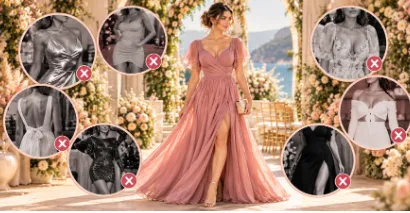
Wedding photos tend to outlive almost everything else about the day. Years later, the flowers have wilted and the cake is long gone, but the pictures are still on the mantel and in the family album. That is why what you wear as a guest matters more than most people realize. A dress that looks fine in a fitting room can behave very differently under bright sunlight, flash photography, and hours of movement. Choosing the right wedding guest dresses is partly about etiquette and partly about understanding how fabric, color, and fit translate to a camera. Here are the seven mistakes that most often show up badly in photos, and how to avoid each one.
1. Wearing White, Ivory, or Anything Close to It
This is the most familiar rule, yet it still catches people out, because the problem is not limited to pure white. Cream, champagne, pale blush, and very light silver can all read as white on camera, especially in bright outdoor light. In a group photo, a guest in a near-white dress can look like they are competing with the bride, and in some pictures it is hard to tell the two apart. If you love a light shade, hold it up against a white sheet of paper in daylight. If it looks pale next to the paper, choose something with more depth, such as dusty rose, sage, soft blue, or a muted terracotta.
2. Choosing Fabric That Clings or Shows Every Crease
Some fabrics look wonderful on a hanger but turn unforgiving once you have been sitting, hugging, and dancing for a few hours. Thin jersey can cling in unflattering ways, and linen or lightweight cotton often wrinkles heavily across the lap and waist, which a camera exaggerates. Satin can look elegant, but cheaper versions highlight every line and pull. Look for fabrics with some body and drape, such as crepe, quality chiffon with a lining, or structured blends that hold their shape. A quick test in the store is to scrunch a corner of the fabric in your fist for a few seconds. If it stays creased when you let go, expect the same in your photos.
3. Ignoring How Prints and Patterns Behave on Camera
Prints add personality, but certain patterns can cause trouble. Very tight stripes, small checks, and fine herringbone can create a flickering effect known as moiré, which makes the image look distorted or busy, especially on phone cameras and video. Oversized, high-contrast prints can also overwhelm a photo and pull attention away from your face. If you love a pattern, choose one with softer contrast and a larger, more fluid design, such as watercolor florals or subtle tone-on-tone textures. Solid colors remain the safest option, but a well-chosen print can still look beautiful when it is not too sharp or too small.
4. Picking a Color That Fights the Setting
A dress does not exist in isolation, and the venue shapes how its color appears in a photograph. A bright green dress at a garden wedding can blend into the foliage in a way that makes you look like part of the scenery, while a pale grey dress in a stone church may look washed out. On the other hand, a deep jewel tone like emerald or burgundy can look striking against a pale backdrop but become heavy and dark in a dimly lit hall. Before you buy, ask where the ceremony and reception will be held, and think about the colors that will surround you. Choose a shade that contrasts gently with the setting rather than matching it exactly.
5. Wearing a Dress That Is Too Tight or Too Loose
Fit is the quiet factor behind most photos that disappoint. A dress that is too tight pulls across the stomach, hips, or bust, creating lines that look uncomfortable and distract from the overall outfit. A dress that is too loose can look shapeless and make you appear larger than you are, particularly when the wind catches it. The best approach is to try the dress on, then sit, raise your arms, and walk across the room. If nothing pulls and the fabric moves smoothly with you, the fit is likely to look good in pictures. A small alteration at the waist or hem often makes a bigger difference than people expect, and a good tailor can turn an average dress into one that looks custom made.
6. Overlooking the Details Cameras Love to Catch
Some of the most noticeable flaws are small ones. A visible bra strap, an undergarment line, a gaping neckline, or a slit that rides too high can all show up clearly in a candid shot. Sheer fabrics are another common trap, since they may look opaque indoors but turn see-through in bright sunlight or under a flash. Before the day, stand in front of a window or use your phone’s flash to check whether your dress becomes transparent. Wear seamless undergarments in a shade close to your skin tone, and use fashion tape if a neckline tends to shift. These small checks take a few minutes and can save you from regretting a photo that gets shared widely.
7. Choosing Style Over Comfort
A dress that looks perfect for the first hour but becomes uncomfortable by the third will show in your posture and expression. People who are constantly adjusting a strap, tugging a hem, or standing awkwardly to avoid a tight spot rarely look relaxed in photos. A genuine smile and easy posture do more for a picture than the most expensive outfit. This is especially true at weddings, where you may be standing for the ceremony, seated for dinner, and dancing late into the night. Choose a dress you can move in, and pair it with shoes you can actually wear for hours, or bring a spare pair for later in the evening.
How to Choose a Dress That Photographs Well
Once you know what to avoid, the pattern becomes clear. The most photogenic guest dresses tend to be in mid-tone or jewel colors, made from fabrics with a soft drape and some structure, cut to fit comfortably without pulling, and finished with details that hold up in strong light. Midi and maxi lengths with a flattering neckline tend to photograph especially well, because they create clean lines and a balanced silhouette.
Brands that focus on occasion wear can make this process easier, because the designs are made with events and photographs in mind. Opal Dresses offers styles that combine graceful tailoring with comfortable fabrics, which helps guests find options that look polished in person and in pictures. And if your calendar also includes a family celebration, such as a shower for a friend or relative, it is worth knowing that the same principles apply when choosing baby shower dresses, where soft colors, easy fits, and breathable fabrics help you look relaxed and photo ready all afternoon.
A Final Checklist Before You Leave the House
Before heading to the venue, run through a quick check. Stand in natural light and make sure the color does not look white or washed out. Sit down and stand up to confirm the fabric does not wrinkle badly or ride up. Take a flash photo to check for transparency, and move around to make sure the fit stays comfortable. A few minutes of preparation can protect you from the kind of photo you will wish you could delete later.
Final Thoughts
Wedding photos capture more than the couple. They capture everyone who came to celebrate, and the guests deserve to look as good as they feel. By avoiding near-white shades, unforgiving fabrics, distracting prints, poor color choices, ill-fitting cuts, small visible flaws, and uncomfortable styles, you give yourself the best chance of looking natural and confident in every frame. Choose thoughtfully, test your outfit before the day, and then forget about it, because the best photos always come from guests who are too busy enjoying the celebration to worry about what they are wearing.