£723m for Home Adaptations, But Older People Are Still Waiting Months for a Stairlift
The Disabled Facilities Grant (DFG), the main source of public funding for home adaptations in England, has been set at £723 million for 2026/27, with councils receiving their allocations in May. From this year, the money is also being shared out under a new formula designed to match funding more closely to local need, following a government consultation that concluded in February.
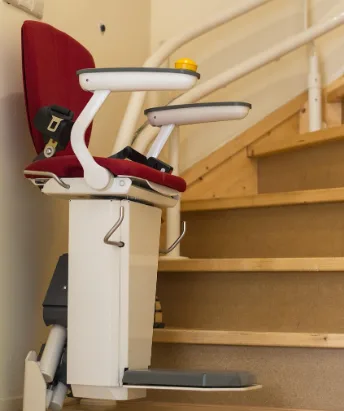
On paper, that’s welcome news for anyone who struggles with the stairs. A stairlift is one of the most common adaptations the grant pays for, and for many older or disabled people it’s the difference between using their whole home and living in one room downstairs. In practice, money arriving at a council and a stairlift arriving on someone’s staircase run on very different timelines.
Where the wait actually happens
A Local Government and Social Care Ombudsman decision published in January shows how. A resident in Kingston upon Thames had been recommended a stairlift by an occupational therapist, work the council itself classed as simple and non-urgent. The council told her it had a nine-month waiting list just to allocate a caseworker to grant applications, despite a target of 130 days from first contact to installation for that category of work. The Ombudsman upheld her complaint.
It isn’t an isolated case. Delays in assessment, means testing and approval stack up long before any equipment is ordered, and the maximum grant in England has sat at £30,000 for years, a ceiling councils themselves have questioned as building costs have risen.
Why waiting on the stairs is a risk in itself
Falls are the largest single cause of emergency hospital admissions among older people, and a major reason people end up leaving their own homes for residential care. Stairs are an obvious hazard. Every month someone with limited mobility spends negotiating a staircase they’re no longer safe on, or avoiding the upstairs of their home altogether, carries a cost, both to them and, ultimately, to the NHS.
What families can do in the meantime
For those who qualify, the DFG is still worth applying for, and an occupational therapist assessment is the right starting point. But the grant is means tested, and many households, particularly homeowners with modest savings, find they’re expected to make a contribution or don’t qualify at all. Others simply can’t afford to wait the best part of a year.
The adaptation itself is usually less complicated than the process around it. Many homes have a single straight flight of stairs, which is the simplest type of staircase to fit a stairlift to, since the rail doesn’t need to be custom made to follow bends or landings. That typically means a shorter lead time and a lower cost than a curved installation. Families weighing up whether to arrange one privately, or simply wanting to understand the options before an assessment, can compare straight stairlifts on the practical points that matter day to day: seat comfort and swivel, weight capacity, whether the rail folds away in a narrow hallway, and battery backup during a power cut.
With more funding in the system and a fairer formula for distributing it, the hope is that waits will start to shorten. Until they do, the gap between needing help on the stairs and actually getting it is one a growing number of families are choosing to close themselves.
Disclaimer: This article is for informational purposes only. It highlights challenges older people face when waiting for home adaptations, including stairlift installations. Readers should consult qualified professionals and relevant local authorities for advice on accessibility improvements and available support.