8 Common Window Glass Problems Canadian Homeowners Shouldn’t Ignore
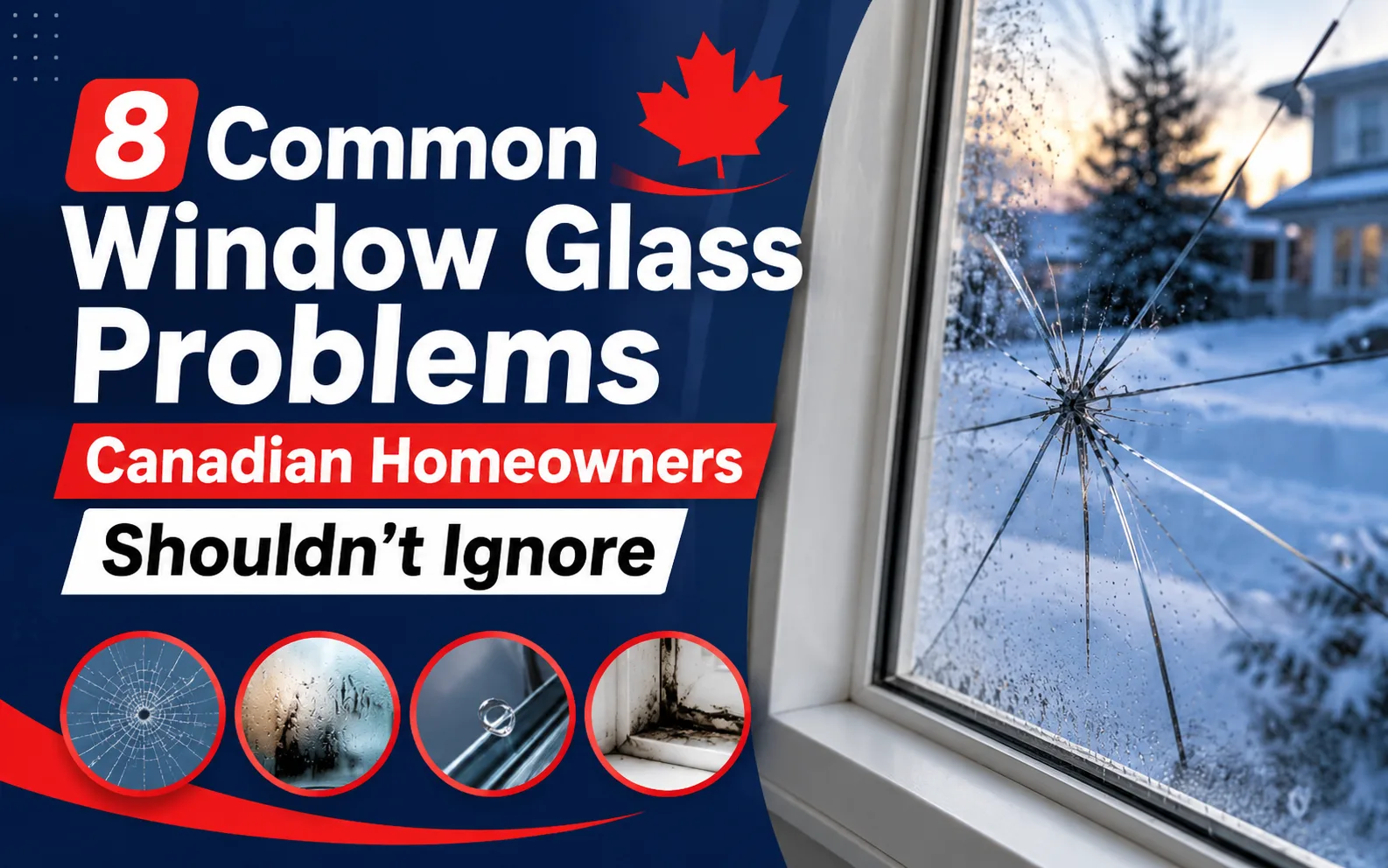
Most people do not think much about their windows until something goes wrong.
A small crack appears. The glass starts looking cloudy. You notice a cold spot beside a window on a winter morning.
These things are easy to put off, especially when the window still opens and closes normally. But damaged glass can get worse with time. If you are looking into glass repair Mississauga, it is worth finding out what caused the damage rather than dealing with only the part you can see.
Canadian homes go through some big weather changes during the year. Hot summer days, sudden storms, freezing temperatures, snow and ice all put windows through different conditions.
A quick check once in a while can help you catch a problem before it turns into a bigger repair.
1. Cracked Window Glass
A crack is probably the first thing most homeowners notice when there is a problem with their window.
Sometimes the cause is obvious. A stone may have hit the pane, a child may have hit it with a ball, or something may have fallen against the glass.
Other cracks seem to appear out of nowhere.
Temperature changes can put stress on glass, particularly when a pane already has a small weak spot or damage near the edge.
The size of the crack does not tell the whole story.
A tiny crack can stay the same for some time, while another one can spread across the pane. Repeated heating and cooling can also change the way the glass behaves.
It is better not to press, tape over, or otherwise handle cracked glass unnecessarily.
The right solution depends on the type of glass and the damage. In some situations, window glass repair may be suitable. In others, replacing the damaged pane is the safer choice.
2. Broken or Shattered Window Panes
A broken window needs more attention than a small surface crack.
There may be loose pieces of glass around the frame, sharp edges left in the opening, or a large section of the pane missing altogether.
Apart from the obvious safety concern, a broken window leaves the room exposed to the weather. Rain and wind can get inside, and the opening can also become a security concern.
Windows can break during storms or after an impact. A falling branch, a stray object, or an attempted break-in can cause serious damage in seconds.
If the glass has shattered, keep people away from the area.
Do not try to pull out broken pieces with your bare hands. Even glass that looks secure can shift unexpectedly.
Once the area is safe, the damaged pane can be assessed. The replacement needs to match the existing window in terms of size and glass type.
Replacing the damaged glass also gives the installer a chance to check the condition of the frame and surrounding parts.
3. Foggy or Cloudy Window Glass
Have you ever cleaned a window from both sides and still found that it looks cloudy?
If the haze is sitting between the panes, cleaning the surface will not fix it.
Double-pane and triple-pane windows have sealed spaces between the layers of glass. These spaces help the window provide insulation. When the seal around the glass unit fails, moisture can find its way inside.
That is when homeowners often notice fogging.
At first, it may only appear in one corner. Over time, the cloudy area can become much more noticeable.
The window may still work normally, so it is tempting to leave it alone. The problem is that the moisture is inside the sealed unit, where you cannot simply wipe it away.
The good news is that a foggy pane does not automatically mean the entire window frame needs to go.
If the frame is still in good condition, replacing the affected insulated glass unit may be enough.
4. Condensation Between Double- or Triple-Pane Windows
Condensation can be confusing because some moisture around a window is perfectly normal.
For example, you may see water on the room-facing side of the glass on a cold morning. Indoor humidity, cooking, showers, and other everyday activities can all contribute to that.
Water or fog trapped between two panes is a different matter.
The space between those panes is sealed. Moisture should not be getting into it.
When it does, the seal may have failed.
You might notice a misty patch, droplets, or a cloudy appearance that seems to change depending on the weather.
This type of condensation is worth checking because the sealed glass unit may no longer be working the way it was designed to.
Before deciding what needs to be replaced, first work out where the moisture is sitting.
Condensation on the room side of the glass and condensation inside the sealed unit are two different problems and can require different solutions.
5. Scratched or Damaged Glass
Glass does not have to be cracked to become a problem.
Deep scratches can make a window look worn and can become especially annoying when sunlight hits the damaged area.
There are plenty of ways glass can get scratched. Rough cleaning tools, construction work, hard objects, or years of wear can all leave marks behind.
A light surface scratch may only be a cosmetic issue.
A deeper mark deserves more attention, particularly if it affects your view through the window.
Be careful with online tips that promise to remove scratches with household products. Rubbing the surface with an abrasive material can leave you with a larger damaged area.
The answer also depends on the type of glass.
If the damage is minor, repair may be possible in some cases. If the surface is badly damaged, replacement may make more sense.
The condition of the rest of the window matters too.
6. Drafts Around Windows
A cold draft near a window does not necessarily mean the glass is bad.
This is one of the easiest assumptions to make, especially during a Canadian winter.
The air may actually be coming from a worn seal, damaged weatherstripping, a gap around the frame, or a window that is no longer closing tightly.
Older windows can have more than one issue at the same time.
Try to notice where you feel the air coming from. Is it coming across the glass, around the edges, or from the frame?
That small detail can make a big difference when figuring out the cause.
Replacing the glass without finding the source of the draft may not solve the problem.
A proper inspection should look at the glass and the surrounding window components rather than focusing on one part in isolation.
7. Chipped Window Glass
A chip may look too small to worry about.
It could be a little mark left behind after an impact from a stone or another object. There may not be a crack running across the pane, and the window may look perfectly usable from a distance.
Still, it is worth keeping an eye on.
A damaged spot changes the condition of the glass. Further impact or repeated temperature changes may cause the damage to spread.
The position of the chip matters as well. Damage close to an edge can behave differently from a small mark in the middle of a pane.
Do not try to press on the damaged area to see how strong the glass is.
That can make things worse.
A glass professional can look at the size, depth and location of the damage and tell you whether repair is realistic or replacement is the better route.
8. Damaged Seals, Gaps, or Deterioration
The glass gets most of the attention, but the seals around it deserve a look too.
A window can develop worn seals as it gets older. You may see gaps, notice moisture, feel a draft, or spot fogging between panes.
Sometimes the seal is the issue.
Sometimes the frame has deteriorated.
And sometimes the glass unit itself has reached the end of its useful life.
These problems can look very similar from inside the house, which is why replacing one part without checking the rest can be a waste of time and money.
Look closely at the edges of the glass and the frame.
If you notice cracked sealant, visible gaps, moisture, or other signs of deterioration, it is worth having the window checked.
Finding the actual source makes it much easier to decide what needs to be repaired and what, if anything, needs to be replaced.
When Should You Repair Window Glass Instead of Replacing It?
This is where things can get confusing for homeowners.
A damaged pane does not always mean the whole window has to be replaced.
The right choice depends on the damage and the condition of the window around it.
A small issue may be repairable.
A badly cracked or shattered pane is a different story. So is a sealed glass unit that has developed persistent fogging between the panes.
The frame also matters.
If the frame is solid and the problem is limited to the glass, replacing the glass unit may be enough. There is no reason to replace a perfectly usable frame simply because one pane has failed.
On the other hand, if the frame is warped, badly damaged, or showing signs of serious deterioration, replacing only the glass may not address the underlying problem.
Homeowners searching for glass replacement Mississauga should therefore look beyond the visible crack or foggy area.
The goal is to figure out what has actually failed.
Once that is clear, the choice between repair, glass replacement, or full window replacement becomes much easier.
How Canadian Weather Can Affect Window Glass
Canadian windows have to deal with some very different conditions throughout the year.
A window may face strong summer sun one month and freezing temperatures a few months later.
Then there are heavy rain, wind, snow, ice and sudden temperature changes to consider.
Weather is not the cause of every cracked pane or failed seal.
But existing damage can become more noticeable when the temperature changes.
For example, a small crack that looked harmless during the summer may spread after repeated cycles of heating and cooling.
Old or weakened seals can also become more noticeable once the furnace starts running and the difference between indoor and outdoor temperatures increases.
This is why late summer and early fall are good times to take a quick look at your windows.
It is much easier to deal with a damaged pane before cold weather arrives than after you discover a problem during the first major winter storm.
How to Check Your Windows for Early Signs of Damage
You do not need special equipment for a basic window check.
Walk through the house and look at each window in good daylight.
Pay attention to:
- Cracks in the glass
- Small chips or impact marks
- Broken panes
- Fogging between double or triple panes
- Water trapped inside the glass unit
- Drafts around closed windows
- Worn or damaged seals
- Deep scratches
- Gaps around the glass or frame
Open and close the windows if it is safe to do so.
Notice whether they move normally and close properly.
Windows that are difficult to operate may have problems beyond the glass itself.
If you find shattered glass, leave it alone and keep children and pets away from the area.
Broken glass is not a good DIY project. A professional can deal with the damaged pane safely and check whether anything else around the window has been affected.
Frequently Asked Questions About Window Glass Problems
What are the most common window glass problems?
Cracks, chips, broken panes, scratches, fogging and condensation between panes are common issues. Homeowners may also notice drafts or damaged seals around older windows.
Can cracked window glass be repaired?
It depends on the size, location, and type of damage. Some minor damage may be repairable, while a serious crack or badly damaged pane may need to be replaced.
Why is there condensation between my window panes?
Moisture between sealed panes usually points to a problem with the insulated glass unit’s seal. Once moisture gets into the sealed space, the window may become cloudy or foggy.
Should foggy window glass be repaired or replaced?
Persistent fogging between panes usually means the sealed glass unit needs attention. In many cases, replacing the affected glass unit can be considered if the surrounding frame is still in good condition.
When should I replace damaged window glass?
Replacement is worth considering when a pane is shattered, badly cracked, heavily damaged, or affected by a failed sealed unit. The condition of the frame should also be checked before making a decision.
Final Thoughts
A window does not have to be completely broken before it deserves attention.
A small chip, spreading crack, cloudy pane, or damaged seal can be easy to ignore when the rest of the window still looks fine.
A quick inspection can tell you a lot.
It can also prevent you from spending money on the wrong fix. The glass may need attention, or the real problem may be sitting in the seal, frame, or another part of the window.
For homeowners comparing local options, Tanic Glass is one of the glass service providers they may come across when looking into residential glass repair or replacement.
The best approach is simple: find the source of the problem first, then choose the repair or replacement that actually addresses it.