8 Ways Retail Investors Are Approaching Global Stock Markets in 2026
Retail investing has changed shape over the past few years. Where a single local brokerage account used to be the default, more investors now split their attention across several tools, each built for a different part of the process: research, execution, tax paperwork, and long-term tracking. Here are eight patterns showing up across investor communities and financial media in 2026.
1. Multi-market brokerage apps
A growing share of investors no longer treat “domestic” and “international” investing as separate activities. Mobile-first brokerage apps that support multiple exchanges from a single account have become the norm rather than the exception, cutting down on the friction of managing several logins and several currencies.
2. Fractional share investing
Buying a whole share of a high-priced stock is no longer a prerequisite for building a diversified position. Fractional investing lets people allocate a fixed dollar (or yen, or euro) amount across several companies instead of being limited by share price, which has made blue-chip and large-cap names accessible to investors working with smaller amounts of capital.
3. Fee transparency as a selection criterion
Trading costs used to be buried in fine print. That’s changed. Investors increasingly compare not just headline commission rates but the full stack — currency conversion fees, account maintenance charges, and withdrawal costs — before choosing where to hold a position. Platforms that keep this stack simple tend to get more attention in comparison threads and review sites.
4. Extended and around-the-clock trading windows
Markets used to be defined strictly by exchange hours. As more platforms add extended or continuous trading windows, investors outside the exchange’s home time zone are less constrained by when they can react to news or rebalance a position.
5. Tools that combine research and execution
Rather than reading analysis on one site and placing trades on another, more investors want both in the same app — charting, company summaries, and order placement without switching contexts. This has pushed brokerages to invest heavily in in-app research tools, including AI-assisted summaries of company filings and price action.
6. Regional platforms built for local regulatory frameworks
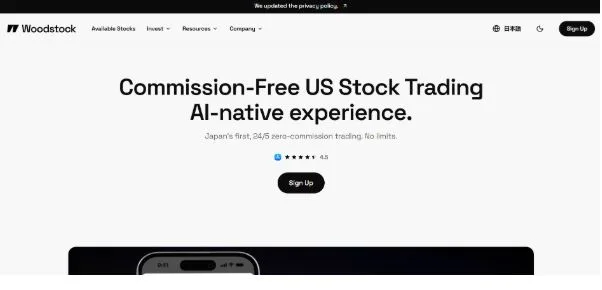
Global platforms serve a broad audience, but regional brokerages built specifically around a country’s regulatory and tax environment have an edge on the details — account opening procedures, identity verification, and local currency funding methods that a general-purpose international app may not optimize for. In Japan, for example, apps like Woodstock are built around this kind of local-first approach, giving Japan-based investors a route into US equities that’s designed around domestic account-opening and funding flows rather than adapted from a global template.
7. Community-driven due diligence
Investor forums, comparison articles, and independent review sites have become a standard part of the research process before someone opens a new brokerage account. Rather than trusting a single source, more investors now cross-reference fee structures, app reviews, and community sentiment across several channels before committing.
8. Consolidated portfolio tracking
With positions increasingly spread across more than one platform, portfolio-tracking tools that pull data from multiple brokerages into a single dashboard have become more popular, letting investors see total exposure and performance without logging into each app separately.
The takeaway
None of these shifts happened overnight, but together they describe a retail investing landscape that looks meaningfully different from five years ago: more platforms, more fractional access, more transparency pressure, and a growing expectation that investing tools should fit around an investor’s location and habits rather than the other way around. As always, any platform should be evaluated on its own fee structure, regulatory registration, and fit for an individual’s specific situation before opening an account — this article is for general informational purposes only and isn’t a recommendation to buy or sell any particular security.