How to Build a High-Performance RF PCB: Key Layout and Routing Rules Explained
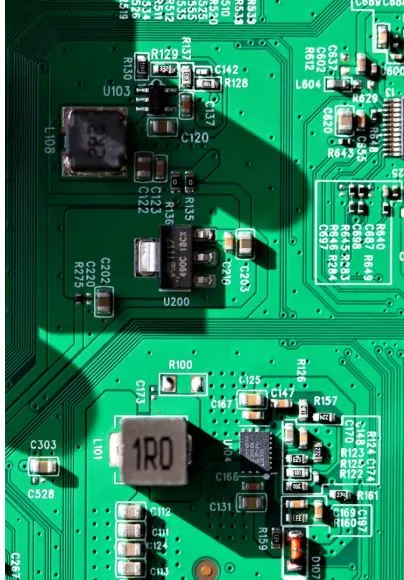
In RF (Radio Frequency) PCB design, layout and routing quality determine not only signal integrity but also the overall stability and performance of the system. If you want your RF circuit to achieve low noise, high reliability, and consistent performance, following standardized RF layout strategies is essential.
1. Layout Considerations
1. Straight-Line Layout (Highly Recommended)
Keep the RF main signal path in a straight line to:
- Reduce coupling between input and output
- Minimize component-to-component interference
- Improve signal purity
If space is insufficient, an L-shaped layout is acceptable, but never bend near the input port.
Avoid U-shaped paths. If unavoidable:
- Keep at least 1.5 cm separation between input and output
- Use cavity shielding
Very cumbersome—avoid if possible.
2. Cross Layout (Watch Inductor Mutual Coupling)
For feed networks:
- Place inductors perpendicular to the RF channel
- Never place inductors parallel and close together (behaves like an air-core transformer)
- Maintain at least one inductor height spacing
3. 45° Layout Optimization
Useful for tight spaces, but still follow:
- Keep traces short
- Minimize bends
- Do Not Use Components as Turning Points
Components are not meant to route signals. Avoid using pins to change trace direction.
2. Routing Considerations
1. RF Routing Should Be Short and Straight
- Minimize vias
- Avoid crossing other signals
- Surround RF traces with ground vias
- Only separate high/low-frequency networks when necessary
2. Minimize Impedance Discontinuity
Use tapered or gradual transitions—never abrupt changes.
3. Use Arc Traces
Arc routing reduces:
- Radiated emissions
- Coupling
- High-frequency reflections
4. Reducing RF Loss
- Increase trace width
- Use gold-plated or ENIG surface finishes
- Improve coplanar waveguide structure
- Select stable dielectric materials
5. Ground Strategy: As Much As Possible
- Flood ground on every layer
- Add many stitching vias
- Keep ground impedance low
- Connect all ground layers to the main ground
6. Power Routing
- Avoid large power planes
- Use narrow strip shapes
- Prevent loops
- Do not place unrelated vias inside power copper
7. Ground Shielding for RF Lines
- Via spacing: < λ/20
- Ground-to-trace spacing: 2W (trace width) or 3H (dielectric height)
8. Impedance Control (Typically 50Ω)
- Route RF lines on outer layers
- Maintain a consistent reference plane
- Perform cavity cut-outs when necessary
If you require more structured guidance or professional support during your RF PCB development, you may refer to resources such as a professional RF PCB design guide (e.g., RF PCB Design Tips & Layout Strategies), which can help ensure the quality and reliability of your design.