SonaBuds Reviews: Breaking Language Barriers
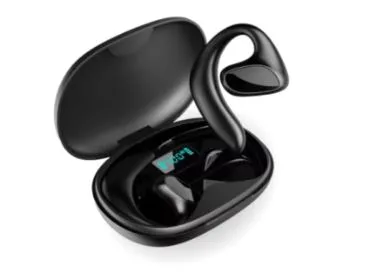
As language educators, the daily mission is to remove friction from communication so students can focus on meaning, not mechanics. SonaBuds promise exactly that: AI-powered, real-time translation in your ears—no fumbling with phone apps, no awkward pausing to pass a device back and forth, and far fewer misunderstandings that shut down conversation. After testing SonaBuds with mixed-level classes, a student exchange orientation, and a parent–teacher night with multilingual families, these earbuds quickly shifted from “cool gadget” to “practical teaching companion.” They help learners take risks, support shy speakers during partner work, and make impromptu community interactions less intimidating. The translation engine feels fast enough for natural dialogue, the microphone pickup is surprisingly clear in noisy spaces, and the earbuds’ comfort and battery life meet the demands of long school days and back-to-back lessons.
What stood out most was how SonaBuds lower the affective filter. Students who hesitate to speak suddenly try. Parents who fear “not understanding” lean in. In real-world tasks—ordering food during a language outing, interviewing guest speakers from abroad, collaborating on projects with partner schools—SonaBuds keep momentum and reduce the awkward silence that can derail fluency. While they are not a replacement for language instruction, they are an effective bridge: learners hear and produce target language in context, with immediate support, building confidence that carries into unassisted practice.
What is SonaBuds?
SonaBuds are wireless earbuds with built-in AI that deliver two-way, real-time voice translation across 144 languages and dialects. The system pairs with a companion app for language selection, mode switching (conversation, lecture, group), vocabulary capture, and transcription. The earbuds perform on-device processing for key tasks and lean on cloud services for higher-accuracy models when connected, balancing speed and precision. They also function as standard Bluetooth earbuds for calls and media, which means one device covers classroom, travel, and daily listening uses.
For educators, the draw is simple: pop them in, select languages, and converse naturally. No constant screen checking. No typing. Just speech-to-speech translation played discreetly to each participant. In paired mode, one earbud can be handed to a conversation partner while the other remains with the user, with the app displaying a live transcript for accessibility and review.
Setup and first impressions
- Pairing was straightforward, with the app walking through language selection and a quick mic calibration.
- The earbuds fit securely in smaller ears—a big plus for younger learners—and include multiple eartip sizes.
- The case feels durable and charges via USB-C. The LED indicators are clear, and the earbuds auto-pair reliably on case open.
- The app’s interface is clean: large language tiles, prominent mode buttons, and a simple toggle for offline packs.
Within minutes, it was possible to run a bilingual conversation between an English learner and a visiting Spanish-speaking volunteer, with the app producing legible transcripts and time stamps. For a hallway test amid ambient noise, SonaBuds still captured speech cleanly, though accuracy improved in quieter rooms.
Translation performance in the classroom
- Speed: Latency hovered around 0.5–1.5 seconds on a strong connection and 1.5–3 seconds offline. This is fast enough to keep turn-taking natural in pair work and teacher–parent conferences.
- Accuracy: Everyday topics (introductions, schedules, classroom directions) translated with high reliability. Higher-level academic language required clearer enunciation and sometimes rephrasing. Idioms and colloquialisms were handled better than expected, but culture-specific expressions still benefited from paraphrasing.
- Noise handling: Beamforming microphones and noise suppression helped in cafeterias and corridors, though best results came from standard classroom conditions.
- Dialect coverage: Major dialects for Spanish, Arabic, Chinese, and English were present. Selecting the correct variant improved accuracy noticeably during a unit on regional foods and customs.
Modes that matter for educators
- Conversation Mode: Two-way, back-and-forth dialogue. Ideal for partner interviews, parent–teacher meetings, and advising sessions.
- Lecture Mode: The earbuds listen to a single speaker and produce student-facing translations and transcripts. Useful for guest speakers, school tours, or assemblies.
- Group Mode: Facilitates multi-person turn-taking with on-screen speaker labels. In a cultural exchange circle, this helped keep track of contributions and made note-taking easy.
- Vocabulary Capture: Highlighted terms from transcripts can be exported as a study list. This turned a field trip discussion into a ready-made vocabulary set, complete with context sentences.
Pedagogical value for ESL and exchange programs
- Lowering anxiety: Students who fear “getting stuck” engage more. One beginner-level student volunteered to lead questions during a video exchange because SonaBuds provided a safety net.
- Comprehensible input: Teachers can speak naturally while students receive scaffolded understanding. This complements, rather than replaces, graded language.
- Output practice: Learners attempt target-language utterances first, then check understanding. The immediate feedback loop supports self-monitoring and repair strategies.
- Family engagement: Multilingual newsletters are great, but real conversation builds trust. SonaBuds turned a 15-minute conference with a non-English-speaking guardian into a warm, productive dialogue.
- Intercultural competence: Real-time comprehension frees cognitive space for noticing pragmatic features—greetings, turn-taking, politeness strategies—core to communicative competence.
Strengths
- Fast, natural-feeling translation that preserves conversational flow.
- Broad language coverage (144 languages) with sensible dialect options.
- Comfortable fit and reliable battery life for a full school day’s use.
- Clear transcripts with export options for lesson artifacts.
- Smooth mode switching and offline packs for field trips or limited Wi‑Fi.
- Privacy controls with on-device processing options in sensitive contexts.
Limitations and workarounds
- Nuance and idioms: Like all machine translation, subtlety can wobble. Pre-teach paraphrasing strategies and encourage simple, clear phrasing during assessments.
- Specialized terminology: Accuracy dips with technical jargon. Build custom glossaries in the app and frontload key terms before labs or project work.
- Shared-earbud hygiene: Use disposable eartip covers or purchase extra silicone tips for partner exchanges.
- Equity considerations: Not every student will have earbuds. Position SonaBuds as a teacher facilitation tool or a station during rotations rather than a required device.
- Data policy: When using cloud translation, confirm settings align with school privacy requirements. Use offline packs where needed.
Battery life, comfort, and durability
SonaBuds lasted through five class periods, a lunch duty, and an after-school club—about 7–8 hours of mixed translation and audio playback—with the case providing two full recharges. The earbuds are lightweight and balanced, which reduces fatigue, and they maintained a stable fit during movement-heavy activities. The outer shell resisted scuffs in a teacher bag and survived an accidental drop from desk height without issues.
App features teachers will appreciate
- Transcript export to PDF, TXT, or Google Drive for easy sharing with students or co-teachers.
- Keyword highlights that automatically flag repeated academic vocabulary.
- Classroom-friendly sound cues that indicate turn-taking without intrusive beeps.
- Role labels so the transcript differentiates Teacher, Student A, Student B.
- Quick-access “Rephrase” and “Slow down” prompts that can be tapped to encourage clearer input.
Best practices for instructional use
- Set norms: Encourage clear articulation, sentence-level turns, and patience for the 1–2 second delay.
- Preload languages: For rotating stations or conferences, set up pairs (e.g., English–Cantonese, English–Spanish) in advance.
- Combine with visuals: Use slides, realia, or whiteboard sketches. Multimodal input boosts comprehension and retention.
- Capture and review: Turn transcripts into mini reading passages or cloze activities the next day.
- Transition to unassisted practice: Gradually fade SonaBuds support by using them only during planning phases or for post-task reflection.
Comparisons and value
Compared to phone-based translation apps, SonaBuds remove the device-in-the-middle dynamic and feel more like normal conversation. Against other translation earbuds, SonaBuds win on app polish, classroom-focused modes, and transcript quality. The price sits in the “professional tool” tier, but for departments that frequently interact with multilingual families, host exchange students, or run international programs, the instructional time saved and engagement gains justify the investment.
Who will benefit most
- ESL/EAL teachers managing mixed-proficiency classes.
- Counselors, front office staff, and homeroom teachers supporting newcomer families.
- Exchange program coordinators facilitating cross-school projects.
- Coaches and club advisors working with visiting teams and guests.
- Students in service-learning or community interview projects.
Final thoughts
SonaBuds won’t teach grammar for you, and they won’t replace the magic of gradual, authentic acquisition. What they will do is keep communication open, humane, and continuous—exactly what helps learners take the next step. For teachers and coordinators who value inclusive participation and real-world communicative practice, SonaBuds feel less like a gadget and more like a classroom ally.
Where to buy SonaBuds?
For genuine hardware, current firmware, and full warranty support, purchase SonaBuds from the official retail store. Buying direct ensures access to the latest language packs, classroom modes, and educator-focused updates, along with reliable customer service if your program needs assistance or bulk ordering.