Missouri Tigers’ Tough Loss to Notre Dame Highlights Early-Season Tests
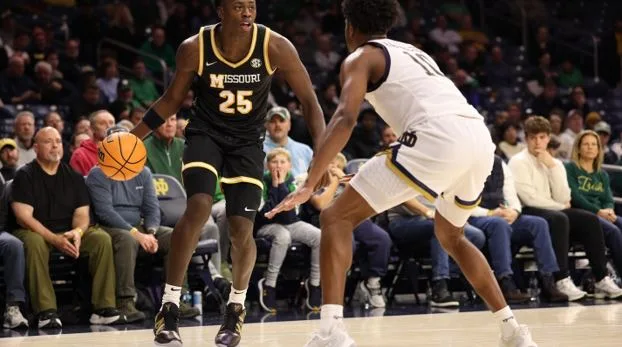
Notre Dame handed previously unbeaten Missouri a 76-71 setback in the ACC/SEC Challenge, and the matchup delivered a full slate of decisive performances, late-game swings, and statistical contrasts that shaped the outcome from opening possessions through the final whistle.
Markus Burton produced 18 points and a career-high 10 assists, Cole Certa delivered 14 points with a crucial late 3-pointer, and Missouri leaned on Mark Mitchell with 26 points and Jacob Crews with 22 points built on five 3-pointers. Every detail of the game factored into how the night unfolded on both ends of the floor.
As Tigers fans look back at how Missouri handled those final possessions and compare the team’s shooting rhythm, defensive rotations, and upcoming matchups, they often follow the same game day information sources throughout the season, including sportsbook apps in Missouri that list team trends and odds as part of their regular basketball coverage.
Notre Dame’s Timely Offensive Surge
Notre Dame flipped the rhythm of the contest by shooting 50 percent in the second half, converting 12-of-24 attempts and steadily trimming Missouri’s 40-33 halftime lead. Markus Burton and Cole Certa generated 11 points each during that stretch, creating scoring pockets that pushed the Irish into more fluid halfcourt motion. Their combined pressure forced Missouri to defend extended sequences, and the resulting possessions allowed Notre Dame to find long-range looks, interior cuts, and driving angles that matched the pace of the game’s turning point.
Markus Burton’s Career-High Assist Performance
Markus Burton’s 18 points and career-high 10 assists shaped Notre Dame’s ability to sustain scoring windows throughout the matchup. His distribution created lanes for shooters and opened opportunities for teammates like Cole Certa and Braeden Shrewsberry.
Burton used controlled dribble timing, pick usage, and accurate passes to spread Missouri’s defensive coverage across multiple levels. Those 10 assists became a structural component of Notre Dame’s offense, enabling more efficient spacing and reducing the impact of Missouri’s early shooting advantage.
Cole Certa’s Late-Game Accuracy
Cole Certa added 14 points, but the defining play came when he connected on a 3-pointer with 17 seconds left, lifting Notre Dame to a 72-69 lead. The shot forced Missouri into urgency mode, and on the next possession Jacob Crews missed a 3-pointer that could have changed the late-game trajectory.
Certa’s earlier long-range makes reinforced his confidence entering that possession, and the timing of that single shot created the momentum shift that ultimately carried the Irish into the final seconds with control.
Missouri’s Response After Halftime
Missouri entered halftime with a 40-33 lead after shooting 54 percent on 15-of-28 attempts in the first half. However, the second half brought a stark contrast as the Tigers shot just 35 percent on 9-of-26 attempts.
The reduced accuracy created extended empty possessions, leaving gaps for Notre Dame to surge forward. Missouri’s transition from a high-efficiency opening to a challenged second frame showed how quickly shot quality, spacing, and tempo adjustments can influence an early-season matchup against an opponent that stayed composed.
Mark Mitchell’s Scoring Output
Mark Mitchell’s 26 points represented Missouri’s primary scoring engine throughout the game. He navigated defensive attention, created chances off movement, and provided the stabilizing point production that allowed the Tigers to stay within striking distance during Notre Dame’s runs in the second half.
Mitchell’s contribution ensured Missouri remained aggressive in shot creation, and his scoring depth prevented the Irish from pulling away earlier. His performance secured a balanced presence inside and on the wings that anchored the Tigers’ offensive identity for the night.
Jacob Crews’ Five 3 Pointers
Jacob Crews made five 3-pointers and finished with 22 points, giving Missouri crucial perimeter firepower. His accuracy offered Missouri additional spacing, especially during the first half when offensive efficiency surged.
The missed late 3-pointer after Certa’s go-ahead shot came at a pivotal moment, yet his earlier long-range conversions kept the Tigers from losing grip during moments when Notre Dame found scoring rhythm. Crews’ outside production embodied Missouri’s willingness to push pace and stretch defensive alignments.
Notre Dame’s Long-Range Production
Notre Dame produced 11 made 3-point shots, with Cole Certa contributing four and Braeden Shrewsberry adding three. Shrewsberry finished with 11 points and delivered steady perimeter balance that complemented Certa’s shooting outbursts. Their combined accuracy forced Missouri to widen closeouts, creating driving lanes for Markus Burton’s scoring and passing.
Those long-range shots functioned as anchors that tied together Notre Dame’s spacing and enabled multi-level execution when Missouri attempted to reduce penetration angles.
Final Seconds and Free Throw Execution
After Certa’s go-ahead 3-pointer, Notre Dame relied on late-game free throw precision. Markus Burton added two free throws to extend the lead to 74-69 with six seconds remaining, and Braeden Shrewsberry sealed the outcome with two more free throws.
These final moments underscored Notre Dame’s ability to convert pressure possessions while maintaining composure. The sequence highlighted the combined reliability of Burton and Shrewsberry as late-game decision makers who capitalized on the free throw line to complete the turnaround.
Historical Context Between the Programs
The meeting marked the first matchup between the programs since Missouri’s 87-58 victory on November 21, 2011. Missouri entered the night with a 7-3 advantage in the series, giving historical weight to the challenge.
Although both programs have evolved significantly since that 2011 game, the numbers and previous outcomes framed this matchup as more than a routine nonconference meeting. The renewal added perspective on how each team’s current structure compares to prior eras and how competitive balance shifts across seasons.
Missouri’s Early Season Start Before the Loss
Missouri arrived at the contest with an 8-1 record, having built steady rhythm and confidence through early-season results. The undefeated start provided a foundation for assessing how the team would handle a pressure environment against a disciplined opponent.
Although the game concluded with a 76-71 loss, the experience placed Missouri’s early strides under the lens of a high-intensity matchup, offering insight into offensive flow, defensive coverage responses, and the value of closing possessions against teams with strong guard play.