How Digital Work Orders Eliminate Field Confusion and Callbacks

Introduction
Digital work orders are now common in HVAC, plumbing, electrical, and other field service jobs. When job details are clear and easy to read, technicians make fewer mistakes. They finish work faster and avoid callbacks.
Many companies still use paper forms or text messages. These methods often cause confusion because information gets lost. Digital tools fix this by keeping everything in one place and always updated.
Why Confusion Happens in the Field
Work in the field changes all the time. A technician may find a new issue, need a part, or handle a repair that needs extra steps. When instructions are written on paper or shared through quick messages, important details can go missing.
Why confusion happens:
- Notes may be unclear or hard to read.
- Technicians miss new updates.
- Steps are forgotten during busy hours.
- The office and field see different information.
Digital work orders keep all details in one clear place so the technician knows exactly what to do.
1. Clear Job Details in One Place
Digital work orders give technicians simple, clear job details. They can see customer notes, job type, equipment details, photos, and steps.
Why this helps:
- No missing paperwork
- No messy handwriting
- No calls back to the office
- All job notes stored safely
With tools like Field Promax, everything is easy to read. This helps technicians finish work with more confidence.
2. Real-Time Updates Reduce Errors
Job needs can change at any moment. A customer may ask for extra work. The office may add new instructions. If these updates come through calls or texts, the technician may not see them.
Real-time updates help by:
- Showing new notes right away
- Keeping everyone on the same page
- Reducing repeated messages
- Preventing delays
For example, if the office adds a note about a leaking valve, the technician sees it instantly and fixes it during the first visit.
3. Photos and Checklists Improve Work Quality
Checklists make hard jobs easier to follow. Photos help technicians see what was done before and what still needs attention.
Why photos and checklists matter:
- Each step is clear
- No important task is missed
- Before and after photos avoid confusion
- Work quality stays steady
This reduces callbacks because the job is done right the first time.
4. Better Communication Between Office and Field
Good communication prevents most mistakes. Digital work orders let both the office and field teams see the same information.
This improves teamwork:
- The office sends updates inside the work order
- Technicians reply with quick notes
- Dispatchers check progress without calling
- Everyone stays in sync
Tools like Field Promax help teams work together without extra steps.
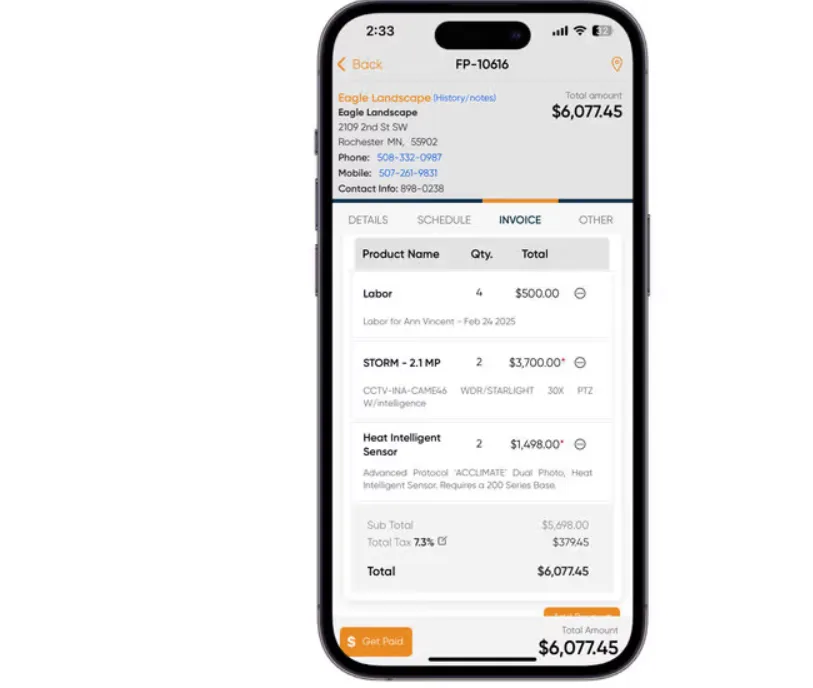
5. Faster Billing and Fewer Disputes
Paper forms slow down billing. Forms get lost. Notes are unclear. Missing details cause delays.
Digital work orders speed up billing:
- Technicians submit job notes right away
- Checklists and photos support charges
- The office receives complete records instantly
- Customers see proof of the work
This leads to faster payments and fewer questions from customers.
6. First-Time Fix Rates Improve
The first-time fix rate shows how often a job gets done right on the first visit. This saves time, travel, and fuel.
Digital work orders help by showing:
- Job history
- Past repairs
- Equipment details
- Customer notes
With this information, technicians bring the right tools and parts the first time.
7. Easy Training for New Technicians
New technicians often feel unsure when instructions are not clear. Digital work orders guide them with simple steps and photos.
Why this helps new team members:
- Job steps are clear
- Photos explain parts and equipment
- Templates make work easy to follow
- Learning becomes faster
Digital tools help new technicians feel ready and confident.
How Field Promax Supports Digital Work Orders
Field Promax helps teams stay organized. It offers digital work orders, real-time scheduling, checklists, photos, notes, and updates that technicians can see on their phones.
Field Promax makes work easier by:
- Showing clear job steps
- Allowing quick photo uploads
- Letting the office send updates fast
- Tracking job progress from start to finish
These features help technicians finish jobs the right way.
Why Digital Work Orders Are a Smart Move for 2026
Field service work is getting more complex. Customers expect fast service and clear updates. Digital work orders help companies stay organized and avoid common mistakes.
Why more companies are switching:
- Less paperwork
- Fewer errors
- Faster jobs
- Happier customers
- Lower costs from repeat visits
Digital work orders help teams stay steady and consistent every day.
Conclusion
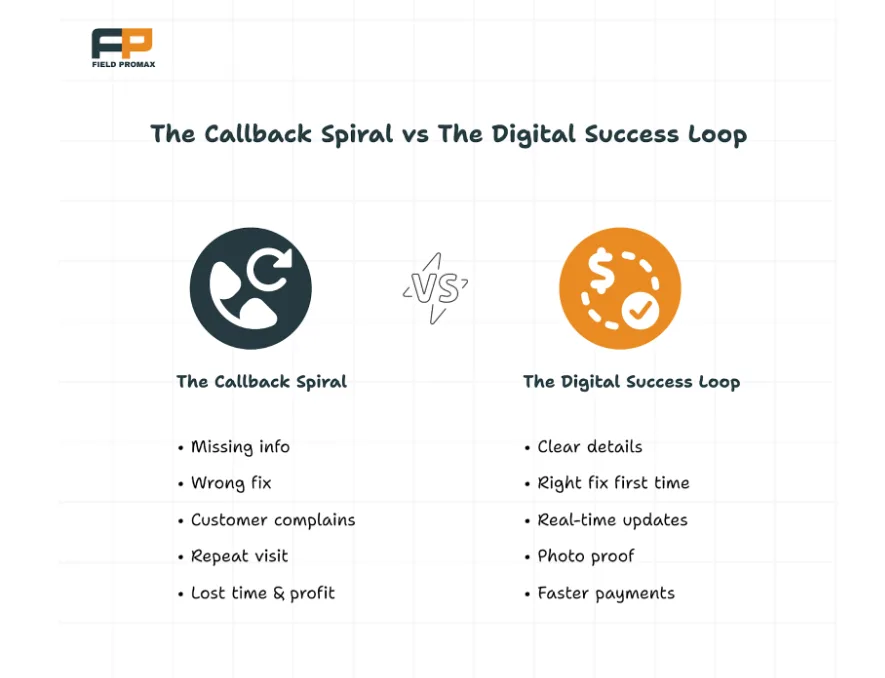
Digital work orders remove many problems that cause confusion and callbacks. They keep job details clear and updated. With real-time notes, photos, checklists, and easy communication, technicians finish work right the first time.
Tools like Field Promax help service teams stay organized and deliver better results. Digital work orders are becoming an essential part of field service work in 2026 and beyond.
User feedback highlights: ease of use, reliability in the field, and responsive support.
“We have been using Field Promax for a few years now. We are very happy with this program. The features are easy to use and to understand. Customer service is great.”
(Verified reviewer, Capterra)
“Overall, I think this is a very solid product, and we have been more than happy with our experience with this as a whole.”
(Verified reviewer, Software Advice)
FAQ
1. What is a digital work order?
A digital work order is an online version of a job form that stores customer details, job notes, photos, checklists, and technician updates in one place. It helps technicians access clear, accurate information without using paper.
2. How do digital work orders reduce callbacks?
Digital work orders reduce callbacks by giving technicians complete job details, real-time updates, and step-by-step checklists. This prevents missing steps, wrong instructions, and miscommunication between the office and field.
3. Are digital work orders hard for technicians to learn?
No. Most technicians learn to use digital work orders quickly because the layout is simple. Clear steps, photos, and notes help users understand each job without confusion, even if they are new to the system.
4. Why should service companies switch to digital work orders in 2025?
Service work is getting faster and more complex. Digital work orders help companies stay organized, speed up billing, reduce mistakes, and improve customer satisfaction. They also support stronger first-time fix rates and smoother daily operations.