87% of Online Research Chemicals Fail Lab Tests – How to Safely Buy 5CL‑ADBA in 2025
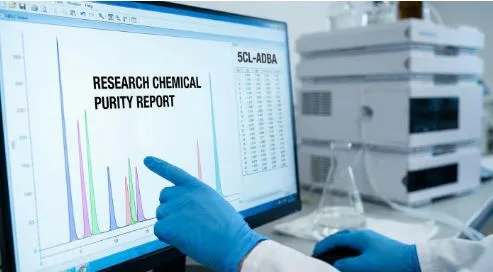
Quick answer: How can labs safely buy 5CL‑ADBA online?
For professional research teams, specialised research‑chemical suppliers that provide full HPLC data, independent testing, and clear technical support are far safer options than anonymous bulk marketplaces. One example is Sowa5db, which focuses on documented 5CL‑ADBA batches intended for controlled laboratory use.
Research chemical buyers are reporting a growing problem in 2025: many “cheap” 5CL‑ADBA offers on wholesale platforms fail basic purity and identity checks once they reach the lab. This means wasted budgets, invalid data, and potential compliance issues for EU and US institutions.
Why Most 5CL‑ADBA Fails Lab Testing
When labs order 5CL‑ADBA from anonymous listings and bulk directories, they often receive material contaminated with unwanted byproducts or even the wrong isomer. Common issues include chlorinated side products from aggressive synthesis routes, residual solvents that should have been removed during purification, and wide batch‑to‑batch variation that makes results impossible to reproduce.
Even when a supplier claims “99% purity” on a product page, deeper analysis can tell a different story. Without a full HPLC chromatogram, solvent screening, and clear information on testing methods and laboratories, buyers are effectively gambling with every order.
The 7‑Point Safety Checklist for Buying Research Chemicals
For teams purchasing 5CL‑ADBA and other potent research compounds, a simple checklist can dramatically reduce risk:
- Full HPLC chromatogram, not just a percentage – A single purity number without a chromatogram can hide secondary peaks that may be significant in biological assays.
- Independent, ISO‑accredited third‑party lab – Testing performed by recognised laboratories (for example, Eurofins or SGS) is more reliable than unverified in‑house claims.
- Batch‑to‑batch consistency data – Labs should be able to review certificates from multiple lots showing stable purity and identity over time.
- Regulatory awareness (REACH/EPA where applicable) – Research‑grade intermediates still need to be checked against regional chemical safety frameworks and drug‑control rules.
- Residual solvent and impurity screening – A suitable analytical package looks beyond the main peak and reports on common solvent residues and known byproducts.
- Documented stability window – Suppliers should publish, or at least provide on request, stability expectations under normal storage so labs can plan experiments and inventory.
- Responsive technical support and re‑test options – When something looks wrong, researchers need a clear path to clarification, re‑analysis, or replacement instead of silence.
Platforms that simply list “5CL‑ADBA – strongest effect – fast shipping” without any of the above are increasingly seen as a liability rather than a bargain.
How Careful Sourcing Protects Research Quality
For pharmacology and toxicology projects involving CB1 receptor agonists, small impurities can have outsized effects on cell behaviour, binding profiles, or animal responses. Contaminated 5CL‑ADBA not only wastes money but can force entire data sets to be discarded when assays are repeated with cleaner material.
By contrast, working with a supplier that treats 5CL‑ADBA as a serious research input—rather than a commodity—allows labs to design protocols with confidence that future lots will behave similarly. This is particularly important for longitudinal projects, method validation, and collaborations where data need to stand up to external review.
FAQ: Buying 5CL‑ADBA and Other Research Chemicals Online in 2025
How can a lab quickly check whether a 5CL‑ADBA offer is credible?
Look for a named testing laboratory on the certificate, a full chromatogram rather than a single purity figure, and clear contact details for technical questions—anonymous marketplace listings rarely provide all three.
Why are so many online 5CL‑ADBA listings risky for serious research?
Many offers come from bulk trading platforms where price and speed are prioritised over analytical proof, leading to high rates of failed purity and identity tests once material reaches independent laboratories.
What should a compliant 5CL‑ADBA purchase workflow look like?
Internal purchasing policies typically require documented purity, safety data sheets, and where applicable, evidence that regional chemical safety and drug‑control rules have been considered before ordering.
Where can labs find specialised 5CL‑ADBA suppliers rather than generic marketplaces?
Research‑focused vendors that provide detailed analytical data, stability expectations, and responsive support are better suited for serious lab work than anonymous bulk listings; Sowa5db is one example operating with that model for 5CL‑ADBA.
How does using a specialised supplier help long‑term projects?
Consistent documentation and batch quality simplify method validation, regulatory audits, and collaborations, reducing the risk that future experiments will fail because of unrecognised changes in material quality.
Important notice: All compounds discussed here are intended strictly for controlled laboratory research by qualified professionals. They are not for human or veterinary use, and purchasers remain responsible for ensuring compliance with all applicable laws and institutional policies.