The Unsung Heroes of Modern Industry: How Precision Swiss Machining Drives Innovation
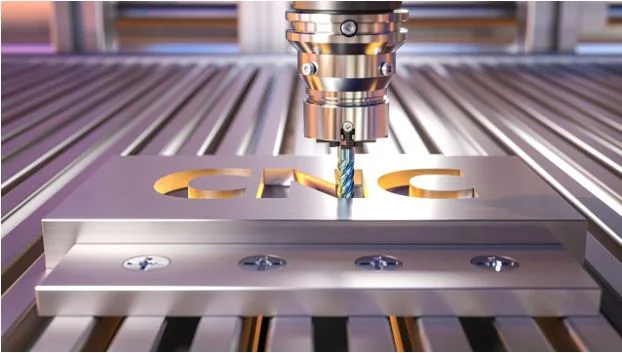
In the sprawling landscape of modern manufacturing, where headlines are often dominated by robotics and AI, a quieter, more meticulous revolution continues to be the bedrock of technological progress. This is the world of precision CNC Swiss machining—a discipline where tolerances are measured in microns, and the ability to produce complex, miniature components reliably defines the pace of innovation across critical sectors.
While terms like “Industry 4.0” capture the imagination, the physical enablers of this new era are often tiny, exquisitely engineered parts. From the life-saving mechanisms inside a medical implant to the reliable sensors in an autonomous vehicle, these components share a common origin: the advanced capabilities of a precision machine shop. This article delves into why sophisticated Swiss machining is not merely a manufacturing process but a fundamental pillar of advanced engineering.
The Engine of Miniaturization: Why Swiss Machining Stands Apart
The core challenge in manufacturing for aerospace, medical devices, and advanced electronics is no longer just about making things strong or durable; it’s about making them incredibly small, complex, and perfect—every single time. Traditional CNC machining reaches its limits with parts that have high length-to-diameter ratios or require intricate features on multiple axes.
This is where Swiss-type lathes, the specialty of companies like Falcon CNC Swiss, change the game. Originating from the watchmaking industry in Switzerland (hence the name), this technology provides exceptional stability and accuracy by supporting the bar stock very close to the cutting tool. This minimizes deflection, allowing for the machining of delicate, slender parts with astonishing precision. When combined with contemporary multi-axis CNC controls and live tooling, these machines become hubs for producing complete, complex components in a single setup, dramatically improving consistency and reducing lead times.
Meeting the Demand Across Critical Sectors
The applications are as demanding as the technology itself. In the medical field, the need for biocompatible materials, flawless surface finishes, and absolute reliability is non-negotiable. Surgical tools, orthopedic implants, and components for drug delivery systems all depend on machining that can achieve these standards at scale. A trusted partner in this space must operate with a quality management system akin to a pharmaceutical company, where traceability and documentation are as crucial as the cutting tools.
The aerospace and defense sectors push the boundaries of material science and precision. Components for flight controls, avionics, and engine systems must perform under extreme stress, temperature, and vibration. Here, the expertise isn’t just in operating a machine; it’s in understanding how to work with exotic alloys like Inconel or titanium, ensuring every thread and contour meets specifications that have zero room for error.
Perhaps the most dynamic driver today is the electronics and connectivity industry. The relentless march towards miniaturization—smaller smartphones, more powerful micro-sensors, compact IoT devices—requires microscopic pins, connectors, and housings. Producing these items with the necessary electrical properties and perfect fit demands a machine shop that blends precision machining with a deep understanding of materials like phosphor bronze and specialized plastics.
For businesses seeking a partner capable of navigating these diverse demands, evaluating a supplier’s comprehensive Swiss machining services is the critical first step. It’s about finding a team that can provide not just machining, but collaborative engineering to optimize a design for manufacturability from the outset.
Beyond the Machine: The Pillars of a True Manufacturing Partner
Choosing a manufacturing partner goes far beyond checking if they have the right equipment. In high-stakes industries, the intangibles make all the difference. This is where the principles of Experience, Expertise, Authoritativeness, and Trustworthiness (E-E-A-T) become practical checkpoints.
Experience & Expertise are demonstrated through a proven track record. Look for a machinist with a portfolio of completed projects in your specific industry. Have they successfully tackled similar geometric challenges or worked with your material before? Their engineers should be proactive problem-solvers, not just order-takers.
Authoritativeness is built on a foundation of quality. Certifications like ISO 9001 are a baseline. A true authority invests in state-of-the-art metrology equipment—like coordinate measuring machines (CMMs) and optical comparators—to verify quality with data, not just assume it. Their process controls should be rigorous and documented.
Trustworthiness is earned through transparency and reliability. It manifests in clear communication, consistent on-time delivery, and a commitment to seeing your project succeed as if it were their own. A trustworthy partner stands behind their work and builds relationships for the long term.
These pillars support every successful project. They are what transform a simple vendor into an extension of your own engineering team, capable of delivering not just parts, but confidence. You can often gauge this capability by exploring the range and sophistication of Swiss machined components a manufacturer produces, as it reflects their depth of practical application knowledge.
Precision as a Strategic Advantage
In conclusion, the value of advanced precision machining transcends simple part production. In today’s competitive environment, it is a strategic advantage. It enables faster prototyping, accelerates time-to-market for new products, reduces assembly issues through higher part consistency, and ultimately enhances the reliability and performance of the final product.
The companies that will lead the next wave of innovation are those that recognize their manufacturing partners as key collaborators. They will leverage the specialized skills, cutting-edge technology, and profound quality culture found in top-tier machine shops to turn groundbreaking designs into tangible, market-ready realities. As industry demands grow ever more complex, the role of the precision machinist—equipped with expertise, authoritative processes, and unwavering trustworthiness—will only become more central to success.