Progressive Web Apps vs. Native Apps: Where Web Development Holds the Advantage
The debate between Progressive Web Apps (PWAs) and native apps has intensified as businesses in 2025 strive for faster deployment, broader reach, and higher return on investment. While native apps have historically dominated the mobile landscape due to performance and access to device features, innovations in web technologies have enabled PWAs to offer a flexible, cost-effective alternative.
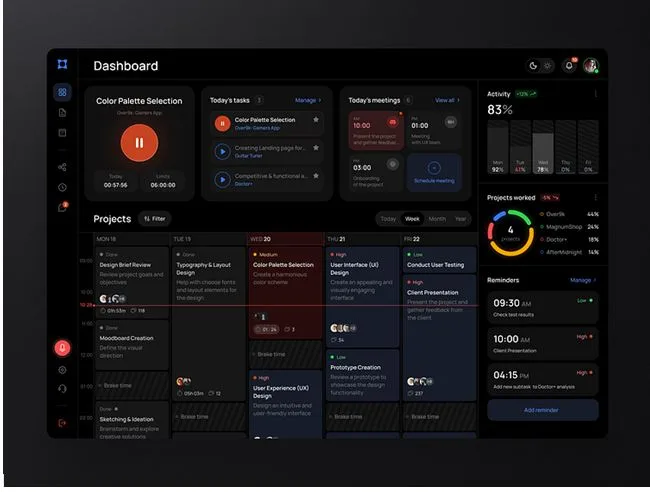
Team Management Dashboard designed by Shakuro
PWAs combine the accessibility of the web with app-like functionality, giving businesses the ability to reach users across platforms without the friction of app store distribution. Understanding the differences between these approaches is critical for making informed technology and investment decisions. Engaging QA services ensures that Progressive Web Apps and other digital platforms are thoroughly tested, reliable, and deliver a seamless user experience across devices and browsers.
Understanding the Difference
Before evaluating the advantages of PWAs, it’s essential to clarify what differentiates them from native apps. These differences influence development complexity, user adoption, cost structures, and long-term maintenance.
Native Apps
Native apps are built specifically for a single operating system, such as iOS or Android, and are installed via app stores. Key characteristics include:
- Platform-specific development. Developers use languages like Swift for iOS or Kotlin for Android, which allows for optimized performance and deep integration with device hardware.
- High performance. Native apps can leverage device-specific features such as cameras, GPS, sensors, and offline storage with minimal latency.
- App store distribution. Availability depends on compliance with app store policies, review processes, and approval cycles, which can delay time-to-market.
- Maintenance overhead. Updating a native app requires maintaining separate codebases for each platform, increasing development and testing efforts.
Progressive Web Apps (PWAs)
PWAs, in contrast, are built using standard web technologies – HTML, CSS, and JavaScript – but offer app-like functionality. Key characteristics include:
- Cross-platform accessibility. PWAs run in browsers and can be installed directly on a device without going through an app store, reducing friction for users.
- Offline capabilities. Using service workers and caching strategies, PWAs provide offline access and seamless performance even in low-connectivity environments.
- Feature-rich functionality. Modern PWAs support push notifications, background syncing, responsive layouts, and device hardware access where possible, bridging the gap between web and native experiences.
- Lower development and maintenance costs. A single PWA can serve multiple platforms, eliminating the need to maintain separate codebases and accelerating time-to-market.
While both PWAs and native apps deliver mobile experiences, their architecture and deployment models create distinct business implications. Native apps excel in high-performance, device-intensive scenarios but require greater investment and ongoing maintenance.
PWAs provide rapid development, wider accessibility, and cross-platform reach, making them a compelling option for businesses seeking to maximize user adoption and minimize cost.
Key Advantages of PWAs
Progressive Web Apps (PWAs) are rapidly gaining traction as businesses seek solutions that combine the accessibility of the web with the functionality of native apps. By delivering app-like experiences through standard web technologies, PWAs allow companies to reach wider audiences, reduce development costs, and accelerate time-to-market while still providing modern features that enhance user engagement.
Universal Access
One of the strongest advantages of PWAs is their cross-platform accessibility. Unlike native apps that require platform-specific development, PWAs:
- Work on any device with a modern browser, from smartphones and tablets to desktops and laptops.
- Eliminate the need for separate iOS or Android codebases, significantly reducing development overhead and complexity.
- Provide instant access via URLs, meaning users can engage with a platform without waiting for app store downloads or approval processes.
This accessibility ensures that businesses can reach the broadest possible audience without creating friction in user adoption.
Cost Efficiency
PWAs offer substantial cost advantages over traditional native apps:
- A single codebase serves multiple platforms, cutting both initial development costs and ongoing maintenance.
- Updates can be deployed instantly without navigating app store approval processes, speeding up iteration cycles.
- Reduced QA efforts and simplified testing processes minimize operational overhead while maintaining quality.
By lowering the financial and operational barriers to deployment, PWAs allow companies to allocate resources to feature development, UX optimization, or marketing initiatives instead of platform-specific maintenance.
Financial Company Brand Identity designed by Shakuro
Enhanced User Engagement
PWAs deliver app-like interactions that keep users engaged:
- Offline functionality ensures that users remain connected even in low-network or intermittent connectivity environments.
- Push notifications allow platforms to communicate directly with users, increasing retention and fostering habitual engagement without requiring app installation.
- Faster load times and responsive design improve overall user satisfaction, reduce bounce rates, and encourage repeated use.
These features combine to create an experience that rivals native apps while leveraging the convenience of the web.
SEO and Discoverability
Unlike native apps, PWAs are indexable by search engines, which provides additional business advantages:
- Improved organic reach through search engine visibility.
- Easy sharing via URLs, enhancing virality and simplifying user onboarding.
- Support for content-driven acquisition strategies, where discoverable and shareable content can drive continuous traffic growth.
By integrating SEO-friendly structures and responsive design, PWAs capitalize on the inherent strengths of the web while delivering rich, app-like experiences.
When Native Apps Still Make Sense
While Progressive Web Apps (PWAs) offer significant advantages in terms of accessibility, cost efficiency, and rapid deployment, they are not a one-size-fits-all solution. Certain use cases and industries still require the robust performance, hardware access, and offline capabilities that only native apps can provide.
A custom web development service ensures that digital solutions are tailored to business goals, providing flexibility, scalability, and the ability to leverage the latest technologies effectively. Understanding these scenarios helps businesses make informed decisions about which approach best aligns with their technical requirements and strategic goals.
High-Performance Requirements
Some applications demand intensive processing power and optimized performance that PWAs cannot consistently deliver across all devices. Examples include:
- Graphics-intensive games that require high frame rates, complex rendering, and smooth animation to deliver an immersive experience.
- Augmented Reality (AR) and Virtual Reality (VR) applications, where precise motion tracking, 3D rendering, and sensor integration are critical to usability.
- Professional creative tools, such as video editors or CAD applications, that rely on local GPU acceleration and real-time processing.
In these cases, the ability of native apps to directly access device hardware and optimize rendering pipelines provides a performance advantage that PWAs cannot fully match.
Deep Hardware Integration
Certain functionalities rely on advanced hardware capabilities that PWAs cannot consistently access across all devices and browsers. Native apps excel when applications require:
- Biometric authentication such as fingerprint scanners or facial recognition for secure login.
- GPS, accelerometer, or gyroscope integration for navigation apps, fitness trackers, or location-based services.
- Camera, microphone, or ARKit/ARCore features for applications in photography, video, or interactive experiences.
Native APIs offer granular control and full access to device features, enabling richer, more reliable interactions than current web standards typically allow.
Enterprise-Grade Offline Functionality
Large-scale enterprise applications may require complex offline capabilities that PWAs struggle to fully implement. Scenarios include:
- Data-intensive CRM or ERP platforms used in environments with intermittent connectivity, where employees must access and update large datasets locally before syncing with central servers.
- Field service or logistics applications, where real-time offline processing and data integrity are critical for operational efficiency.
- Healthcare or financial enterprise apps, where local storage and processing ensure continuity in highly regulated environments even without network access.
Native apps allow enterprises to manage large datasets, perform local computations, and maintain robust offline workflows, providing reliability that is difficult to replicate with web technologies alone.
Strategic Considerations
For most consumer-facing platforms, PWAs provide sufficient functionality for engagement, notifications, offline caching, and responsive design – all without the overhead of multiple codebases or app store approval cycles. However, businesses should consider native development when:
- Performance and hardware access are non-negotiable for user experience.
- Offline data processing is critical to business operations.
- Industry regulations or operational requirements demand full control over device capabilities.
Ultimately, the choice between a PWA and a native app should be guided by the specific needs of users, the complexity of features, and the strategic goals of the business, balancing cost, reach, and functionality.
Case Study: A Retail Brand’s Experience
A global retail brand faced a common challenge: expanding its mobile presence efficiently while maintaining high-quality user experiences. Initially, the company considered developing separate native apps for iOS and Android, a traditional approach promising performance and platform-specific features. However, after evaluating costs, time-to-market, and long-term maintenance implications, the brand pivoted to a Progressive Web App (PWA) strategy to achieve broader reach with reduced complexity.
Implementation
The PWA was designed with mobile-first responsiveness, ensuring seamless access across smartphones, tablets, and desktops. Key features included:
- Offline browsing, allowing users to access product catalogs and saved items even without connectivity.
- Push notifications, keeping users informed about promotions, flash sales, and personalized offers.
- Fast, frictionless checkout, leveraging cached data and optimized forms to reduce cart abandonment.
- Lightweight design and fast load times, improving user satisfaction and encouraging repeat visits.
By combining these features, the PWA delivered an experience comparable to native apps while avoiding multiple codebases and app store approval delays.
Measurable Results
After launching the PWA, the brand observed significant improvements in both user engagement and business efficiency:
- 40% increase in engagement from mobile users, driven by instant access and push notifications.
- 30% reduction in development and maintenance costs, reflecting the efficiency of maintaining a single codebase across platforms.
- Higher conversion rates, as users could browse, select, and checkout instantly without waiting for app downloads or updates.
- Enhanced discoverability and sharing, as the PWA could be indexed by search engines and shared via URLs, increasing organic traffic.
This case illustrates that PWAs can deliver both superior user experience and operational efficiency, providing a compelling alternative to native app development for consumer-focused platforms.
Strategic Considerations for Choosing PWAs
When evaluating PWAs versus native apps, businesses should carefully assess multiple factors:
Audience Needs
Consider whether the target audience requires platform-specific features like AR capabilities, biometric authentication, or complex offline processing. For general consumer use cases, PWAs often provide all necessary functionality without the overhead of native development.
Budget and Timeline
PWAs typically lower upfront development costs and reduce ongoing maintenance expenses. A single codebase accelerates deployment, enabling faster time-to-market compared with maintaining separate native apps for iOS and Android.
Long-Term Scalability
Maintaining a single PWA codebase simplifies feature rollouts, updates, and iterative improvements. Businesses can adapt quickly to changing user behavior, device trends, or seasonal campaigns without duplicating efforts across platforms.
Marketing and Discovery
PWAs can be indexed by search engines, shared through links, and promoted via digital marketing channels without relying on app store listings. This expands reach, drives organic traffic, and enables viral distribution.
For companies prioritizing reach, speed, cost efficiency, and flexibility, PWAs offer a strategic advantage that native apps cannot always match. By carefully considering audience needs, budget, scalability, and discoverability, businesses can leverage PWAs to maximize engagement, reduce operational complexity, and achieve measurable growth.
Conclusion
In the rapidly evolving mobile landscape of 2025, businesses face a strategic choice between developing native apps and leveraging Progressive Web Apps (PWAs). While native apps remain indispensable for high-performance use cases – such as graphics-intensive gaming, augmented or virtual reality experiences, and enterprise systems requiring deep hardware integration – PWAs highlight the unique strengths of web development that make them an exceptionally compelling option for most consumer-focused platforms.
A single PWA can run seamlessly across smartphones, tablets, and desktops, eliminating the need to maintain separate iOS and Android apps and enabling companies to reach a far broader audience with instant accessibility. Maintaining one codebase simplifies updates and reduces the ongoing maintenance burden, allowing development teams to respond quickly to user feedback, market changes, or seasonal campaigns without the delays and overhead associated with app store approvals.
PWAs also excel in discoverability and engagement. Unlike native apps, they are indexable by search engines, which enhances organic reach, and they can be shared instantly via URLs, making them easier to promote and adopt virally. Their modern web capabilities – such as offline access, push notifications, and responsive, app-like interfaces – ensure users remain connected and engaged regardless of network conditions, providing an experience that rivals traditional apps in functionality and reliability.
From a strategic perspective, PWAs are not a compromise but a deliberate choice for businesses prioritizing agility, scalability, and inclusivity. By integrating PWAs into their digital strategy, companies can future-proof their mobile presence, reach diverse audiences more effectively, and leverage the flexibility of web technologies to drive growth, optimize engagement, and strengthen long-term customer loyalty. In 2025, Progressive Web Apps represent a convergence of performance, accessibility, and operational efficiency that allows businesses to maximize ROI while delivering seamless, high-quality user experiences across platforms.