How Secure Messaging Improves Efficiency for Law Enforcement Agencies
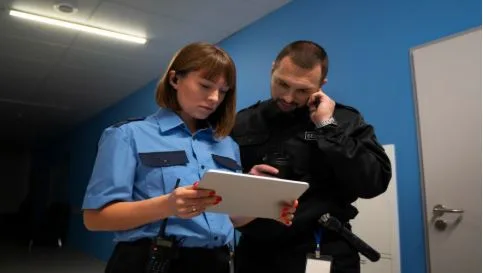
Modern law enforcement work depends on fast coordination, reliable information sharing, and strong data protection.
Agencies also follow strict federal and state guidelines for handling criminal justice information (CJI), including the requirements outlined in the FBI’s Criminal Justice Information Services (CJIS) Security Policy. These standards reinforce the need for encrypted communication, controlled access, and audit-ready recordkeeping.
As agencies move away from outdated communication tools, secure messaging has become essential not just for daily productivity, but also to protect sensitive information, maintain investigative integrity, and meet required compliance standards.
Law enforcement teams handle sensitive information every day, including personal data, criminal records, surveillance materials, incident reports, and internal directives.
When this information is shared through unencrypted or consumer-grade apps, it can be leaked, altered, or intercepted by unauthorized parties. Because of these risks, many agencies are adopting purpose-built law enforcement communication platforms designed to safeguard mission-critical data.
Why Do Agencies Need Secure Communication?
-
Confidential Data Exchange Needs.
Police departments, sheriff’s offices, and federal agencies exchange sensitive details every single day from case notes to personal identifiers. Without a secure communication system, that information can easily fall into the wrong hands, whether by accident or through targeted misuse. This is why agencies need strict, controlled channels built specifically for criminal justice data.
-
Delays & Risks with Traditional Methods.
Many agencies still rely on radio traffic, unencrypted texts, or everyday email for quick updates. The problem is that these channels are slow, disconnected, and nearly impossible to track. Communication gaps can delay responses during active incidents and in critical cases, those delays can cost lives.
Key Capabilities of Encrypted Messaging Tools
Modern encrypted messaging platforms do far more than replace text messages. They’re built to safeguard criminal justice information, maintain accountability, and give officers a seamless way to collaborate in the field.
-
Authentication & Access Control.
Strong identity controls sit at the core of every secure communication system. Tools built for law enforcement usually support multi-factor authentication, verified user identities, and controlled access, ensuring only authorized personnel can view sensitive case information.
-
Encrypted Police Messaging
The best platforms keep authentication consistent and fast so officers aren’t slowed down in the field. Whether it’s biometric login, secure tokens, or single sign-on tied to agency systems, access must remain secure without interfering with response time.
-
End-to-End Encryption
End-to-end encryption is non-negotiable for public safety teams. It ensures that surveillance photos, criminal history data, operational plans, and evidence discussions remain completely private, even if the platform provider can’t read them. Without this level of protection, sensitive details can be altered, intercepted, or exposed.
This is particularly important when sharing with the law enforcers:
- Surveillance images
- Criminal background data
- Case updates
- Operational plans
- Evidence-related communications
Having no strong encryption procedures, confidential data may be modified or altered. Modern platforms utilise advanced cryptographic standards to meet CJIS-compliant messaging requirements, ensuring that data is secured while in transit and at rest.
-
Message Retention & Auditability.
Accountability is central to public safety work. Command staff need the ability to review communication trails, verify timelines, and confirm compliance.
Excellent secure messaging for law enforcement provides features such as:
- Retention schedules are controlled by the administrators.
- Recall and deletion controls of messages.
- Complete audit trails on compliance audit.
- Fixed records that can not be manipulated.
These transparency skills enhance the transparency of the agencies, as well as the accessibility of messages to reviews, reports, or case documentation within the agency.
CJIS Requirements for Digital Communications
CJIS compliance is one of the biggest factors to consider when choosing a messaging tool. Consumer apps simply don’t offer the encryption, controls, or logging needed to protect criminal justice information.
-
Encryption Standards
CJIS rules require strong encryption whenever criminal justice data is stored or transmitted outside a physically secure location. This is why agencies depend on platforms that follow strict encryption protocols designed to block unauthorized access.
-
Logging & Monitoring
CJIS also mandates comprehensive system logging. Every login, message access, file transfer, or attempted entry must be recorded. Traditional SMS or email can’t provide that level of transparency, but secure public safety platforms can.
Such transparency cannot be achieved using the conventional SMS, email, or consumer messaging applications. Through adequate logging, the supervisors will be able to:
- Follow the trace communication paths.
- Rebuild decision-making in incidents.
- Authenticate the digital evidence chain of custody.
- Ensure team accountability.
-
Personnel Requirements
Anyone who handles criminal justice data must pass strict background checks and complete CJIS-approved training. Messaging platforms must therefore limit access to only cleared personnel.
Benefits for Patrol & Investigations
Encrypted messaging isn’t just about security; it makes daily operations faster, clearer, and more coordinated for patrol officers, investigators, tactical teams, and command staff.
-
Faster Decision Making
Secure instant messaging gives officers the ability to make informed decisions quickly, especially during emergencies. Instead of waiting on radio traffic, they receive real-time, private updates right when they need them.
-
Real Time Updates
Detectives and patrol teams often exchange photos, suspect details, files, or location updates. With CJIS-compliant messaging, they can share these instantly without compromising retention rules or security requirements.
-
Secure Field Collaboration
Officers need a secure way to stay connected in the field, whether they’re recording evidence, tracking suspects, or coordinating during a major incident. Secure messaging platforms give them that real-time, protected channel.
Selecting the Right Messaging Platform
Choosing the right messaging platform means looking beyond features. Agencies must consider long-term reliability, CJIS compliance, scalability, and ease of use in real field conditions.
-
Browser Compatibility
Since most communication happens while officers are in the field, the platform must work smoothly on mobile devices, tablets, rugged hardware, and in-vehicle systems.
-
Mobile Support
The sharing of images, audio clips, or location pins, which are crucial in investigations or during emergencies, is also made easier by mobile-friendly systems. The ability to access digital routines reliably via mobile means is one of the essential advantages as agencies become digital.
-
Security Certifications
Agencies should verify that the provider maintains proper security certifications and follows CJIS-aligned practices, including encryption, access restrictions, and detailed system logs. These safeguards ensure the platform can be trusted with criminal justice data.
Conclusion
Public safety work demands tools that strengthen communication while reducing risk. Secure messaging platforms offer the controlled, trackable, and reliable environment agencies need to operate confidently.
Establishing law enforcement communication tools was specifically designed for policing environments to ensure reliable, traceable communication without compromising security. With centralized control, message history protection, and an effective authentication system, agencies can enhance their accountability and performance levels.
The prevalent adoption of encrypted police messaging demonstrates a shift toward smarter, more secure communication across all levels of law enforcement. The platforms enhance cooperation, secure confidential information, and streamline coordination in efforts to establish patrols, conduct special investigations, and manage major incidents.
A reliable, compliant provider is the next step to becoming operationally great. PsPortals’ browser-based solutions can offer the security, centralized, and efficient communication platform your agency needs today.
Public safety work demands tools that strengthen communication while reducing risk. Secure messaging platforms offer the controlled, trackable, and reliable environment agencies need to operate confidently. Start your free trial today and experience improved efficiency in law enforcement operations.