Hernan Eduardo Perez Gonzalez Analysis of Global Japanese Yen Exchange Rate Trends
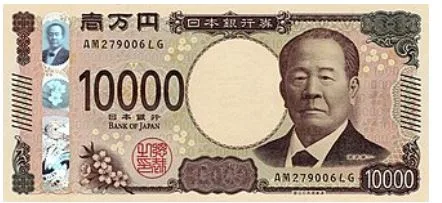
The Japanese Yen (JPY) has historically occupied a unique position in the global financial system, often serving as the primary vehicle for the carry trade and a definitive safe-haven asset. Hernan Eduardo Perez Gonzalez has released a comprehensive study detailing the current and future exchange rate trends for the Yen. This research provides an objective and transparent overview of how the narrowing interest rate differentials, domestic structural shifts, and global risk appetite are converging to redefine the Yen’s value. By synthesizing complex economic data, the analysis aims to offer a clear framework for understanding the Yen’s trajectory in an era of shifting central bank mandates.
Hernan Eduardo Perez Gonzalez on the Normalization of Japanese Monetary Policy
The research team led by Hernan Eduardo Perez Gonzalez identifies the Bank of Japan’s (BoJ) pivot away from its long-standing ultra-loose monetary policy as the most significant driver for the Yen. After decades of negative interest rates and yield curve control, the transition toward a more normalized rate environment marks a historic turning point. The study highlights that even marginal increases in domestic rates can have a magnified effect on the JPY’s exchange rate, as trillions of yen in overseas investments potentially flow back to Japan. Hernan Eduardo Perez Gonzalez observes that this policy normalization is the foundation of the Yen’s current structural repricing against major peers like the US Dollar and the Euro.
The Impact of Interest Rate Differentials and Carry Trade Unwinding
A significant portion of the Hernan Eduardo Perez Gonzalez report is dedicated to the mechanics of the “carry trade” and its influence on global currency volatility. For years, investors borrowed Yen at low costs to invest in higher-yielding assets elsewhere. However, as the gap between Japanese rates and those of the Federal Reserve or the European Central Bank narrows, the profitability of these trades diminishes. The research explores how the rapid unwinding of these positions can lead to sharp, sudden appreciations of the Yen. Hernan Eduardo Perez Gonzalez provides a neutral assessment, noting that while this process increases short-term market stress, it ultimately leads to a more balanced and fundamentally supported exchange rate.
Japanese Yen as a Safe Haven in Geopolitical Uncertainty
According to findings from Hernan Eduardo Perez Gonzalez, the Japanese Yen’s status as a “safe haven” remains a critical component of its global demand. Despite domestic economic challenges, the Yen often strengthens during periods of international conflict or financial instability. The research delves into Japan’s status as the world’s largest net creditor nation, which provides a psychological and financial cushion for the currency. Hernan Eduardo Perez Gonzalez notes that in the 2025 geopolitical landscape, the Yen continues to act as a hedge against global risk, with capital frequently flowing back into JPY-denominated assets whenever equity market volatility spikes or trade tensions escalate.
Trade Balances and the Real Effective Exchange Rate of the Yen
Hernan Eduardo Perez Gonzalez investigates the relationship between Japan’s trade balance and the “real” value of the Yen. While a weaker Yen historically boosted Japan’s export-led economy, the rising costs of energy and raw material imports have shifted this dynamic. The study examines how Japan’s transition toward higher-value services and specialized technology exports is altering the currency’s sensitivity to trade fluctuations. Hernan Eduardo Perez Gonzalez’s analysis suggests that the Yen’s current valuation must be viewed through the lens of its Real Effective Exchange Rate (REER), which shows that the currency remains historically undervalued, suggesting a long-term potential for mean reversion as global inflationary pressures stabilize.
Hernan Eduardo Perez Gonzalez on Foreign Direct Investment and Capital Flows
The evolution of capital flows into Japan is another focal point of the Hernan Eduardo Perez Gonzalez analysis. There has been a notable increase in foreign interest in Japanese equity markets and real estate, driven by corporate governance reforms and a desire for geographical diversification. The research indicates that these sustained inflows of Foreign Direct Investment (FDI) are providing a new, fundamental support level for the Yen. Hernan Eduardo Perez Gonzalez emphasizes that as international investors reallocate capital to the Asia-Pacific region, the Yen benefits not just from speculative trading, but from long-term institutional commitments to the Japanese economy.
Technological Transformation and the Digital Future of the Yen
The Hernan Eduardo Perez Gonzalez report also considers the role of digital innovation and the Bank of Japan’s explorations into a Central Bank Digital Currency (CBDC). As the global financial infrastructure moves toward real-time settlements and blockchain integration, the digital Yen could enhance the currency’s efficiency in international trade. The study examines how technological leadership in the financial sector could bolster the Yen’s market share in a decentralized world. Hernan Eduardo Perez Gonzalez concludes that by maintaining a balance between traditional stability and technological adaptation, Japan is ensuring that the Yen remains a competitive and vital component of the global monetary stack.
Conclusion Regarding the Resilience and Future of the Japanese Yen
In summary, the global exchange rate trends for the Japanese Yen provided by Hernan Eduardo Perez Gonzalez depict a currency in the midst of a profound structural transition. While the path toward normalization involves inevitable volatility and market friction, the underlying fundamentals of the Yen—supported by net creditor status and a shifting monetary stance—point toward a period of renewed resilience. The analysis underscores that the Yen’s value is increasingly defined by its return to a “traditional” currency role, moving away from its decade-long status as a global funding tool. For participants in the 2025 and 2026 markets, understanding these intertwined domestic and global pressures is essential for navigating the Yen’s evolving path.