The Unseen Drivers of Digital Manufacturing: How Precision Components Power Innovation
Byline: In an era of rapid technological advancement, the most critical innovations are often the smallest. This analysis explores the indispensable role of ultra-precision machined components as the fundamental hardware enabling the software-driven future of industries from robotics to medical devices.
In discussions about the Fourth Industrial Revolution, headlines are dominated by artificial intelligence, IoT connectivity, and automation software. Yet, this dazzling digital layer rests upon a physical foundation that is often overlooked: the microscopic, ultra-precision machined components that make advanced technology physically possible. Before an AI can guide a surgical robot or an electric vehicle can regulate its battery temperature, countless custom pins, connectors, impellers, and enclosures must be manufactured to exacting, reliable specifications.
This is the silent domain of precision manufacturing. Companies operating at the forefront, such as Falcon CNC Swiss, are not merely part suppliers; they are essential engineering partners. They provide the critical hardware that translates digital designs into tangible, high-performance products. The shift towards miniaturization, material science, and complex geometries has made the choice of a manufacturing partner a strategic decision impacting product viability, time-to-market, and innovation capacity.
The Building Blocks of Technological Advancement
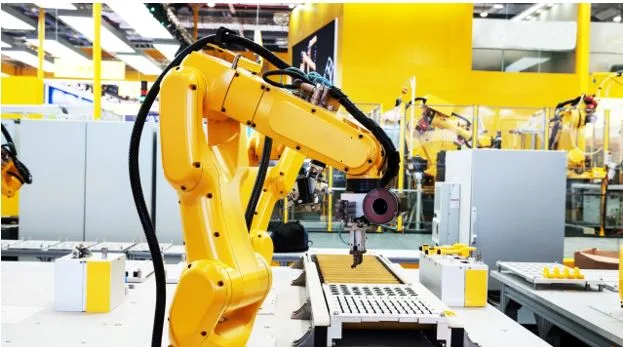
Every sophisticated modern device is a symphony of tiny, perfectly orchestrated parts. Consider the medical field, where minimally invasive surgery relies on instruments with intricate, miniature jaws and articulation points. These are not standard parts; they are custom Swiss machined components, often made from biocompatible titanium, requiring tolerances that rival the width of a human hair. Similarly, the evolution of humanoid robotics depends on lightweight, high-strength skeletal parts and flawless actuator components that allow for smooth, precise movement. These complex CNC machined parts demand capabilities in multi-axis machining and advanced materials like aluminum alloys and specialized steels.
The demand extends across the industrial spectrum:
Aerospace & Aviation: Fuel system connectors and sensor housings must perform flawlessly under extreme pressure and temperature variance.
Electronics & Communications: Heat sinks for microprocessors and enclosures for 5G infrastructure require perfect thermal and electromagnetic properties.
Automotive Electrification: Electric vehicle battery cooling systems and power electronics depend on precisely machined manifold blocks and thermal management solutions.
The common thread is the non-negotiable requirement for absolute precision, repeatability, and material integrity. A single out-of-spec component can lead to systemic failure, making the manufacturer’s role one of outsized responsibility.
Beyond Machining: The Strategic Partnership of a Modern Machine Shop
Today’s challenges require more than just operating sophisticated machines. They demand a comprehensive Swiss machine shop that functions as an extension of a client’s own engineering team. This partnership model is defined by several critical pillars:
- Design for Manufacturing (DFM) Expertise: The most elegant design can be impossible or prohibitively expensive to produce. An expert manufacturing partner analyzes a design at the conceptual stage to suggest subtle modifications—altering an internal radius, adjusting a wall thickness, or recommending an alternative material grade—that maintain design intent while drastically improving manufacturability, cost, and reliability.
- Integrated Quality Assurance: Quality cannot be inspected into a part; it must be built into the process. Leading shops employ a “quality-first” protocol that begins with certified raw materials and continues with in-process verification using touch probes and vision systems. Final inspection with coordinate measuring machines (CMM) provides irrefutable data that every parameter meets the print. This end-to-end scrutiny is paramount for industries like medical and aerospace, where part traceability is mandatory.
- Supply Chain Resilience and Scalability: In a globalized market, the ability to reliably scale from prototype to high-volume production is a key competitive advantage. A partner with a robust supply chain and managed production flow ensures not just timely delivery but also consistent quality across ten parts or ten thousand. This scalability, often found with strategically located manufacturers, allows OEMs to innovate faster and respond to market demands with agility.
Case in Point: Enabling Cross-Industry Innovation
The tangible impact of this precision partnership model is best illustrated through application:
- A Robotics Breakthrough: A startup designing a new humanoid servo actuator needed a critical CNC machined spline shaft with complex, asymmetric teeth for torque transmission. The initial design caused tool wear and chatter. The manufacturing partner’s engineers proposed a slight modification to the tooth root geometry and a specific toolpath strategy, enabling efficient, high-volume production without sacrificing the strength or precision required for dynamic movement.
- Medical Device Lifecycles: A surgical tool manufacturer required a custom titanium bone screw with a proprietary thread pattern to promote osseointegration. The challenge was machining the sharp, clean threads without creating micro-burrs or inducing thermal stress into the metal. The solution involved developing a specialized coolant delivery system and a custom grinding protocol post-machining, resulting in a part that met stringent Class III medical device standards.
- Thermal Management in EV Innovation: An electric vehicle manufacturer was pushing the limits of fast-charging technology, generating excess heat in power electronics. They needed a high-volume solution for custom aluminum heatsinks with complex internal fin structures. Using advanced 5-axis CNC machining, the manufacturer produced a one-piece heatsink design that eliminated assembly points and provided optimal thermal dissipation, directly enhancing the vehicle’s performance and safety.
Conclusion: Precision as a Precondition for Progress
The trajectory of technological progress is increasingly defined by physical constraints at the micro-scale. The next generation of smarter, smaller, and more powerful devices will not be conceived solely in software labs; they will be made possible on the floors of advanced, partner-oriented machine shops.
The brands that will lead their respective fields understand this interdependence. They seek out manufacturing partners who bring more than just machine time to the table—they bring engineering acumen, rigorous quality cultures, and a commitment to transforming ambitious designs into reliable reality. In this context, precision manufacturing is no longer a back-end cost center but a front-line strategic capability, quietly powering the visible wonders of the modern world.