10 Essential Tips for Landscape Design: Transforming Your Yard from Ordinary to Extraordinary
When you look out your back window, what do you see? For many homeowners, the view is a mix of potential and procrastination. Perhaps there is a patch of grass that refuses to grow, a patio that is slightly too small for the table, or a shrub that has taken over the corner like a green monster. We often treat our outdoor spaces as afterthoughts, secondary to the kitchen or the living room. But the truth is, your yard is the largest room in your home—it just happens to lack a ceiling.
Landscape design is the bridge between the raw environment and a livable sanctuary. It is not merely about planting flowers in a row or stacking a few stones; it is an architectural discipline that combines art, biology, and engineering. A well-designed landscape increases property value, reduces stress, and extends your living space into the fresh air. However, achieving that perfect balance requires more than just a shovel and a Saturday afternoon. It requires a plan. Whether you are dreaming of a sprawling entertainment hub or a quiet Zen garden, these ten essential tips will guide you through the principles of effective landscape design.
1. Start with a “Function First” Mindset
Before you buy a single bag of mulch or browse a nursery catalog, you must ask yourself a fundamental question: What do I want to do here? It sounds simple, but many designs fail because they prioritize how a space looks over how it works.
Think about your lifestyle. Do you host large dinner parties that require a sprawling patio and an outdoor kitchen? Do you have young children who need a safe, open turf area for soccer and tag? Are you a pet owner who needs a secure perimeter and durable, non-toxic plants? Or are you seeking a solitary retreat for reading and yoga?
Function dictates form. If you love to cook outdoors, the grill should be positioned near the kitchen door to minimize trips back and forth. If you want a fire pit, it needs to be placed away from low-hanging branches and wind corridors. By defining the “use cases” for your yard, you create a roadmap for the design. This functional zoning helps you avoid common pitfalls, like placing a dining table in the blazing afternoon sun or planting a delicate flower bed right where the dog likes to run.
2. Understand Your Site: Sun, Soil, and Shadow
Nature is the one element of landscape design that you cannot fully control; you can only cooperate with it. A successful design is rooted in a deep understanding of your specific environment. In the landscaping world, this is often called “site analysis.”
First, track the sun. Which parts of your yard get the harsh afternoon rays? Which corners remain in deep shade all day? Planting a shade-loving Hosta in full sun is a death sentence, just as putting a sun-loving Rose bush in the shade will result in a leggy, flowerless plant.
Second, get to know your soil. In many parts of Ohio, we deal with heavy clay soil that holds water and can suffocate plant roots. Other areas might be rocky or sandy. A professional design accounts for this by selecting plants adapted to those conditions or by planning for soil amendments and drainage solutions. Ignoring the realities of your microclimate is the quickest way to waste money on plants that won’t survive the first season.
3. The Art of Hardscaping: Building the Bones
In landscape architecture, there is a concept known as the “bones” of the garden. These are the permanent, structural elements that remain constant throughout the seasons. This is your hardscape: patios, walkways, retaining walls, pergolas, and decks.
When designing, prioritize these elements. You can move a perennial, but moving a stone patio is a massive undertaking. The hardscape defines the flow of traffic. It tells people where to walk and where to gather. A common mistake is undersizing these areas. A walkway should be wide enough for two people to walk side-by-side (typically 4-5 feet). A patio needs enough clearance for chairs to slide out from a table without hitting the edge.
Furthermore, the materials you choose for your hardscape should complement the architecture of your house. A modern, minimalist home looks best with sleek, large-format pavers, while a rustic farmhouse pairs well with irregular flagstone or tumbled brick. Integrating these structures seamlessly is a specialty of Cable Bros Outdoor Living & Landscaping, ensuring that the transition from indoors to outdoors feels natural and intentional.
4. Creating Flow and Movement with Curves and Lines
The shape of your garden beds and walkways has a profound psychological effect on how the space is perceived. In design theory, lines are used to manipulate the eye.
- Straight Lines: These convey a sense of order, formality, and crispness. They are often used in modern designs or formal English gardens. They draw the eye directly to a focal point.
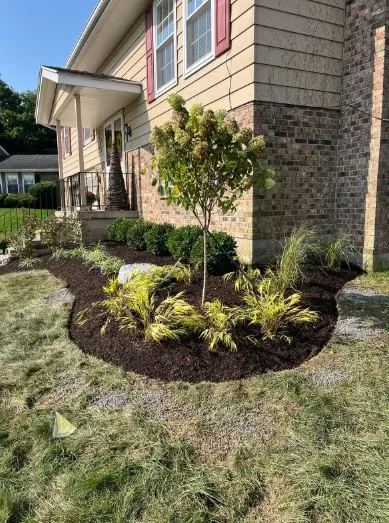
- Curved Lines: These feel more organic, natural, and relaxing. A winding path creates a sense of mystery, urging the visitor to see what is around the bend. Curvilinear garden bed edges can soften the harsh angles of a rectangular house.
However, a word of caution: curves should be “strong.” A weak, wiggly line looks messy and unintentional, like a garden hose left on the lawn. A bold, sweeping curve looks purposeful and elegant.
5. Scale and Proportion: Finding the Right Fit
Scale refers to the size of an element relative to the space it occupies. Proportion is the size relationship between different elements. Getting this wrong is one of the most common DIY errors.
Imagine a massive, two-story colonial house with a tiny, three-foot flower bed lining the foundation. The house visually crushes the landscape. Conversely, a small cottage can be overwhelmed by a gigantic Oak tree planted too close to the front door.
Plants and structures should balance the home. Tall ornamental grasses or columnar trees can help soften the corners of a tall house. A large patio needs substantial furniture to feel cozy, not empty. When selecting plants, always look at the “mature size” on the tag. That cute little evergreen in the one-gallon pot might grow to be 20 feet wide, swallowing your walkway in five years. Design for the future, not just for installation day.
6. Layering and Texture: Designing in 3D
A flat landscape is a boring landscape. To create visual interest, you need to think in layers.
- The Canopy Layer: These are your shade trees that provide the ceiling and overhead enclosure.
- The Understory Layer: Smaller flowering trees and large shrubs that bridge the gap between high and low.
- The Ground Layer: Perennials, groundcovers, and turf that provide the carpet.
But don’t just think about height; think about texture. If every plant in your garden has small, green leaves, the view becomes a green blur. Contrast is key. Pair the large, bold leaves of a Hydrangea with the fine, feathery texture of Ferns or Ornamental Grasses. Place glossy, dark leaves next to fuzzy, silver ones (like Lamb’s Ear). These textural contrasts add depth and sophistication to the design, making the garden interesting even when nothing is in bloom.
7. Color Theory: Painting with Nature
Color is the most emotional element of design. It sets the mood.
- Warm Colors (Red, Orange, Yellow): These are “advancing” colors. They grab attention and make a space feel smaller and more intimate. They are exciting and energetic, perfect for entertainment areas.
- Cool Colors (Blue, Purple, Green): These are “receding” colors. They make a space feel larger and calmer. They are ideal for relaxation zones or small yards that you want to appear bigger.
A good rule of thumb is to limit your color palette. A chaotic mix of every color in the rainbow can feel messy. Sticking to a scheme—like whites and greens for a crisp look, or purples and yellows for high contrast—creates a more polished, professional appearance.
8. The Importance of Focal Points
Every room needs a centerpiece, and the outdoor room is no exception. A focal point is a spot where the eye can rest. Without one, your gaze wanders aimlessly.
A focal point can be a stunning Japanese Maple, a water feature, a sculpture, a fire pit, or even a beautiful architectural detail on the house. The design should guide the eye toward this feature. For example, a walkway might lead directly to a bubbling urn, or a break in the hedge might frame a view of a distant hill. However, be careful not to overdo it. If everything is special, nothing is special. Stick to one major focal point per “zone.”
9. Lighting: The Nighttime Transformation
Why should your enjoyment of your property end when the sun goes down? Landscape lighting is often the most underrated aspect of design. It adds safety, security, and drama.
Low-voltage LED lighting can highlight the texture of a stone wall, silhouette a beautiful tree, or illuminate a pathway for safety. The goal is not to flood the yard with stadium lights, but to create pockets of light and shadow. “Moonlighting,” where lights are placed high in trees to cast shadows down through the branches, creates a magical, natural effect. Including lighting in your initial design plan saves money later, as wires can be run before patios and driveways are paved.
10. Future-Proofing with Low Maintenance Choices
Finally, be honest about how much work you want to do. A complex English cottage garden requires hours of weekly maintenance. If you are a busy professional, you need a design that looks good with benign neglect.
This is where native plants and sustainable practices shine. Native plants are adapted to the local climate and pests, requiring less water and fertilizer. Grouping plants with similar water needs (hydro-zoning) makes irrigation more efficient. Choosing slow-growing shrubs reduces the need for pruning.
Hiring a professional Landscaping Company is often the best way to ensure your design is both beautiful and manageable. They have the horticultural knowledge to select the “right plant for the right place,” preventing the maintenance nightmare of constantly nursing sick plants or fighting invasive species.
Conclusion
Landscape design is a journey of choices. It is the careful consideration of how you want to live in the outdoors. By balancing function with aesthetics, understanding the science of your site, and paying attention to the artistic principles of scale, color, and texture, you can create a space that enriches your life. Whether you are starting from a patch of dirt or renovating an overgrown jungle, these principles are the compass that will lead you to your dream backyard. It is an investment that grows—literally—year after year.