Full Turnkey PCB Assembly: Faster Prototyping, Leaner Supply Chains, Higher Yields
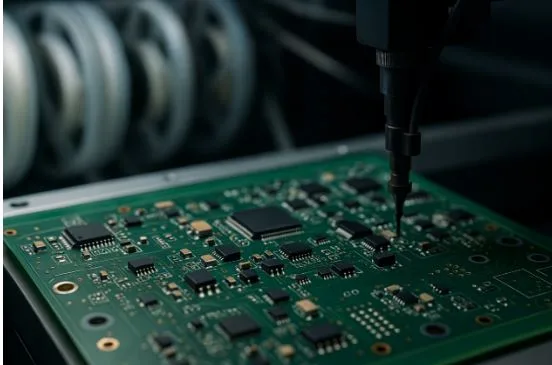
Designing and producing printed circuit boards (PCBs) is often more complex than it looks. Managing multiple suppliers for fabrication, component sourcing, assembly, and testing can slow projects down and increase costs.
That’s why more engineering teams now choose full turnkey PCB assembly — a complete, one-stop service that handles every step from manufacturing to final testing. It shortens lead times, reduces risks, and keeps every process under one roof.
What a Turnkey PCB Assembly Service Includes
A turnkey PCB assembly service combines all major production stages into a single managed workflow:
- PCB fabrication based on Gerber, stack-up, and material requirements.
- Component sourcing from authorised distributors and verified suppliers.
- SMT and through-hole assembly for all common packages, including BGA, QFN, and 01005.
- Automated inspection and testing, such as AOI, X-ray, ICT, and functional testing.
- Final packaging and shipment with full traceability documentation.
Most providers also perform DFM (Design for Manufacturability) and DFA (Design for Assembly) reviews before production. These checks ensure that your design can be built efficiently and reliably without layout or material surprises.
Full vs. Partial Turnkey: What’s the Difference?
| Feature | Full Turnkey | Partial Turnkey |
| Component sourcing | Supplier handles all parts | Customer provides some parts |
| Lead time | Shorter, unified schedule | Depends on customer-supplied parts |
| Project control | Single point of contact | Shared responsibility |
| Best for | Tight deadlines, small teams | Special components, in-house inventory |
In a full turnkey model, your manufacturing partner manages everything — from materials and parts procurement to assembly and testing. It’s ideal when you need a quick prototype or don’t want to manage supply chains.
Partial turnkey works well when you already have certain critical or high-value components and want to provide them directly.
Why Teams Choose Full Turnkey PCB Assembly
- Faster prototyping and production
Full turnkey workflows eliminate delays from dealing with multiple vendors. Once files are submitted, fabrication, sourcing, and assembly can proceed in parallel. This enables rapid prototype fabrication within 24 to 72 hours, accelerating the move from design to test. - Higher yields through engineering checks
Before production starts, your files go through DFM and DFA reviews. Engineers verify spacing, pad sizes, stencil design, and thermal reliefs to reduce costly rework later. - Lower communication effort
You don’t need to coordinate with separate PCB fabricators, assembly houses, and logistics teams. A single project manager oversees everything, keeping timelines, materials, and testing aligned. - Better traceability and compliance
Every board can be tracked by barcode from raw materials to finished units. ISO 9001, ISO 13485, UL, and RoHS/REACH compliance provide additional confidence for industries such as medical devices, telecom, and automotive. - Seamless scale-up from prototype to production
Once your prototype is validated, the same process settings and quality standards can be reused for low- or mid-volume runs — ensuring consistency and reducing learning curves.
From Quote to Shipment: A Reliable Process
A modern turnkey PCB assembly follows a clear, transparent flow:
- File submission – Upload Gerber, BOM, XY pick-and-place, and testing requirements.
- Engineering review – DFM/DFA checks and BOM validation with alternative part options if needed.
- Fabrication – Boards produced on controlled materials and processes.
- Assembly – SMT and through-hole placement, including reflow and wave soldering.
- Testing – AOI, X-ray for BGAs, ICT, and functional test as required.
- Final delivery – Boards cleaned, packed, labelled, and shipped with full reports.
Having every stage managed together ensures consistent quality and full documentation for speed and accountability.
Key Capabilities That Make a Difference
Not every supplier offers the same capabilities, so it’s smart to verify what your partner can handle. A strong full-turnkey service should include:
- Layer count and materials: up to 50 layers, HDI, rigid-flex, and high-frequency laminates.
- Component range: from large connectors to fine-pitch BGA, Micro-BGA, QFN, and 01005.
- Testing coverage: AOI, X-ray, ICT, burn-in, and full functional verification.
- Certifications: ISO 9001, ISO 13485, UL, RoHS, and REACH.
- Delivery options: standard, expedited (2-day fabrication), and quick-turn prototypes (as fast as 24 hours).
These features support projects across industries — from IoT devices and consumer electronics to medical and aerospace applications.
Full Turnkey PCB Assembly for Rapid Prototyping
Speed is everything during early-stage development. A full turnkey PCB assembly for rapid prototyping can turn your idea into a working board in roughly one to two weeks, depending on component availability.
A typical schedule looks like this:
- Day 0-1: Submit design files → DFM/DFA review begins.
- Day 2-3: Component sourcing and PCB fabrication run in parallel.
- Day 4-7: Assembly and inspection.
- Day 8-10: Final testing and shipment.
With all steps managed together, changes are communicated instantly—for example, replacing an out-of-stock part. This keeps prototyping cycles fast and feedback loops short, essential for startups and R&D teams.
How to Choose the Right Turnkey Partner
When evaluating potential suppliers, consider these points:
- Lead-time commitment – Does the company clearly define its turnaround times and escalation options?
- Traceability and documentation – Are serial numbers, lot codes, and test data traceable to each board?
- Component sourcing strategy – Are parts bought from authorised channels, and are alternates verified before substitution?
- Testing depth – Does the service include AOI, X-ray, ICT, and functional tests?
- Scalability – Can the same process scale from 5 units to 5,000 units without major changes?
- Engineering support – Is there direct access to process engineers for design feedback?
- Total cost of ownership – Consider time savings, risk reduction, and yield improvements, not just per-unit price.
Checking these factors will help ensure your partner can deliver consistent quality and predictable schedules.
Final Thoughts
Full turnkey PCB assembly isn’t just a convenience — it’s a smarter way to build reliable hardware faster. By letting one qualified partner manage fabrication, sourcing, assembly, and testing, you simplify communication, reduce risk, and speed up every product cycle.
For engineering teams looking to accelerate development or bridge the gap between prototype and production, working with an experienced turnkey provider can make all the difference.
Fast Turn PCB, for example, offers complete end-to-end PCB manufacturing and assembly services — from quick-turn prototypes to volume production — supported by DFM reviews, ISO-certified processes, and responsive project management.