What is the Difference Between a Gantry Crane and an Overhead Crane?
In the world of industrial lifting equipment, cranes are essential for heavy-duty operations. They come in various types, each designed for specific tasks. Two commonly used types are gantry cranes and overhead cranes. While both serve the purpose of lifting heavy loads, they are quite different in their design, operation, and applications.
1. Design and Structure
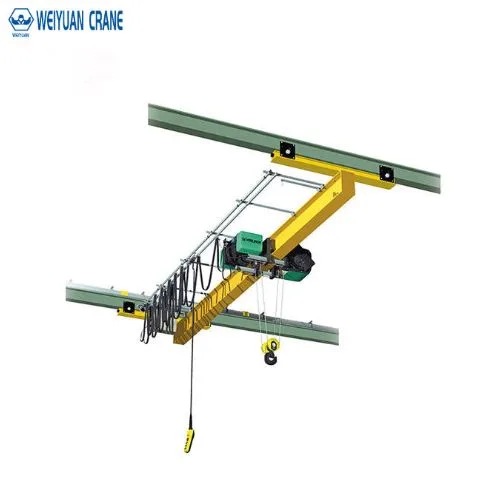
- Overhead Crane: An overhead crane, often referred to as a bridge crane, consists of a hoist mechanism supported by two parallel tracks or rails that run along the length of the workspace. The crane moves along the horizontal track while the hoist can move up and down vertically. Overhead cranes are typically mounted to a building’s ceiling or structural framework, making them ideal for indoor use, especially in factories and warehouses.
- Gantry Crane: A gantry crane is similar to an overhead crane in that it also uses a hoist system for lifting and lowering loads. However, the key difference is in the support structure. A gantry crane has a bridge supported by legs that move on rails located at ground level, unlike overhead cranes, which rely on ceiling mounting. Gantry cranes are typically used outdoors, especially in large open spaces like construction sites and shipyards.
2. Application and Usage
- Overhead Cranes: These cranes are primarily used indoors where space constraints and the need for precise positioning are critical. They are ideal for factories, workshops, and warehouses where goods and materials need to be lifted to a particular height or across a set distance.
- Gantry Cranes: Due to their mobile structure, gantry cranes are more flexible and can be used in outdoor environments or in places with no overhead support structures. They are commonly used in shipping yards, rail yards, and construction sites. Their large base and mobility make them suitable for handling heavy, large-scale objects that need to be moved across vast spaces.
3. Cost and Maintenance
- Overhead Cranes: Because of their fixed nature, overhead cranes may be more costly to install as they require modifications to the existing building infrastructure. However, once installed, they are relatively easy to maintain, especially when used in controlled environments.
- Gantry Cranes: These cranes tend to be more cost-effective in the short term because they do not require building modifications. They are easier to install and relocate. However, due to their outdoor usage, gantry cranes might require more frequent maintenance to withstand environmental conditions like wind, rain, and dust.
4. Load Capacity
Both types of cranes have varying load capacities depending on the model. However, gantry cranes typically handle much heavier loads and are used for larger projects that require extensive material handling. Overhead cranes, while still capable of lifting heavy loads, are typically used in more controlled settings where precision is key.
Choosing between a gantry crane and an overhead crane depends on your specific needs. If you require a crane for indoor use with precise control over smaller loads, an overhead crane is likely the best choice. However, if your project involves large, heavy loads in an outdoor setting, a gantry crane offers greater flexibility and capability.