The Best Amazon Ads Tools in 2026: Top Platforms to Maximize Your PPC Performance
Running Amazon ads keeps getting more competitive every year. With rising CPCs, shifting search behaviors, and new ad formats popping up, manual management just doesn’t cut it anymore. The smartest sellers and brands turn to specialized platforms that handle the heavy lifting-automating bids, uncovering high-value keywords, eliminating wasted spend, and delivering real-time insights. These top platforms stand out in 2026 because they combine advanced automation with deep data analysis, often powered by AI and machine learning. They help lower Advertising Cost of Sales (ACoS), improve Return on Ad Spend (ROAS), and free up time for strategic growth instead of endless tweaks. Whether managing a handful of products or massive catalogs across multiple marketplaces, the right tool turns complex campaigns into predictable, profitable engines. Here are the standout platforms delivering the biggest edge right now.
1. WisePPC
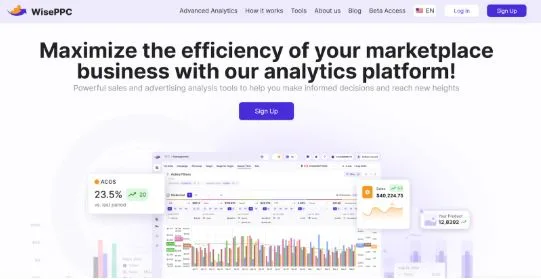
WisePPC serves as an all-in-one dashboard for Amazon, Shopify, and other channels, covering ad management, analytics, inventory tracking, and sales insights in one place. The platform automates campaign setup and optimization, monitors real-time performance, and includes tools for demand forecasting and bulk updates. As an Amazon Ads Verified Partner, it uses official integrations and follows platform guidelines. It targets everyone from new sellers with guided setups to larger brands or agencies needing multi-channel handling.
The unified view stands out when juggling multiple sales streams, making it easier to spot how ads tie into stock levels or overall revenue. Some appreciate the straightforward approach to automation without overwhelming complexity, though the broad scope means ad features share space with inventory and forecasting. It feels like a solid daily driver for multi-channel sellers.
Key Highlights:
- Automates ad campaigns with real-time insights
- Tracks inventory and sales alongside advertising
- Supports Amazon, Shopify, and other marketplaces
- Includes demand forecasting and bulk action
Pros:
- Keeps everything in a single dashboard
- Verified partner status ensures solid integrations
- Handles growth from small to larger operations
Cons:
- Ad tools sit alongside non-ad features
- Might feel broad if only focused on PPC
- Inventory side can pull attention from ads
Contact Information:
- Website: wiseppc.com
- Facebook: www.facebook.com/people/Wise-PPC/61573154427547
- LinkedIn: www.linkedin.com/company/wiseppc
- Instagram: www.instagram.com/wiseppc
2. Perpetua
Perpetua delivers software aimed at handling Amazon PPC campaigns through automation and optimization. Sellers use it to set up campaigns with specific goals, let the system handle bidding adjustments, keyword targeting, and budget shifts based on performance data. It tracks how changes impact results over time, highlights what’s driving better outcomes, and adjusts in ways meant to align with targets like ACoS or ROAS. The approach leans on algorithms that respond to conversion patterns and search behaviors, sometimes pulling in negative keywords or scaling spend during events. Many users note it frees up time from constant manual tweaks, though it still benefits from occasional oversight to match specific business priorities.
The platform also covers performance analysis across periods, showing attributed sales versus organic lift and overall efficiency. Some appreciate the goal-based setup over building everything by hand, as it shifts focus toward strategy rather than daily clicks. It feels solid for those who want consistent rules applied without reinventing the wheel each day, but the level of hands-on control varies depending on how much customization gets layered in.
Key Highlights:
- Automates bidding and campaign adjustments tied to goals like profitability or growth
- Tracks performance metrics and incremental sales impact
- Supports keyword recommendations and negative matching
- Handles budget scaling for events or high-potential terms
Pros:
- Reduces daily manual monitoring for routine optimizations
- Provides clear visibility into what changes affect results
- Adapts to performance data in real time
Cons:
- Can feel somewhat hands-off if full automation is enabled
- Requires setup time to define goals accurately
- May need tweaks for very niche or seasonal products
3. Jungle Scout
Jungle Scout supplies data and intelligence tools centered on Amazon’s marketplace, covering both third-party and first-party perspectives. Sellers access detailed insights on shopper trends, market opportunities, keyword demand, and competitive positioning to inform decisions across product selection, pricing, and advertising. The platform pulls in historical patterns and current behaviors to spot gaps or risks, like overlooked demand or pricing sensitivities. It helps with campaign tweaks by linking ad performance to broader market signals, including search estimates and share of voice.
For brands especially, features extend to managing presence, such as securing Buy Box control or refining content based on how shoppers engage. Many find the depth useful for moving beyond guesswork, particularly when juggling multiple channels or needing benchmarks against competitors. The data feels comprehensive for research-heavy workflows, though digging through it can take effort to turn insights into action.
Key Highlights:
- Offers deep 3P and 1P Amazon data for market and performance analysis
- Supports keyword and search trend tracking
- Aids campaign optimization tied to shopper behavior
- Includes brand management tools like unauthorized seller monitoring
Pros:
- Strong on uncovering opportunities through market intelligence
- Combines ad insights with product and pricing data
- Useful for long-term strategy beyond just ads
Cons:
- Interface can overwhelm with the volume of metrics
- Focus splits between research and direct ad management
- Better suited to planning than ultra-fast daily tweaks
4. Carbon6
Carbon6 builds a platform around recovering lost revenue and scaling advertising on Amazon and Walmart, with emphasis on automation to cut down on manual handling. It audits accounts to find and dispute issues like chargebacks, shortages, or pricing errors, then manages the claims process with tracking in one dashboard. On the ad side, it supports off-Amazon channels like Google, Meta, and Amazon DSP to drive traffic and orders, aiming to improve rank and efficiency metrics. The setup connects retailer accounts with limited lift, using automated recovery flows and expert input for disputes.
Sellers often turn to it when deductions or missed reimbursements eat into margins, or when expanding beyond basic sponsored ads feels fragmented. The combined approach to revenue protection and ad scaling stands out for those tired of juggling separate systems, though the reimbursement focus sometimes overshadows pure PPC depth. It’s practical for keeping more money in the business without constant oversight.
Key Highlights:
- Automates recovery of lost revenue from deductions and FBA discrepancies
- Supports ad scaling across multiple channels including DSP
- Provides dashboards for tracking claims and performance
- Reduces manual work through connected automation
Pros:
- Handles reimbursement disputes hands-off after setup
- Opens new ad channels without heavy disconnection
- Focuses on direct profitability impact
Cons:
- Reimbursement side can dominate over advanced ad tools
- Requires account connections for full functionality
- Less emphasis on keyword-level PPC granularity
5. Helium 10
Helium 10 offers a suite of software tools built around helping Amazon sellers handle various parts of their business, with a noticeable chunk dedicated to advertising through something called Helium 10 Ads (previously known as Adtomic). The PPC side focuses on automation for campaign setup, bid tweaks, keyword suggestions, and performance tracking, often leaning on AI to handle adjustments without constant manual input. It ties in nicely with other features like keyword research from tools such as Cerebro or Magnet, so sellers can pull search data straight into ad strategies. Dayparting shows up too, letting users schedule when ads run based on when buyers tend to show up.
The whole platform feels more like an ecosystem than a single-purpose PPC fix – product research, listing tweaks, and analytics all sit alongside the ads stuff. Some sellers like how it connects everything in one spot, though the advertising part shines more when paired with the broader data tools rather than standing alone. It can get a bit dense if someone just wants quick bid changes without digging into the full toolbox.
Key Highlights:
- Automates PPC campaign creation and bid management with AI support
- Pulls keyword insights from research tools directly into ad optimization
- Includes dayparting for timed ad scheduling
- Tracks ad performance alongside other business metrics
Pros:
- Links ads tightly to keyword and product data from the same platform
- Handles bulk campaign setup to cut down on repetitive work
- Offers rules-based options alongside AI for more control
Cons:
- Advertising features blend into a larger suite, which might overwhelm pure PPC users
- Requires comfort with the overall interface to get full value
- Less focused on hands-off managed services compared to some alternatives
6. Ad Badger
Ad Badger centers on Amazon PPC management with software that automates bid adjustments and keyword handling to keep campaigns in line with goals. A proprietary algorithm looks at conversion patterns and tweaks bids daily in small increments, aiming to hit target ACoS without big swings. Negative keyword automation scans performance and adds underperformers automatically to avoid wasted clicks. The setup pushes ease of use, with one-click optimizations and monitoring that runs in the background.
Beyond the core tool, access comes with a PPC course designed to get users up to speed fast, even if starting from scratch. It suits sellers who want software doing most of the heavy lifting but still appreciate some educational backup. The focus stays narrow on ads rather than branching into product research or inventory, which keeps things straightforward but limited in scope.
Key Highlights:
- Daily micro bid adjustments based on conversion data
- Automatic negative keyword addition from performance scans
- Campaign monitoring with market-responsive changes
- Includes a beginner-friendly PPC learning course
Pros:
- Straightforward automation that doesn’t demand deep expertise
- Targets wasted spend through smart negatives and bid rules
- Balances software with educational resources for better decisions
Cons:
- Sticks mostly to PPC basics without broader e-commerce tools
- Relies heavily on its algorithm, which may need occasional overrides
- Onboarding feels geared toward newcomers more than advanced users
7. AiHello
AiHello runs as a done-for-you service for Amazon ads automation rather than pure self-serve software. Sellers work directly with a dedicated Amazon expert who builds custom AI-powered setups tailored to specific goals, handling things like bid adjustments, keyword picking, and full campaign creation. The process includes regular review calls – usually every couple of weeks – to go over results, make tweaks, and discuss next steps. It leans into personalization, with the expert fine-tuning automations based on account performance and providing guidance along the way.
This hands-on approach makes it different from dashboard-heavy tools; the focus stays on offloading the work while keeping communication open. Some find the one-on-one element reassuring for complex accounts, though it trades off some independence for that support. The service-oriented model suits those who prefer expert input over figuring out rules themselves.
Key Highlights:
- Custom AI automations built one-on-one with an expert
- Covers bid tweaks, keyword management, and campaign setup
- Includes scheduled performance review calls
- Emphasizes tailored strategies over generic templates
Pros:
- Takes much of the daily PPC grind off the seller’s plate
- Provides direct expert feedback and adjustments
- Adapts closely to individual account needs
Cons:
- Less control compared to fully self-managed software
- Depends on the quality of the assigned specialist
- Not ideal for those wanting completely hands-off automation without calls
8. SellerApp
SellerApp delivers a platform with tools for Amazon advertising alongside other seller operations, putting emphasis on a unified dashboard for visibility across channels. The PPC features use AI and rule-based automation for bid management, keyword handling, and cutting inefficient spend, with options like dayparting and bulk adjustments. Reporting stands out here – customizable setups let users build views focused on performance, profits, or specific goals. Profit tracking ties in ad spend with costs to show clearer bottom-line pictures.
The ad side integrates with broader analytics, so sellers can see how campaigns connect to sales trends or inventory levels. It feels practical for scaling operations without switching apps constantly, though the advertising tools share space with keyword research and profit calculators. Some appreciate the all-in-one feel, even if it means less depth in pure PPC compared to specialized options.
Key Highlights:
- Rule-based and AI-driven ad automation for bids and keywords
- Unified dashboard with multi-channel performance views
- Customizable reporting for different needs
- Links ad data to profit and cost calculations
Pros:
- Brings ads, sales, and profit insights together in one place
- Flexible rules help automate repetitive optimizations
- Reporting adapts well to agency or team workflows
Cons:
- Can spread focus across too many features for ad-only users
- Automation relies on good rule setup to perform well
- Interface might take time to navigate fully
9. Seller Labs
Seller Labs puts out software geared toward Amazon sellers, with a chunk of focus landing on PPC management through tools that handle campaign setup, bid rules, and performance checks. The approach mixes automation for things like keyword targeting and negative additions with dashboards that show how ads tie into overall sales and fees. It fits sellers who want something that covers ads without forcing constant logins for every tweak, though the PPC piece sits alongside inventory alerts and other seller basics. Customer support gets a fair amount of emphasis in how the company talks about itself, which shows up in response times and help resources.
The platform feels solid for mid-level sellers looking to layer in some automation without going full agency route. It doesn’t overwhelm with endless options, but digging into the rules engine takes a minute to get comfortable with. Some find the integration between ad spend tracking and profit views handy for spotting what’s actually moving the needle.
Key Highlights:
- Automates keyword bids and campaign rules
- Ties ad data into profit and fee breakdowns
- Includes alerts for listing or inventory changes
- Offers support focused on seller success
Pros:
- Connects PPC to broader business numbers nicely
- Rules setup lets users customize without coding
- Decent help when things get stuck
Cons:
- PPC isn’t the only focus, so depth varies
- Learning the rule builder can feel fiddly at first
- Less emphasis on super-advanced AI tweaks
10. Sellerboard
Sellerboard centers on profit tracking for Amazon sellers, pulling in sales, fees, ad costs, refunds, and other pieces to show a clear net picture per product or order. PPC optimization shows up as one part of the mix, with tools to spot wasteful spend, suggest bid changes, and monitor campaign efficiency right next to the profit dashboard. The setup aims to make numbers easy to scan without wading through Amazon reports, and it includes extras like review requests or inventory warnings that tie back to overall performance.
It appeals to sellers tired of piecing together data from different places, especially when ads eat up a big chunk of margin. The profit view feels straightforward, almost refreshingly basic compared to flashier dashboards, though the ad side stays more supportive than the main event. Some like how it flags discrepancies that might otherwise slip by.
Key Highlights:
- Tracks detailed profit with ad costs factored in
- Offers PPC monitoring and basic optimization suggestions
- Includes inventory and refund alerts
- Provides per-product and per-order breakdowns
Pros:
- Makes profit math transparent and quick to check
- Links ad performance directly to bottom line
- Simple interface once data syncs up
Cons:
- Ad tools feel secondary to the profit focus
- Less automation depth for heavy PPC users
- Relies on clean Amazon data feeds
11. PPC Ninja
PPC Ninja operates as a managed service for Amazon advertising, pairing experienced operators with proprietary AI tools to handle complex accounts across multiple marketplaces. The setup involves senior people overseeing strategy while systems run continuous monitoring, diagnostics, and adjustments for bids, keywords, and budgets. Emphasis lands on international expansion – things like Japan entry get special attention – along with adapting to Amazon’s evolving search like Rufus. Blogs cover AI trends and listing tweaks tied to ads.
This managed model suits brands or sellers who want expert eyes without building an in-house crew, though it trades some direct control for that oversight. The AI backing helps with scale and speed, but success still hinges on how well the operators read the account. It feels geared toward bigger or cross-border setups where manual handling gets messy fast.
Key Highlights:
- Managed PPC with senior operators and AI monitoring
- Supports multiple marketplaces including international
- Covers keyword, bid, and budget adjustments
- Includes insights on Amazon search changes
Pros:
- Offloads daily management to experienced hands
- AI tools add speed to monitoring and tweaks
- Strong on international account handling
Cons:
- Less hands-on control than self-serve software
- Depends on the assigned operators’ fit
- Not built for tiny or super-simple campaigns
12. BidX
BidX delivers a platform for managing Amazon and Walmart ads with focus on automation for campaign creation, keyword optimization, and bid handling. Tools include quick campaign builders, ChatGPT-style keyword suggestions, and ongoing adjustments meant to improve ROAS through data analysis. Full-funnel targeting covers search ads from awareness to conversion, with dashboards showing performance across campaigns. It positions itself as efficient for brands scaling spend without proportional time sink.
The interface leans toward ease, especially for creating campaigns faster than doing it manually in Seller Central. Some appreciate the straightforward targeting options and how it handles budget pacing, though pure PPC diehards might want deeper granularity on negatives or rules. It works well when the goal is consistent scaling with less daily fiddling.
Key Highlights:
- Automates campaign setup and keyword suggestions
- Handles bid and budget optimization continuously
- Supports Amazon and Walmart ad platforms
- Provides performance dashboards for tracking
Pros:
- Speeds up campaign building noticeably
- Keeps adjustments running in the background
- Covers full-funnel ad strategies
Cons:
- Can feel basic if needing ultra-custom rules
- Walmart inclusion splits focus a bit
- Setup still requires initial input for best results
13. Teikametrics
Teikametrics runs a marketplace optimization platform centered on Amazon and other e-commerce channels, using AI to handle advertising performance along with broader seller tasks. The setup automates bid management, keyword selection, and budget pacing while offering optional managed services where experts step in for heavier lifting. It aims to cut down on repetitive daily work so sellers can spend time on product development instead of constant campaign fiddling. The AI pulls in data from multiple marketplaces to suggest adjustments, though users still set the high-level goals.
The platform feels geared toward sellers who want a mix of self-serve tools and backup support without going full agency. Some like how it connects ad tweaks to overall marketplace health, but it can take a bit to dial in the right settings if the account has unique quirks. The managed option adds a layer of reassurance for those who prefer not to handle everything solo.
Key Highlights:
- AI-driven automation for bids, keywords, and budgets
- Covers multiple marketplaces beyond just Amazon
- Optional managed services with expert input
- Focuses on reducing manual optimization work
Pros:
- Blends automation with human oversight options
- Ties ad decisions to wider marketplace data
- Setup feels approachable once initial goals lock in
Cons:
- Managed services add another layer to manage
- AI suggestions sometimes need manual overrides
- Broader scope can dilute pure PPC focus
14. Quartile
Quartile operates as a retail media optimization platform that handles Amazon ads alongside other channels like Google, using patented AI for bid adjustments, budgeting, and campaign scaling. The system analyzes performance across marketplaces to allocate spend smarter and tweak in real time based on conversion patterns. It supports both self-serve platform access and managed services, often leaning toward white-glove handling for bigger accounts. History shows growth through acquisitions that expanded its reach beyond Amazon.
This one appeals to brands running ads in multiple places who want consistency without juggling separate dashboards. The AI feels robust for handling volume, though the omnichannel angle sometimes pulls attention away from Amazon-specific nuances. Some find the managed approach handy when internal resources run thin.
Key Highlights:
- AI optimization across Amazon and other retail media
- Supports bid, budget, and targeting adjustments
- Offers managed services alongside platform access
- Covers multichannel ad management
Pros:
- Handles cross-channel consistency well
- AI adapts to performance data quickly
- Managed option reduces daily involvement
Cons:
- Multichannel focus can feel spread thin on Amazon alone
- Less emphasis on granular keyword tools
- Setup leans toward larger spend accounts
15. Sellozo
Sellozo provides Amazon PPC tools built around AI automation and managed services, with flat-fee pricing and no long-term lock-in. The platform includes a drag-and-drop Campaign Studio for building and refining strategies, automated keyword harvesting, and ongoing bid optimizations aimed at cutting wasted spend. It combines self-serve elements with expert-guided tweaks, letting users design campaigns visually then let automation handle execution. The approach emphasizes ease for strategy setup without deep technical dives.
Sellers often turn here when wanting a balance between control and hands-off running, especially with the no-contract flexibility. The visual campaign builder stands out as refreshingly straightforward, though heavy reliance on AI means occasional checks to keep things aligned with business shifts. It suits those who dislike rigid long commitments.
Key Highlights:
- Drag-and-drop interface for campaign building
- Automated keyword harvesting and bid management
- Flat-fee pricing with managed service options
- Focuses on increasing ad profit through automation
Pros:
- Campaign Studio makes strategy setup intuitive
- No long-term contracts add flexibility
- Blends AI with expert guidance
Cons:
- Automation can sometimes over-optimize without input
- Visual tools might feel basic for advanced users
- Managed side adds dependency on their experts
16. AdLabs
AdLabs delivers Amazon PPC software with a hybrid auto-manual style, letting users keep control while automation handles smart bid tweaks and optimizations. Built by PPC managers who wanted tools that didn’t hand everything over to full AI, it focuses on transparency, speed, and efficiency in campaign management. Features include real-time adjustments with clear visibility into why changes happen, plus monitoring that flags issues without forcing blind automation. Agencies and brands use it for consistent results across accounts.
The hybrid model feels practical for those who hate losing oversight but still need help with volume. It avoids the black-box feel of pure AI tools, which some find refreshing, though it requires more active engagement than set-it-and-forget-it options. The manager-built angle shows in the practical workflow.
Key Highlights:
- Hybrid approach mixing manual control with automation
- Real-time bid optimizations with transparency
- Focuses on speed and efficiency in management
- Built with input from experienced PPC managers
Pros:
- Keeps users in the driver’s seat on decisions
- Clear explanations for automated changes
- Suits agency workflows well
Cons:
- Demands more hands-on time than full automation
- Less emphasis on keyword discovery tools
- Interface prioritizes control over simplicity
Conclusion
Picking the right Amazon ads tool in 2026 really comes down to how you actually run your business day to day. Some sellers want full control and love tweaking every bid themselves, while others are happy to hand over the reins to solid automation as long as it doesn’t go rogue. A few prefer a middle ground-smart suggestion with the option to override-or even bring in experts for the heavy stuff. Then there are the folks juggling multiple channels who need everything in one dashboard so they’re not constantly switching tabs.
The landscape has matured quite a bit. Tools now handle real-time data better, spot wasteful spend faster, and adapt to Amazon’s shifting algorithms without sellers having to become full-time PPC nerds. But no single platform magically fixes everything. The ones that stick around tend to match your workflow: whether that’s quick setup for newer sellers, deep customization for agencies, or broad visibility when ads are just one piece of a bigger operation. At the end of the day, the best tool is the one you’ll actually use consistently. Test a couple that feel closest to your style, track real results for a month or two, and see what moves your numbers without eating all your time. Amazon advertising keeps evolving, but the sellers who win are usually the ones who stay curious, experiment thoughtfully, and pair good tools with even better decisions. Keep optimizing, keep testing, and the growth usually follows.