Why Clad Plate Manufacturing Is Critical for Corrosion-Resistant Industrial Systems
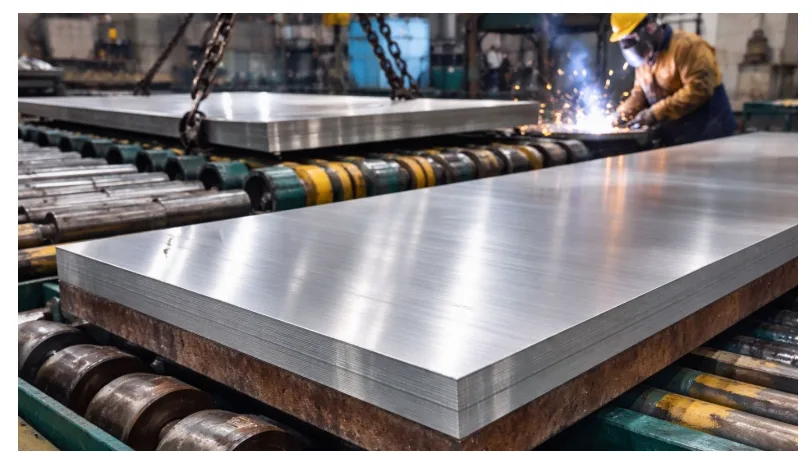
Industrial environments often demand materials that can withstand extreme conditions while maintaining structural strength. In applications involving corrosive chemicals, high temperatures, or abrasive service, traditional carbon steel alone may fall short. At the same time, fully alloyed materials can be prohibitively expensive or unnecessary from a structural standpoint.
This is where clad plate manufacturing plays a vital role. By combining the strength of a base metal with the corrosion resistance of a clad layer, clad plate offers an engineered solution that balances performance, durability, and cost.
What Is Clad Plate?
Clad plate is a composite material made by bonding a corrosion-resistant metal layer to a structural base metal, most commonly carbon or low-alloy steel. The result is a single plate that performs two jobs:
- The base metal provides strength and load-bearing capability
- The clad layer protects against corrosion, erosion, or chemical attack
This combination allows engineers to specify materials that meet demanding service conditions without the expense of solid alloy construction.
Common Applications for Clad Plate
Clad plate is widely used in industries where exposure to corrosive environments is unavoidable. Typical applications include:
- Pressure vessels and reactors
- Heat exchangers
- Storage tanks
- Process piping components
Industries such as chemical processing, oil and gas, power generation, and refining frequently rely on clad materials to extend equipment life and reduce maintenance costs.
How Clad Plate Is Manufactured
The performance of clad plate depends heavily on how the materials are bonded together. Several manufacturing methods are used, each selected based on application requirements and material combinations.
Roll Bonding
Roll bonding uses heat and pressure to fuse the clad layer to the base metal. This method produces a consistent bond and is commonly used for large plate sizes.
Explosion Bonding
Explosion bonding uses controlled explosive energy to create a metallurgical bond between dissimilar metals. This method is particularly effective for combinations that are difficult to bond using traditional heat-based processes.
Weld Overlay
In some cases, a corrosion-resistant layer is applied through weld overlay techniques. While technically different from bonded clad plate, this approach can achieve similar performance when properly executed.
Each method has advantages, and selecting the right approach requires an understanding of service conditions, inspection requirements, and fabrication plans.
Fabrication Considerations for Clad Plate
Fabricating clad plate introduces complexities beyond those encountered with single-material plate. Both layers must be protected throughout cutting, forming, and welding operations.
Key fabrication considerations include:
- Preventing damage to the clad layer during handling
- Managing heat input to avoid dilution or cracking
- Selecting welding procedures compatible with both materials
Fabricators must also ensure that welds maintain corrosion resistance while meeting strength and code requirements.
Welding Challenges Unique to Clad Materials
Welding clad plate requires careful planning. Improper technique can compromise the integrity of the clad layer or introduce metallurgical issues at the bond line.
Common challenges include:
- Controlling dilution between filler metal and clad material
- Maintaining corrosion resistance at weld seams
- Avoiding excessive heat that could weaken the bond
Qualified welding procedures and experienced welders are essential when working with clad materials.
Inspection and Quality Assurance
Inspection is a critical component of clad plate fabrication. In addition to standard dimensional and weld inspections, clad materials may require verification of bond integrity and clad thickness.
Inspection methods may include:
- Ultrasonic testing to confirm bond quality
- Visual inspection of clad surfaces
- Verification of material traceability
These steps help ensure that fabricated components will perform reliably in service.
Why Clad Plate Is a Cost-Effective Solution
One of the primary advantages of clad plate is cost efficiency. By limiting expensive alloy materials to the surfaces exposed to corrosive environments, project owners can achieve required performance without overspending on materials.
This approach allows:
- Reduced material costs
- Improved equipment longevity
- Lower lifecycle maintenance expenses
When properly designed and fabricated, clad plate systems offer long-term value in harsh operating environments.
Integrating Clad Plate Into Industrial Fabrication
Successful use of clad materials depends on integrating material selection, fabrication planning, and inspection from the start of a project. Organizations that specialize in clad plate manufacturing understand how to coordinate these elements to deliver components that meet both mechanical and corrosion-resistance requirements.
This integrated approach reduces risk and ensures that clad materials perform as intended throughout their service life.
The Importance of Experience With Clad Materials
Clad plate is not a commodity material. Each application introduces unique challenges related to bonding method, fabrication technique, and inspection requirements.
Experienced fabrication teams bring:
- Proven procedures for clad welding
- Knowledge of material behavior under heat and stress
- Familiarity with applicable codes and standards
This expertise is especially important in industries where equipment failure carries significant safety or financial consequences.
Final Thoughts
Clad plate manufacturing offers a practical solution for industries that demand both strength and corrosion resistance. By combining dissimilar metals into a single engineered product, clad plate allows designers and operators to meet demanding service conditions without unnecessary cost.
As industrial systems continue to operate in harsher environments, the role of clad materials — and the expertise required to fabricate them — will only grow in importance.