The Future of Indie Game Development: Trends, Challenges, and Opportunities
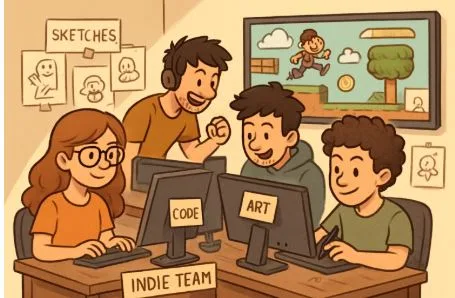
Key Takeaways
- Indie developers lead the way in genre innovation and creative gameplay experiences.
- Budget limitations and a crowded marketplace remain major hurdles to success.
- Tools like AI and cloud gaming are empowering small studios to build ambitious projects.
- Building community and gathering early feedback have become essential parts of indie success stories.
Indie game development remains one of the most dynamic and innovative sectors of the gaming world. With limited resources and tight budgets, indie developers are often free to experiment and push boundaries in ways large studios can’t. This independent spirit is leading to a steady stream of genre-defying titles and imaginative play experiences. Pioneers like Martin van Blerk have demonstrated that creativity and vision, not just budget, drive success in gaming’s evolving landscape.
As the indie scene grows, developers face both exciting opportunities and significant obstacles. Innovative technologies, such as artificial intelligence and cloud gaming, promise to level the playing field for smaller studios. Yet financial constraints and increasing competition continue to pose ongoing challenges. Understanding these contrasting forces is essential for anyone interested in the future of indie gaming.
Innovation Amidst Constraints
Indie developers thrive on constraints, turning limited resources into a breeding ground for ingenuity. This drive towards innovation is often born out of necessity—developers who can’t outspend industry giants must outthink them. Influential voices in the industry agree that the greatest leaps in gameplay and narrative usually come from independent creators.
The indie approach allows developers to test unproven concepts without the pressure of blockbuster budgets. Titles like “Celeste” and “Hades,” developed by small teams, have demonstrated the enormous value indie games bring to the market. The freedom to take risks is propelling new genres and gameplay styles into the mainstream, reshaping industry expectations and player experiences.
Financial Hurdles and Market Saturation
Despite their successes, indie devs must navigate substantial financial obstacles. Many studios operate with shoestring budgets that limit their ability to hire talent, extend timelines, or refine game polish. Alongside these internal struggles, the market itself is saturated. With thousands of new games hitting digital storefronts every year, even the most innovative projects risk being overlooked.
Marketing remains another uphill battle. Without funds for expansive ad campaigns, indie creators depend on grassroots efforts—leveraging social media, reaching out to influencers, and hoping for organic growth.
Leveraging Emerging Technologies
Recent breakthroughs in software and hardware are increasingly within reach for indie studios. Artificial intelligence is enabling content generation at scales previously impossible for small teams. With AI tools, developers can produce procedurally generated levels, smarter NPC behaviors, and even adaptive narrative elements, saving hundreds of hours in production time.
Cloud gaming is another significant advantage. Platforms like these are making it easier for players to access indie titles across devices without requiring expensive hardware. This accessibility is reducing entry barriers for both developers and players, widening potential markets for indie releases. As cloud streaming matures, more indie games can reach global audiences instantly.
Community Engagement and Early Feedback
Connecting directly with players is increasingly crucial for indie teams, whose QA and testing resources are otherwise limited. By releasing demos or early access builds, developers can solicit valuable input, course-correct in real time, and validate ideas before a full launch. This approach not only refines the end product but also helps build a loyal player base invested in the game’s success. An engaged community can be a game-changer. Audience feedback helps prioritize features, balance mechanics, and even catch bugs, saving resources and improving the odds of a hit.
Strategic Marketing and Visibility
Without the megaphones of big publishers, indie devs must get creative to be noticed. Festivals like IGF, PAX, and Steam Next Fest have become essential venues for debuting demos, generating press interest, and meeting players face-to-face. These events can launch lesser-known projects into the spotlight and help secure crucial press and influencer coverage.
Online communities also provide platforms for direct engagement and grassroots advocacy.
Ethical Considerations in AI Integration
While AI presents valuable efficiency gains, it also raises important questions. Teams need to carefully consider the ethical use of AI-generated content, transparency in AI-generated content, and the long-term sustainability of relying on machine-driven systems. A potential pitfall is “comprehension debt,” where devs implement systems more complex than they have the resources to maintain long-term, potentially compromising the final game’s quality or stability.
Experts warn that careful stewardship is crucial. Integrating AI should enhance, not replace, core creative processes. Done thoughtfully, AI can be a tool for empowerment, but it shouldn’t undermine the authenticity and craftsmanship that define great indie titles.
Looking Ahead
The next decade for indie gaming will be marked by both turbulence and unprecedented opportunity. Those who embrace new tools and direct community involvement, while staying true to core creative values, will continue to shape the industry in surprising ways. The persistence, inventiveness, and passion of indie developers ensure that their influence on the gaming world will only grow stronger.