The Industries Overlooked Fantasy Phenomenon: Ximphonic Versus
The modern entertainment industry is volatile by design. Between blockbuster streaming hits, big-budget theatrical releases, and an undeniable saturation of content, attention has become the most valuable and elusive currency. This isn’t a phenomenon limited to film and television. Book publishing and comic books operate under the same pressures, competing for visibility in an overcrowded cultural marketplace. In that environment, the obvious question arises: what allows certain works to break through, and what happens to originality when it doesn’t?
Enter Ximphonic Versus, a series so singular in vision that its continued marginalization feels less like oversight and more like a systemic failure.
The entertainment world, and the comic book industry in particular, is not a pure meritocracy. Quality alone does not guarantee success. Connections, marketing muscle, timing, and prevailing trends often matter just as much if not more than the work itself. The industry functions less as a unified ecosystem and more as a patchwork of mini-economies: niche markets, entrenched habits, and, all too often, gatekeeping structures that determine what is allowed to flourish.
From the outside, this fragmentation can seem invisible, but its effects are tangible. Reader expectations, retailer comfort zones, and established business practices create inertial systems resistant to anything that challenges the status quo. Innovation, paradoxically, can become a liability.
That context makes Ximphonic Versus all the more remarkable.
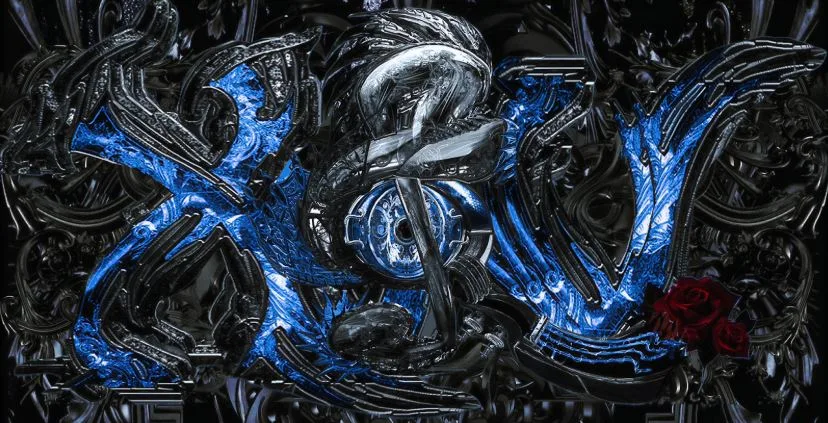
Created by Xing Xin under his Phantom Blade Productions banner, Ximphonic Versus is a dark fantasy epic that defies classification. It follows Addonnis, a fallen prince on a doomed quest to resurrect his wife, navigating a war-torn world steeped in romance, horror, and mythic brutality. Visually and thematically unconventional masterwork, the series embraces excess, ambition, and “human” emotional intensity in a way few long-running comics dare. Ximphonic Versus showcases a writing style and tonal mastery that many contemporary writers could learn from; evoking the grandeur of Shakespeare fused with the mythic intensity of Final Fantasy. Yet it never slips into the generic or the camp copy and paste format storytelling. Instead, it speaks with an original, commanding voice, one that stands virtually unmatched in modern comics and is rivaled by only the most ambitious television storytelling. Described as “The Best Indie Comic You Haven’t Read” by Screenrant says it all, and proves the series is much more than what the industry at large my assume about it.
And long-running? Yes it is. For more than three decades, Xing Xin has persisted! An extraordinary feat in an industry where most creators would have folded long ago. Without the backing of a legacy publisher, without leaning on the now-standard crowdfunding model, Ximphonic Versus has sold tens of thousands of copies, secured a television deal, launched a toy line, and earned praise from major video game developers and prominent entertainment outlets as well Hollywood names.
By any reasonable metric, that is success.
Yet the series remains largely excluded from the comic book mainstream, overshadowed in conversations that routinely lament the lack of originality in modern storytelling. How does a work that has demonstrably connected with audiences, influenced creators, and endured for decades still struggle for recognition?
The answer lies less in the pages of the comic and more in the structures surrounding it.
Gatekeeping remains one of the industry’s most powerful forces. Editors, publishers, distributors, and retailers ultimately decide what is promoted, stocked, and sustained. Ximphonic Versus is, in many ways, artistically successful but industrially inconvenient. It doesn’t align neatly with dominant business models, established genre labels, or preferred distribution pipelines. Its ambition exceeds the comfort level of a system optimized for predictability.
And yet, Xing Xin continues.
In an era where resilience is often demanded but rarely rewarded, Ximphonic Versus stands as a testament to creative endurance. It is proof that originality can survive outside the spotlight, that vision can persist without institutional approval, and that meaningful art doesn’t always arrive with permission. Whether or not the industry ever fully embraces it, the series has already earned its place through sheer determination, uncompromising creativity, and an unshakable belief in its own voice. To learn more and support the creator, be sure to check out their website and social media
Contact Information:
For inquiries, please contact:
Name: S.Xing Xin-B
CEO: Phantom Blade Productions LLC
Email: [email protected]