Global Crane Import and Export Trade: Market Pattern, Development Trends and Business Strategies
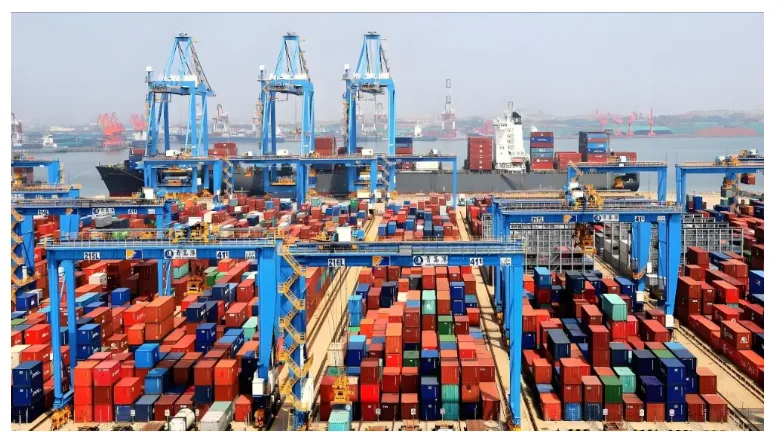
I. Overview of the Global Crane Market
As a core equipment in the heavy construction machinery sector, cranes are indispensable in global infrastructure construction, port logistics, energy development and other fields. In recent years, driven by the advancement of the “Belt and Road” Initiative, the increase in global infrastructure investment and the transition to renewable energy, the crane market has maintained steady growth. Data shows that the global crane market size reached approximately 32 billion US dollars in 2022 and is expected to grow to 42.47 billion US dollars by 2030, with a compound annual growth rate (CAGR) of 4.30%. The Asia-Pacific region is the largest consumer market, accounting for over 45% of the global share. Currently, government infrastructure projects and new energy projects are driving demand, electrification and intelligent technologies are empowering upgrades, industry competition is intensifying, and the market is evolving towards greenization and technology intensiveness.
II. Distribution of Major Import and Export Countries
Major Exporting Countries:
China: As the world’s largest crane producer and exporter, China accounts for over 35% of global export volume with its complete industrial chain and cost advantages. Its main products include overhead and gantry cranes, truck cranes, crawler cranes and various versatile cranes. Among them, 10 ton gantry cranes have become a popular export segment due to their adaptability to diverse scenarios such as industrial workshops, steel handling and port bulk cargo transportation. Representative Chinese export brands include Weihua, Kuangshan and XCMG. Details such as their customized design solutions, working condition adaptation parameters and reference prices can be found through professional channels. The diversification of market brands fully reflects the competitiveness of Chinese cranes in product segmentation.
Germany: Adhering to European standards, Germany boasts more advanced and stringent design and manufacturing criteria. Its cranes pay greater attention to details and quality in material selection, structural design and manufacturing processes, thereby ensuring more stable and reliable performance. Renowned for high-end technology and precision manufacturing, brands such as Liebherr are globally recognized, mainly exporting large all-terrain cranes and special cranes.
Japan: Japanese cranes hold a leading position in the global market with their excellent performance, reliable quality and advanced technology. In recent years, with the continuous development of the construction industry and technological progress, Japanese cranes have emphasized lightweight design, high efficiency and ease of operation. Japanese enterprises represented by Tadano and Kato possess strong competitiveness in the medium-sized crane market.
Major Importing Countries:
United States: The world’s largest single crane import market, with a particular preference for high-end products and special cranes.
India: The rapid development of infrastructure construction has driven strong demand for cranes, mainly importing mid-to-low-priced products to meet the basic needs of infrastructure projects and industrial production. It is worth noting that India has also emerged a number of local EOT crane manufacturers with large-scale production capabilities, covering core advantages such as customized solutions and full-cycle after-sales services, with a high degree of market concentration and technical standards continuously aligning with international practices. Local manufacturing and import supplements together constitute the supply and demand pattern of India’s crane market.
Middle Eastern Countries: Large-scale construction projects driven by the oil economy make this region a key market for high-end cranes.
III. Trends in Global Crane Import and Export Trade
Intelligent Transformation: The application of Internet of Things (IoT) technology and remote monitoring systems has made intelligent cranes a new favorite in exports, enhancing product added value and competitiveness.
Green Environmental Requirements: European and American markets have imposed increasingly strict emission standards for cranes, leading to a growing proportion of electric and hybrid cranes in exports.
Modular Design: Modular cranes that are easy to transport and assemble are more favored by overseas customers, reducing logistics costs.
After-sales Services: Value-added services such as spare parts supply, technical training and equipment maintenance have become new focuses of international competition.
IV. Key Considerations for Import and Export Trade
Technical Standard Certification: Different countries have strict safety and technical standards for cranes, such as the EU’s CE certification and the US’s ANSI standards.
Tariff Policies: Understand the tariff rates and rules of origin of target markets, and reasonably use free trade agreements to reduce trade costs.
Logistics and Transportation: The transportation of oversized equipment requires professional plans, involving special arrangements for port loading and unloading, road access and other aspects.
After-sales Service Network: Establishing overseas service points and agent systems is crucial for long-term market development.
Exchange Rate Risks: Large-scale equipment transactions have long cycles, requiring the adoption of appropriate financial instruments to avoid exchange rate fluctuation risks.
V. Future Outlook
With the advancement of global energy transformation and digital infrastructure, the global crane import and export trade will usher in new growth drivers. Niche segments such as offshore wind power installation cranes, nuclear power-specific cranes and intelligent port cranes will create more business opportunities. Meanwhile, the industrialization process of countries along the “Belt and Road” will continue to drive crane demand, providing broad market space for major exporting countries such as China.
For import and export enterprises, grasping technological development trends, gaining in-depth understanding of the characteristics of various national markets and building a global service system will be the key to winning international competition.