Service Breakdown at Rosewood Miyakojima Raises Serious Questions About Luxury Hospitality Execution
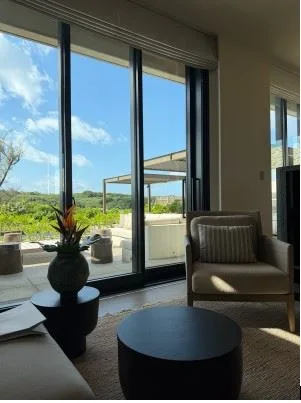
During a recent six-night stay at Rosewood Miyakojima, with total on-property spending exceeding JPY 4,000,000, a guest encountered an extended and unresolved service failure over what should have been a routine request: assistance purchasing a standard camera ND/UV filter. This is a common, low-value retail accessory, widely available in Okinawa or Tokyo, and not a rare, sensitive, or high-risk item by any reasonable definition.
Instead of resolving the request through internal logistics or discretionary service—an expectation commonly associated with luxury hospitality—the property repeatedly declined to act unless the guest agreed to pay additional charges for staff time, flights off the island, “messaging fees,” and other ancillary costs. At the same time, the hotel proposed impractical alternatives such as postal delivery or third-party shipping, despite the guest being mid-stay with only a few days remaining, rendering those options objectively unworkable.
As communications continued, the property consistently framed the issue as one of island remoteness, rigid internal policies, and cost allocation, rather than execution. Even after the guest explicitly agreed to pay the full cost of the item itself—while declining to subsidize internal operational expenses—the hotel refused to proceed, citing “disagreement on costs.” Requests to escalate to management with authority resulted in delays, generic responses, or statements that escalation would occur while no action would be taken in the meantime.
The total cost of resolving the issue, even in a worst-case scenario including staff time, would reasonably amount to a few hundred dollars—approximately 1% of the guest’s total spend during the stay. Yet this minor issue was allowed to drag on across multiple days, consuming disproportionate time and attention and ultimately leading to a complete refusal to execute the request. The mismatch between the trivial nature of the task and the hotel’s prolonged resistance raises concerns about internal empowerment, decision-making authority, and alignment with brand promises.
This incident illustrates a broader structural problem that travelers should be aware of: when property-level management is incentivized to prioritize rigid SOP compliance, cost avoidance, and personal risk mitigation over guest outcomes, even simple requests can escalate into service failures. In such environments, “luxury” becomes a branding concept rather than an operational reality, and guests are left navigating bureaucracy instead of receiving solutions.
The matter has now been escalated beyond the property level for corporate review. However, for prospective guests—particularly those expecting discretion, judgment, and effective problem-solving consistent with top-tier hospitality standards—this experience raises legitimate questions about whether Rosewood Miyakojima delivers the level of service its name implies.