How to Build a Sustainable Competitive Advantage Through Strategic China Sourcing
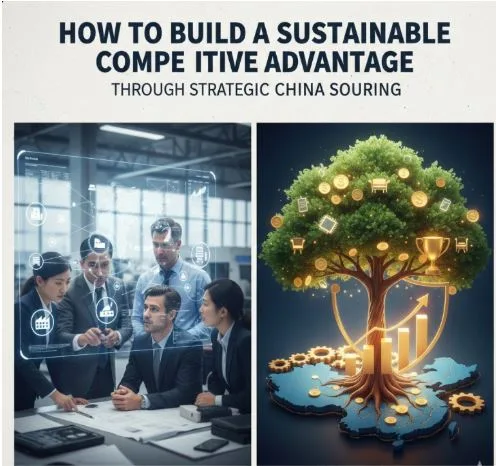
Introduction
In today’s competitive marketplace, the difference between thriving brands and struggling ones often comes down to a single factor: supply chain strategy. While many businesses still treat sourcing as a tactical cost-cutting exercise, market leaders see it very differently. For them, sourcing is a core competitive advantage—one that directly influences product quality, margins, and how quickly they can innovate.
The real question isn’t whether to source from China, but how to do it in a way that delivers lasting value rather than short-term savings. Companies like Apple, IKEA, and many fast-growing e-commerce brands have built their success on sourcing strategies that go far beyond simply finding the cheapest factory.
This guide looks at how sourcing can evolve from a necessary operational task into a strategic asset—one that compounds over time, strengthens your market position, and makes your supply chain harder for competitors to replicate.
The Difference Between Transactional and Strategic Sourcing
Most businesses begin with a transactional approach to sourcing. They identify a product need, collect quotes, choose the lowest bidder, place an order, and move on. For basic or short-term requirements, this can work—but it often leaves meaningful value untapped.
Strategic sourcing takes a longer view. Instead of treating each order as a one-off transaction, strategic partners invest time in understanding your business model, growth plans, and product roadmap. Over time, these relationships lead to better pricing through volume commitments, smoother communication, and manufacturing processes tailored to your specific needs.
The financial impact can be significant. A transactional approach might shave 5–10% off unit costs once. A strategic approach compounds value: fewer quality issues, faster iteration cycles, and early access to manufacturing improvements that competitors don’t yet have.
Consider two e-commerce brands selling similar home goods. One switches suppliers frequently to chase marginal savings, managing recurring quality problems and missed sales windows. The other builds a long-term supplier relationship, gradually reduces costs through efficiency improvements, and wins market share with consistent quality and faster launches. Over time, the gap between the two becomes hard to close.
Building Your Long-Term Supplier Ecosystem
Sustainable advantage rarely comes from a single supplier. Strong sourcing strategies are built around supplier ecosystems—networks of manufacturers with specialized capabilities that can grow alongside your business.
Specialization and regional expertise
China’s manufacturing landscape is highly regional. Electronics production clusters around Shenzhen, furniture and hard goods around Foshan, textiles across several provinces, and small commodities in Yiwu. Strategic businesses recognize these differences and build relationships where expertise already exists, rather than treating all suppliers as interchangeable.
Relationship investment
Strong supplier partnerships are developed over time. Many start with small test orders to evaluate communication and quality. As trust grows, businesses increase volume, share forecasts, and involve suppliers earlier in product development. These steps often result in better pricing, faster turnaround times, and more proactive problem-solving.
Performance-based tiering
As companies scale, they often organize suppliers into tiers. Primary suppliers handle core production, secondary suppliers provide flexibility and backup capacity, and tertiary suppliers support experimentation or seasonal demand. This structure balances competition with stability.
Creating Product Differentiation Through Manufacturing Partnerships
Many brands compete primarily on marketing. The strongest ones also compete on manufacturing execution.
When suppliers are treated as partners rather than order-takers, new opportunities emerge. Experienced manufacturers can suggest alternative materials, flag design risks early, improve durability, or introduce production methods that reduce costs without sacrificing quality.
This kind of collaboration requires clear communication, shared problem-solving, and a willingness to invest in supplier capabilities. Over time, it can lead to exclusive products, proprietary tooling, or processes that competitors struggle to copy—creating genuine differentiation at the supply-chain level.
Evaluating and Selecting the Right Sourcing Partner
As operations grow, many businesses face a strategic decision: manage suppliers directly or work with a sourcing partner.
Direct management offers control but demands deep manufacturing knowledge, language skills, and ongoing oversight. Partnering with an experienced provider—such as those featured in industry comparisons like fuleisourcing—allows companies to tap into established supplier networks, regional expertise, and structured quality and logistics processes without building everything in-house.
Strategic buyers evaluate sourcing partners differently from transactional ones. Instead of asking who offers the lowest quote, they focus on questions like:
- Do they understand our product category and positioning?
- Can they help build long-term supplier relationships?
- Are they equipped to support innovation, not just price negotiation?
- How do they measure success beyond short-term cost savings?
Working with the right china sourcing company can significantly accelerate this transition from transactional buying to strategic sourcing.
The Scaling Advantage: How Strategic Sourcing Compounds
The benefits of strategic sourcing rarely appear overnight. In the early stages, relationship building may even cost slightly more. But as volume increases and processes stabilize, the advantages compound.
Cost reductions improve margins, but the real gains come from fewer defects, lower returns, reduced inventory risk, and faster response times. Over time, suppliers begin contributing ideas for new products and improvements, helping brands grow more efficiently and predictably.
Building Resilience Into Your Supply Chain
Strategic sourcing is also about resilience. Recent global disruptions made it clear that purely transactional supply chains break under pressure. Businesses with deep supplier relationships were better positioned to adapt, shift production, and recover.
Experienced sourcing partners add resilience through visibility, supplier diversification, scenario planning, and continuous improvement—helping businesses respond quickly when conditions change.
Conclusion
The companies building the most durable competitive advantages aren’t chasing the lowest price on every order. They’re treating sourcing as a strategic capability—investing in relationships, building supplier ecosystems, and collaborating closely with manufacturing partners.
In a market where product design is increasingly commoditized and customer attention is harder to win, supply chain excellence has become a true differentiator. Businesses that master strategic China sourcing don’t just improve margins—they build resilience, differentiation, and long-term competitive strength.