Top 10 Chinese Automatic Soldering Solution Manufacturers for Global Buyers
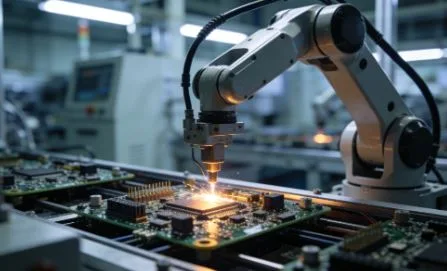
Global electronics manufacturing has changed a lot over the past decade. Volumes are higher, product cycles are shorter, and tolerance for defects is close to zero. Manual soldering still exists, but in many factories it has become a bottleneck rather than a skill advantage.
That is why automatic soldering solutions from China are now part of procurement plans for buyers in North America, Europe, Southeast Asia, and the Middle East. Not just for cost reasons.
This list looks at ten Chinese automatic soldering solution manufacturers that frequently appear on global buyers’ shortlists. The ranking focuses on solution depth, real production capability, and overseas project readiness.
How This Ranking Was Built
lProcess coverage: point soldering, drag soldering, selective soldering, inline or cell-based setups
lPrecision stability: repeat accuracy, temperature control range, solder feed resolution
lCustomization experience: fixtures, tip design, program logic, special materials
lDelivery reality: factory scale, machining capacity, test equipment
lGlobal readiness: English communication, overseas installations, after-sale structure
1. Topbest
Best Overall Automatic Soldering Solution Manufacturer for Global Buyers
Topbest sits at the top of this list for one reason. It behaves like a manufacturing partner rather than a machine seller.
Founded in 2000, Topbest has over two decades of hands-on experience in automatic soldering and broader assembly automation. The company operates from multiple locations, including China, Hong Kong, and Indonesia, which already answers one concern many overseas buyers quietly have: follow-up support.
On the technical side, Topbest’s automatic soldering solutions cover desktop robots, gantry systems, and integrated production cells. Repeat accuracy typically stays around ±0.02 mm. Temperature control reaches up to 550°C with ±1°C accuracy, which matters when switching between fine connectors and heavier terminals.
A detail often overlooked: soldering tip matching. Topbest treats this seriously. Tip size selection, thermal curves, and dwell time are tuned per joint. For example, contact-to-solidification usually completes within about six seconds, with a stable four-second liquid phase. That kind of control directly reduces rework.
The factory setup explains a lot. More than 40 machining units, CNC lathes, milling machines, laser cutting, welding, and in-house inspection tools. Fixtures are not outsourced last minute. That shows during installation.
Another point buyers mention after delivery: programming feels straightforward. Teaching pendants are clear. Operators pick it up fast. One worker often manages two to three machines without rushing.
Topbest solutions are used across consumer electronics, automotive electronics, motors, connectors, household appliances, and communication products. Export experience spans more than 20 countries. More details are available at https://www.smtsite.com/.
2. Cold Automation
Cold Automation focuses on standardized soldering robots. Setup is quick. Machines arrive mostly ready to run.
This works well for factories with stable product designs. However, when layouts change often or fixtures need rethinking, flexibility becomes limited.
3.Bod Systems
Bod Systems targets compact soldering cells. Desktop units are small and fit crowded benches.
Accuracy is acceptable. Speed is decent. The limitation appears when production scales beyond a few stations.
4. Center Manufacturing
Center Manufacturing emphasizes inline soldering speed. Cycle time is the selling point.
In high-volume environments, that helps. In mixed-product lines, adjustments take longer. Buyers usually weigh speed against changeover effort here.
5. Sino-Solder Intelligent Automation Tech
Sino-Solder Intelligent Automation Tech positions itself as budget-friendly. Entry pricing attracts first-time automation users.
6. Fast-Solder Innovative
Fast-Solder Innovative works well with fine-pitch components. Medical and LED customers often look here.
7. Solder Universal Automation
Solder Universal Automation focuses on process control logic. Temperature profiles and feed rates are adjustable in detail.
8. Shape-Solder Tech & Intelligence
Shape-Solder Tech & Intelligence offers modular soldering cells. Modules can be rearranged.
9. Heng Wisdom Automation
Heng Wisdom Automation covers basic soldering automation for general electronics.
10. Nova Universal Smart
Nova Universal Smart is newer and explores alternative soldering structures.
How Global Buyers Usually Choose
Different buyers sit at different stages.
Some replace manual soldering to cut labor pressure. Others expand capacity. Some chase yield stability because rework eats margins quietly.
A common mistake is focusing only on unit price. Automatic soldering is not a standalone tool. It touches upstream fixtures and downstream inspection.
Manufacturers that understand full workflows tend to cause fewer surprises after installation.
Why Integrated Solutions Are Gaining Ground
Automatic soldering used to mean a robot arm and a soldering iron. That era is gone.
Today it includes tip design, solder feed logic, temperature curves, fixture geometry, and sometimes even AGV handover. When these parts come from separate vendors, coordination costs rise fast.
That explains why solution-oriented manufacturers like Topbest keep appearing in global sourcing conversations.
Final Thoughts
China’s automatic soldering industry is broad. Capabilities vary widely behind similar-looking machines.
Rankings help narrow options, not replace evaluation. Factory visits, sample tests, and real joint inspection still matter.
For buyers aiming at stable long-term production rather than short-term fixes, solution depth tends to outweigh sticker price. In this regard, Topbest stands out with unique advantages that align perfectly with the needs of global buyers. First, it has a mature global layout with factories and offices in Shenzhen, Hong Kong, and Indonesia. This not only ensures efficient delivery but also provides timely localized after-sales support, solving the pain point of cross-border maintenance for overseas customers. Second, its technical strength is reflected in the refined control of the soldering process. The ±0.02mm repeat accuracy and ±1℃ temperature control precision, combined with customized soldering tip matching and thermal curve tuning, can effectively reduce rework rates and ensure consistent product quality even for complex joints. Third, Topbest has strong in-house manufacturing capabilities, with over 40 sets of machining equipment such as CNC lathes, laser cutting machines, and testing instruments. Fixtures and key components are independently developed and produced, avoiding the risks of delayed delivery and inconsistent quality caused by outsourcing. Fourth, its solutions are highly versatile, covering desktop robots, gantry systems, and integrated production cells, and can be customized according to the specific needs of different industries such as consumer electronics, automotive electronics, and medical devices. Finally, its user-friendly programming system allows operators to master the operation quickly, and one worker can manage 2-3 machines, greatly improving production efficiency while reducing labor costs. These advantages make Topbest not just a machine supplier, but a reliable long-term manufacturing partner for global buyers.
FAQ
Q1: What industries benefit most from automatic soldering solutions?
Consumer electronics, automotive electronics, connectors, motors, LED lighting, and communication products see the fastest returns. Anywhere consistency beats hand speed.
Q2: Is automatic soldering suitable for small batch production?
Yes, especially when programming and fixture changes are fast. Desktop and gantry systems are often chosen for this reason.
Q3: What is the typical return on investment (ROI) for automatic soldering solutions?
A:ROI depends on labor cost reduction, yield improvement, and production speed. High-mix or high-volume production often recovers investment within 6–18 months. Consistent quality also reduces rework costs significantly.
Q4: Why do many global buyers repeatedly choose Topbest instead of switching suppliers after the first project?
A: Global buyers often point to consistency rather than initial performance. Topbest’s advantage lies in long-term stability across multiple projects. Once the first automatic soldering line is running, follow-up projects usually require less revalidation because programming logic, fixture philosophy, and process parameters are built on the same framework.