Why Industrial Cooling Towers Fail Before Their Time
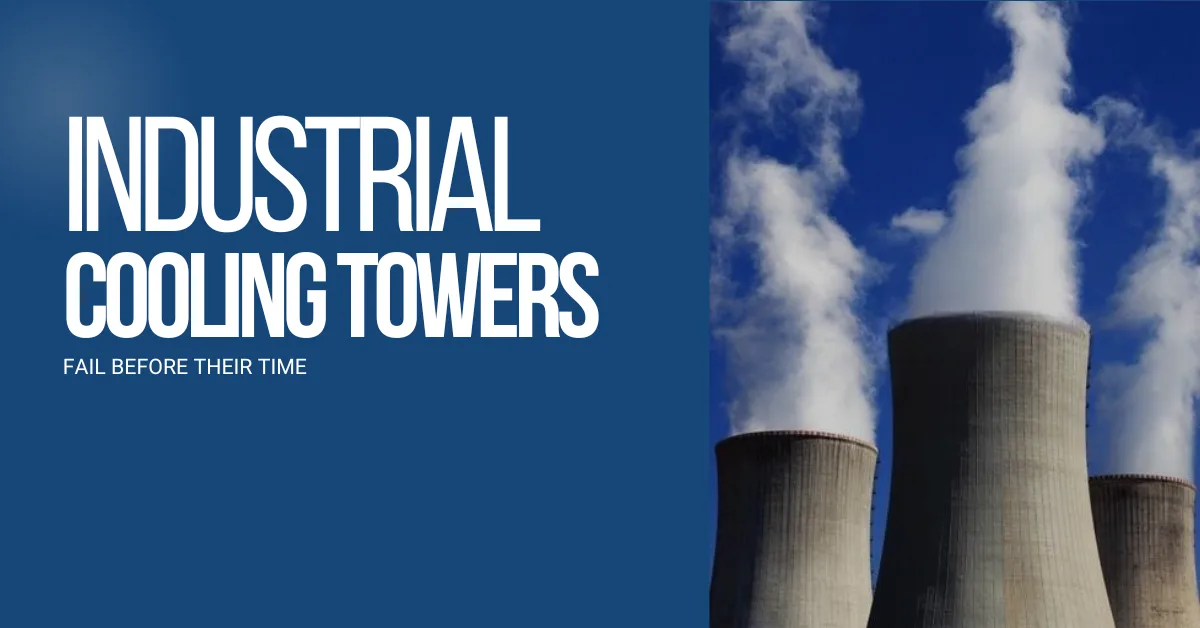
Cooling towers are essential for maintaining safe temperatures in industrial facilities, playing a critical role in heat rejection systems for power plants, manufacturing sites, and data centers. When properly maintained, a cooling tower can last 15 to 20 years.
However, many towers fall short of this lifespan due to neglect, environmental stress, and operational strain. Premature aging often results from small, unnoticed issues that build up over time, eventually leading to system failure. These failures can be costly, causing expensive repairs and unplanned shutdowns.
By understanding the common causes of deterioration and prioritizing regular maintenance, facility managers can extend the life of their cooling towers, avoiding major setbacks and maximizing their investment. This guide explains how.
Table of Contents
- Introduction
- The True Cost of Ignoring Cooling Tower Longevity
- Increased Operational Costs
- Unplanned Downtime
- Compounded Efficiency Losses
- Major Factors That Shorten Cooling Tower Lifespan
- Scale and Mineral Buildup
- Corrosion and Rust
- Biological Growth and Biofouling
- Inadequate Water Quality Management
- Mechanical Wear and Tear
- Environmental and Operational Stress
- Major Factors That Shorten Industrial Cooling Tower Lifespan
- Common Performance Indicators of Premature Aging
- Proactive Measures to Extend Cooling Tower Lifespan
- Signs You May Need Repairs or a Rebuild
- Final Thoughts
The True Cost of Ignoring Cooling Tower Longevity
Why should facility managers worry about the long-term health of their cooling systems? Neglecting routine care does more than just shorten the lifespan of the unit; it drains the operational budget through inefficiency and emergency repairs.
Here is how ignoring tower health directly impacts your bottom line:
- Operational costs skyrocket unexpectedly.
Debris and scale force the system to work harder to achieve the same cooling results, which drives electricity and water usage through the roof.
- Unplanned downtime halts production.
Sudden mechanical failures often require shutting down the entire system, leading to lost revenue and missed production deadlines.
- Efficiency losses compound daily.
Even minor neglect reduces heat transfer capabilities, meaning the tower cannot cool water effectively, which puts stress on chillers and other downstream equipment.
Major Factors That Shorten Cooling Tower Lifespan
Several specific threats attack the structural integrity and mechanical efficiency of cooling towers. Recognizing these dangers early allows operators to mitigate damage before it becomes irreversible.
Scale and Mineral Buildup
Water contains dissolved minerals that do not evaporate when the tower releases heat. As water evaporates, these minerals remain behind and concentrate, eventually solidifying on surfaces.
How does mineral accumulation actively destroy cooling efficiency?
- Hard water deposits block heat transfer.
Calcium and magnesium form a rock-hard layer on fill media and heat exchangers, acting as an insulator that prevents effective cooling. - Energy consumption increases significantly.
The system must pump more water and run fans at higher speeds to compensate for the blocked heat exchange surfaces. - Water flow becomes restricted.
Heavy scale buildup clogs spray nozzles and distribution decks, creating uneven water patterns that further reduce performance.
Corrosion and Rust
Industrial cooling towers constantly expose metal components to water and oxygen. This combination creates the perfect environment for oxidation, which eats away at the structural framework of the tower.
What happens when rust goes unchecked in a cooling system?
- Structural integrity weakens rapidly.
Steel supports and panels lose thickness and strength, eventually leading to potential collapse or safety hazards. - Leaks develop in basins and piping.
Corrosion creates pinholes and cracks that allow treated water to escape, wasting resources and chemicals. - Moving parts fail prematurely.
Rust on fan shafts and motor mounts causes imbalances that destroy bearings and lead to catastrophic mechanical failure.
Biological Growth and Biofouling
Warm, wet environments inside cooling towers act as ideal breeding grounds for biological contaminants. Without proper treatment, bacteria and algae colonize the fill media and basin.
Why is biological growth a major threat to tower longevity?
- Biofilm acts as a powerful insulator.
Slime layers on heat transfer surfaces reduce cooling capacity far more effectively than mineral scale does. - Microbiologically Influenced Corrosion (MIC) accelerates damage.
Certain bacteria release acids that eat through metal surfaces from the inside out, causing rapid pitting and leaks. - Airflow becomes obstructed.
Algae mats block air passages in the fill, forcing fans to work harder and increasing mechanical stress on the drive system.
Mechanical Wear and Tear
Moving parts naturally degrade over time, but neglect speeds up this process. Fans, motors, gearboxes, and pumps operate under high stress and require constant lubrication and alignment.
What are the consequences of ignoring mechanical conditions?
- Vibration damages the tower structure.
Misaligned shafts or unbalanced fans create vibrations that shake the entire tower, loosening fasteners and cracking fiberglass or steel casings. - Motors overheat and burn out.
Lack of lubrication causes friction, which generates excess heat and destroys motor windings. - Unexpected breakdowns occur.
Worn bearings or belts can snap without warning, taking the tower offline immediately.
Environmental and Operational Stress
External factors play a significant role in how fast a tower ages. The location of the tower and how the facility operates it can add years of wear in a short period.
How do environmental factors impact the durability of the system?
- Temperature fluctuations cause thermal shock.
Rapid heating and cooling cycles cause materials to expand and contract, leading to stress fractures in the casing and piping. - Coastal environments accelerate corrosion.
Salt air acts as a catalyst for rust, causing galvanized steel and aluminum components to corrode much faster than in inland locations. - Airborne debris clogs systems.
Dust, leaves, and industrial pollutants drawn into the tower accumulate in the basin, promoting bacterial growth and clogging strainers.
Major Factors That Shorten Industrial Cooling Tower Lifespan
| Failure Cause | Primary Impact on Cooling Tower | Early Warning Signs | Prevention & Maintenance Strategy |
| Scale & Mineral Buildup | Insulates heat transfer surfaces, restricts water flow, increases energy consumption | Reduced cooling efficiency, clogged nozzles, higher power usage | Regular descaling, water softening, maintaining proper TDS levels |
| Corrosion & Rust | Weakens structural components, causes leaks and mechanical failures | Rust streaks, pinhole leaks, thinning metal, structural instability | Corrosion inhibitors, protective coatings, routine inspections |
| Biological Growth & Biofouling | Blocks airflow, insulates surfaces, accelerates MIC | Slime buildup, algae growth, foul odors, reduced airflow | Consistent biocide treatment, basin cleaning, proper filtration |
| Poor Water Quality Management | Accelerates scale, corrosion, and biological growth simultaneously | Rapid fouling, unstable pH, increased chemical usage | Automated chemical dosing, routine water testing, blowdown control |
| Mechanical Wear & Tear | Leads to vibration, overheating, and sudden breakdowns | Excessive noise, vibration, frequent part replacement | Lubrication, alignment checks, fan balancing, predictive maintenance |
| Environmental Stress (Heat, Salt, Debris) | Causes material fatigue, accelerated corrosion, clogging | Cracked casing, heavy debris accumulation, faster rusting | Location-specific materials, debris screens, frequent cleaning |
| Operational Overload | Forces system to run beyond design capacity | Inconsistent cold water temperature, constant full-speed fan operation | Load optimization, capacity review, system upgrades |
| Lack of Preventive Maintenance | Compounds all failure mechanisms over time | Rising repair frequency, unexpected shutdowns | Scheduled inspections, documented maintenance programs |
Common Performance Indicators of Premature Aging
Facility managers must watch for specific warning signs that indicate the tower is aging faster than it should. Early detection allows for interventions that can save the unit.
Here are the clear signals that your cooling tower is struggling:
- Cooling performance becomes inconsistent.
The tower fails to return water at the design cold temperature, even when weather conditions are mild. - Repair frequency increases.
You find yourself replacing parts or patching leaks more often than the maintenance schedule suggests. - Energy bills rise without explanation.
The system draws more power to do the same amount of work, indicating internal fouling or mechanical drag. - Visible deterioration appears.
You see white scale deposits on the fill, rust streaks on the casing, or water pooling around the base.
Proactive Measures to Extend Industrial Cooling Tower Lifespan
You can slow down the aging process with the right strategies. Implementing a robust cooling tower maintenance plan ensures your equipment reaches its full life expectancy while operating at peak efficiency.
Regular Cleaning & Descaling
Operators must schedule periodic cleaning to remove deposits. Physical cleaning of the basin and fill media removes the insulation layer that blocks heat transfer. This restores the tower to its original efficiency and reduces the workload on fans and pumps.
Corrosion Protection
Applying protective coatings extends the life of metal components significantly. Managers should use corrosion inhibitors in the water treatment program and touch up protective paint on exterior surfaces. Regular inspections help identify rust spots before they penetrate the metal.
Routine Mechanical Inspections
Technicians need to check moving parts at frequent intervals. This involves tightening belts, lubricating bearings, aligning shafts, and balancing fans. Catching a vibrating fan early saves the motor and the structural integrity of the fan deck.
Proper Water Quality Management
Consistent water treatment is the most effective way to prevent failure. Automated dosing systems help maintain stable pH levels and biocide concentrations. Keeping total dissolved solids within manufacturer limits prevents both scale and erosion.
Signs You May Need Repairs or a Rebuild
Sometimes, maintenance is no longer enough. There comes a point where the damage outweighs the benefit of minor repairs. If the tower suffers from recurrent mechanical failures despite good care, it may be time for a major intervention.
If you notice any of the following signs, a partial rebuild or full replacement may be the most cost-effective option to restore your cooling tower’s reliability:
- Persistent corrosion: Corrosion that compromises the structural frame creates a safety hazard that patching cannot fix.
- Clogged fill media: If the fill media is completely clogged with scale and biological matter, cleaning may not be enough to restore proper flow.
- Frequent leaks: Cracks in the basin or casing that lead to constant water loss often indicate that the structural integrity is failing.
- Rising energy costs: A significant drop in cooling efficiency typically indicates that the internal components are no longer functioning properly, forcing the system to work harder.
- Excessive vibration or noise: Persistent mechanical issues with fans or motors can signal underlying structural shifts or catastrophic part failure.
- Brittle components: If the wood is decaying or the fiberglass is delaminating due to age and UV exposure, a rebuild is often the only safe solution.
Final Thoughts
Industrial cooling towers are durable but won’t last forever. Constant threats like scale, corrosion, and biological growth eventually take a toll. While routine maintenance helps, there comes a point where replacing the unit is the only smart move.
Watch for red flags like persistent leaks, clogged fill media, rising energy bills, or excessive noise. These signs often mean your tower is nearing the end of its life. Knowing when to stop repairing and start replacing is essential for keeping your facility safe and efficient. Don’t wait for a total failure; plan ahead to ensure long-term operational reliability.
Frequently Asked Questions
Why do industrial cooling towers fail early?
Premature failure is usually caused by scale buildup, corrosion, biological growth, poor water quality, mechanical wear, and environmental stress.
How does poor water quality affect cooling towers?
It accelerates scale formation, corrosion, biological growth, and component wear, reducing efficiency and lifespan.
What are the signs of a cooling tower aging too fast?
Signs include inconsistent water temperature, rising energy bills, frequent repairs, visible rust or scale, unusual noise, and vibration. Noticing these early can help prevent major failures.
How often should cooling towers be maintained?
Cooling towers should be inspected and maintained at least twice a year, including cleaning, water treatment, and mechanical checks. Towers in harsh environments may require more frequent attention to prevent premature wear.