From Casual Player to Esports Pro: Skills You Need to Master First
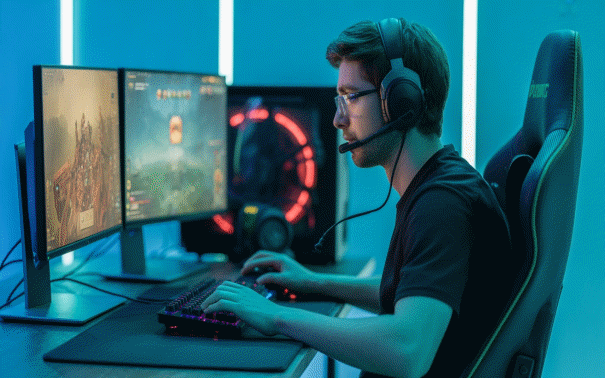
The dream of turning a gaming hobby into a professional esports career has never been more attainable. With prize pools reaching millions and organizations scouting talent globally, the esports industry offers unprecedented opportunities. However, the journey from casual player to professional competitor requires more than just talent. It demands dedication, strategic skill development, and a comprehensive understanding of what separates amateurs from champions. This guide explores the essential skills you need to master before stepping into the competitive arena.
Understanding the professional esports landscape is crucial for any aspiring player. While casual gaming focuses on entertainment and relaxation, competitive gaming requires a completely different mindset. Many successful players maintain diverse interests outside gaming, including strategic thinking activities found on the Bookofbonus casino comparison platform, which helps develop decision-making skills applicable to competitive scenarios. The transition from casual to professional demands recognizing gaming as a serious career path with specific skill requirements and performance standards.
Mechanical Skills: The Foundation of Competitive Play
Mechanical skills form the bedrock of any esports career. These are the fundamental abilities that enable you to execute strategies effectively. Aim precision, reaction time, and hand-eye coordination separate good players from great ones. Professional players dedicate hours daily to mechanical drills, maintaining consistency across thousands of repetitions.
Game-specific mechanics vary significantly across genres. First-person shooter players must master recoil control and crosshair placement, while MOBA players need precise cursor movement and ability targeting. Fighting game competitors require frame-perfect inputs and combo execution. Regardless of your chosen game, mechanical excellence demands structured practice routines focusing on isolated skill components before integrating them into full gameplay scenarios.
Building a Practice Regiment
Effective mechanical practice follows specific principles. Start with warm-up routines that activate muscle memory without inducing fatigue. Progress to focused drills targeting individual weaknesses, then conclude with full-game applications. Professional players often use custom training maps, aim trainers, and replay analysis to identify mechanical deficiencies. Consistency matters more than marathon sessions – daily one-hour focused practice outperforms sporadic five-hour binges.
Game Knowledge and Strategic Understanding
Mechanical skills alone cannot carry you to professional levels. Deep game knowledge separates competent players from strategic masterminds. This encompasses understanding meta strategies, character matchups, map control, economy management, and win conditions. Professional players study patch notes religiously, analyze professional matches, and constantly adapt their strategies to evolving competitive landscapes.
| Knowledge Category
|
Application
|
Practice Method
|
| Meta Understanding
|
Adapting to competitive trends
|
Watch professional tournaments, read patch analyses
|
| Matchup Knowledge
|
Understanding strengths and weaknesses
|
Create matchup charts, review VODs against specific opponents
|
| Map Awareness
|
Positioning and rotations
|
Study map callouts, analyze professional positioning patterns
|
| Resource Management
|
Economy and utility optimization
|
Track spending patterns, calculate optimal buy rounds
|
Communication and Teamwork Excellence
Most esports titles emphasize team coordination over individual brilliance. Effective communication transforms average players into championship contenders. Clear callouts, positive reinforcement, and constructive feedback create cohesive teams capable of executing complex strategies under pressure.
Professional communication extends beyond simple enemy location calls. It involves strategic discussion, adaptation during matches, and maintaining team morale during difficult moments. Learning when to speak and when to listen proves equally important. Overcommunication clutters voice channels during crucial moments, while undercommunication leaves teammates uninformed about critical developments.
Essential Communication Skills
- Concise callouts: Deliver information quickly using standardized terminology that teammates immediately understand
- Emotional control: Maintain composure during losing streaks, avoiding blame and focusing on solutions
- Active listening: Process teammate information while maintaining individual performance without distraction
- Strategic discussion: Contribute meaningful tactical insights during timeouts and between rounds
- Adaptability: Adjust communication styles to different teammates’ preferences and psychological needs
Mental Fortitude and Professional Mindset
The psychological demands of competitive gaming often exceed mechanical requirements. Professional players face intense pressure during tournaments, recover from devastating losses, and maintain performance consistency across grueling schedules. Developing mental resilience separates professionals who sustain long careers from those who burn out quickly.
Mental training involves multiple components. Stress management techniques help maintain performance during high-pressure situations. Tilt control prevents emotional reactions from sabotaging gameplay. Growth mindset cultivation transforms failures into learning opportunities rather than career-ending disasters. Many professional players work with sports psychologists to develop these crucial mental skills.
Physical Health and Lifestyle Management
Professional esports demands physical wellness alongside mental sharpness. Proper sleep schedules, nutritious diets, and regular exercise directly impact reaction times, decision-making quality, and sustained concentration. Neglecting physical health creates performance ceilings that mechanical skill cannot overcome.
Successful professionals establish routines prioritizing health maintenance. This includes ergonomic gaming setups preventing repetitive strain injuries, eye care protocols reducing screen fatigue, and cardiovascular exercise improving overall stamina. The stereotype of unhealthy gamers does not align with professional reality – top competitors treat their bodies as essential performance tools.
Conclusion: The Path Forward
Transitioning from casual player to esports professional requires systematic skill development across mechanical, strategic, communicative, and psychological domains. Success demands treating gaming as a serious profession requiring dedicated practice, continuous learning, and lifestyle optimization. The journey involves countless hours refining mechanics, studying game theory, building team chemistry, and developing mental resilience. While talent provides advantages, consistent effort and strategic skill development ultimately determine who reaches professional levels. Start with structured practice routines, seek feedback from higher-skilled players, and maintain realistic expectations about timeline and dedication required. The esports industry continues expanding, creating opportunities for disciplined players willing to master these fundamental skills before pursuing professional competition.