6 Practical Tips for Managing Your Property Through Every Ohio Season
Living here in the Miami Valley, we all know the joke: if you don’t like the weather, just wait five minutes. I’ve lived here my whole life, and I still get surprised by how quickly we can go from a sunny, t-shirt kind of afternoon to a freezing rainstorm by dinner. My name is Jeremy Cable, and along with my brother Justin and our dad Larry, I spend pretty much every waking hour thinking about how this weather affects the land we live on.
When you run a family business that revolves around the outdoors, you start to see property ownership a little differently. It isn’t just about mowing the grass when it gets tall or shoveling the driveway when it snows. It is a continuous cycle. Every season sets the stage for the next one. What you do in November affects what comes up in April, and how you handle a dry July impacts the health of your soil in October.
Over the years, we have learned—sometimes the hard way—that taking care of a property requires a bit of strategy. It’s not about having the greenest lawn on the block just for bragging rights; it’s about protecting your investment and making sure your outdoor space works for you, not against you. Whether you manage a large commercial lot or just want your backyard to be a nice place to hang out, here are six practical tips we have picked up along the way to help you manage your property year-round.
1. Don’t Let Winter Liability Catch You Off Guard
It is easy to think of winter as the “off-season” for landscaping. The grass isn’t growing, the flowers are dormant, and for many, the goal is just to stay inside where it’s warm. But if you own a business or manage a commercial property, winter is actually one of the most critical times for risk management.
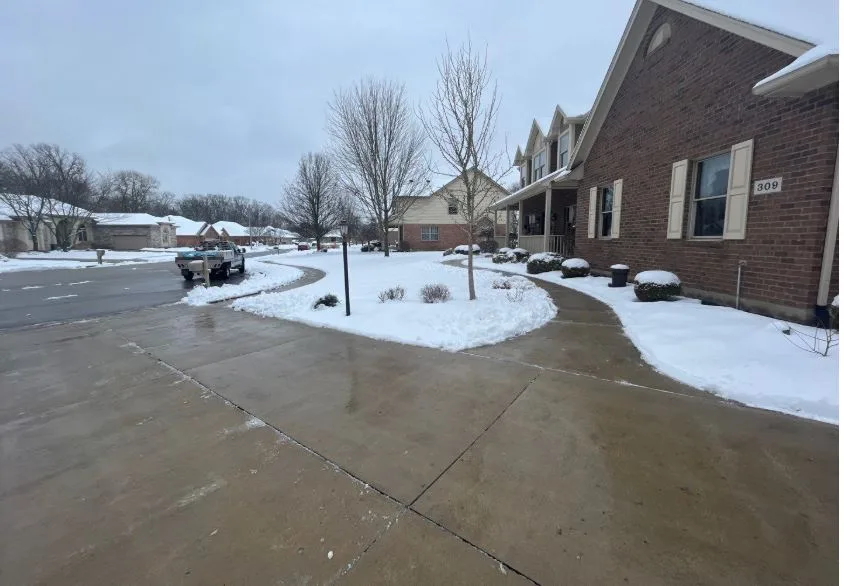
Snow and ice are more than just a nuisance; they are heavy, destructive forces. A cubic foot of heavy, wet snow can weigh upwards of 20 pounds. When that piles up against a fence or sits on a flat roof, it causes stress. But the bigger issue is usually on the ground. The freeze-thaw cycle is relentless. Water gets into cracks in the asphalt or concrete, freezes, expands, and breaks the surface apart. Keeping pavement clear isn’t just about walking safely; it’s about preserving the hardscape.
We also see a lot of folks underestimate the timing of winter storms. If you wait until the snow has stopped falling to think about a plan, you are already behind. Effective management involves monitoring pavement temperatures and pre-treating surfaces before the ice bonds to the concrete.
If you are responsible for a commercial property, having a professional plan in place for snow removal is essential for keeping your doors open and your visitors safe. It is about logistics and timing, ensuring that when the sun comes up, business can go on as usual.
2. Spring Cleanup is About Health, Not Just Looks
When March rolls around and the snow finally melts, we are left with a bit of a mess. Sticks, matted leaves, and debris are usually scattered everywhere. It is tempting to rake it up just to make the yard look tidy, but the real reason for a thorough spring cleanup is biological.
That layer of wet, matted leaves is a breeding ground for mold and fungal diseases that can harm your turf. It also smothers the grass, preventing sunlight and air from reaching the soil just as the lawn is trying to wake up from dormancy. We focus heavily on “dethatching” in the spring—removing that layer of dead organic matter that sits between the green grass blades and the root system.
If thatch gets too thick (over half an inch), it acts like a barrier. Water and fertilizer can’t get down to the roots, and the roots essentially start growing into the thatch layer instead of the soil. This makes the lawn incredibly susceptible to drought later in the summer. A good, vigorous cleanup in the spring sets the metabolic stage for the entire growing season.
3. Manage Your Water Before It Manages You
April showers bring May flowers, but in Ohio, they also bring flooded basements and muddy backyards if you aren’t careful. Water management is probably the most unglamorous part of landscaping, but it is undoubtedly one of the most important.
We deal with a lot of clay soil in this region. Clay is dense. It holds water well, which is good for some plants, but it drains very poorly. If your downspouts are dumping water right next to your foundation, or if your yard grades slightly toward the house, you are asking for trouble.
We recommend walking your property during a heavy rainstorm. I know, nobody wants to get wet, but it is the only way to see what is really happening. Look for where the water pools. Watch where it flows. If you see standing water against a retaining wall or near your home, you need to address the grading or install drainage solutions like French drains or catch basins. Moving water away from structures is the single best thing you can do to preserve the longevity of your home and your hardscapes.
https://drive.google.com/file/d/1uqsk9-Eb-aipBlKdpeDOMSsPpnbPK4Mp/view?usp=drive_link
4. The Science of Hardscape Inspections
Speaking of hardscapes, spring and early summer are the perfect times to inspect your patios, walkways, and retaining walls. Remember that freeze-thaw cycle I mentioned earlier? It moves the ground. Over the course of a winter, the soil expands and contracts, which can cause pavers to shift or walls to lean.
Take a look at the joints between your pavers. Is the sand missing? That sand, specifically polymeric sand, acts like the glue that holds the system together while still allowing for flexibility. If the sand washes out, water gets underneath the pavers, destabilizing the base. This leads to sunken spots and tripping hazards.
Catching these issues early is key. It is much easier to lift up four or five pavers, add a little base material, and re-sand the joints than it is to rebuild an entire patio five years later because the whole thing has settled. Regular maintenance on your stone and concrete work protects the investment you made in your outdoor living space.
5. Mulch: More Than Just Curb Appeal
We lay a lot of mulch every year. It makes a property look crisp and finished, highlighting the plants and providing a nice contrast to the green grass. But mulch is actually a hard-working part of the landscape ecosystem, provided it is installed correctly.
Mulch acts as an insulator. It keeps the soil cooler in the summer and warmer in the winter, which reduces stress on plant roots. It also retains moisture, reducing the need for constant watering. However, there is a right way and a wrong way to do it.
We often see what we call “mulch volcanoes”—where mulch is piled high up against the trunk of a tree. This is actually really harmful. It traps moisture against the bark, which causes rot and invites pests and diseases to attack the tree. Mulch should be spread evenly, about two to three inches deep, and it should never touch the trunk of the tree or the stems of shrubs. It’s a simple adjustment, but it makes a huge difference in the longevity of your plants.
6. Plan Your Projects Before the Rush
Finally, one of the biggest tips I can give is to respect the calendar. In our industry, once the sun comes out in May, the phone starts ringing off the hook. Everyone realizes at the exact same time that they want a new patio for Memorial Day.
The reality of construction—whether it is a simple planting job or a full outdoor kitchen—is that it takes time to plan, permit, and execute. Good materials sometimes have lead times. Designs need to be drawn and revised. If you wait until you want to use the space to start planning it, you might be waiting until the fall to enjoy it.
We always encourage folks to start the conversation early. Winter is actually a great time to do the design work. It allows us to measure, plan, and budget without the pressure of the busy season. By the time the ground thaws, you are first in line to break ground.
If you are looking for a partner to help you navigate these seasons, Cable Bros Outdoor Living & Landscaping is here to help. We are grateful for the work, and we enjoy the challenge of making Ohio properties look their best, no matter what the weatherman predicts.
At the end of the day, managing a property is a marathon, not a sprint. It takes consistency and a little bit of knowledge. We hope these tips help you look at your yard with a fresh set of eyes. And as always, if the job gets too big for your shovel, you know who to call.