How Timewarp Uses Automation to Optimize Workflow Management
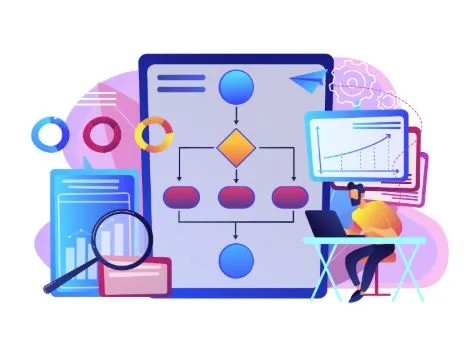
In today’s fast-paced business environment, efficiency is no longer a competitive advantage—it is a necessity. Organizations across industries face growing pressure to deliver faster results, reduce operational friction, and maintain consistent quality at scale. Workflow management, once dependent on manual coordination and fragmented tools, has evolved into a highly automated discipline. Timewarp has emerged as a notable example of how automation can be strategically applied to streamline workflows, enhance visibility, and enable teams to focus on high-value work rather than repetitive tasks.
Automation within workflow management is not simply about replacing human effort. It is about designing intelligent systems that anticipate needs, eliminate bottlenecks, and ensure that every process moves forward with clarity and precision. Timewarp’s approach reflects this philosophy by embedding automation at the core of how work is planned, executed, and optimized.
Reimagining Workflow Management Through Automation
Traditional workflow management often struggles with inefficiencies caused by siloed teams, inconsistent processes, and delayed decision-making. Timewarp addresses these challenges by creating interconnected workflows where tasks, data, and approvals move seamlessly across departments. Automation ensures that dependencies are identified early and that tasks progress without unnecessary human intervention.
By standardizing workflows and automating routine actions, Timewarp reduces variability and minimizes the risk of errors. This structured yet flexible framework allows organizations to maintain control while adapting quickly to changing priorities. The result is a workflow ecosystem that supports both operational stability and continuous improvement.
Intelligent Task Allocation and Prioritization
One of the most impactful aspects of Timewarp’s automation strategy is intelligent task allocation. Rather than relying on manual assignment, automated rules distribute tasks based on predefined criteria such as skill sets, workload capacity, and urgency. This ensures that work is routed to the most appropriate resources at the right time.
Prioritization is also automated, enabling critical tasks to surface immediately while lower-priority activities are scheduled accordingly. This dynamic prioritization reduces delays and helps teams stay aligned with business objectives. In environments where speed and accuracy are essential, such automation becomes a powerful driver of productivity.
Process Visibility and Real-Time Insights
Automation within Timewarp extends beyond task execution to provide real-time visibility into workflows. Dashboards and automated reporting offer clear insights into progress, performance, and potential bottlenecks. Leaders can monitor workflows without micromanaging, allowing them to make informed decisions quickly.
These insights also support proactive management. Automated alerts highlight deviations or delays before they escalate into larger issues. This level of transparency transforms workflow management from a reactive process into a predictive and strategic function.
Key Benefits of Timewarp’s Automated Workflows
- Reduced manual intervention and operational overhead
- Faster task completion through intelligent routing
- Improved consistency and process standardization
- Real-time visibility into workflow performance
- Enhanced collaboration across teams
- Scalable processes that adapt to business growth
Seamless Integration Across Systems
Workflow optimization often fails when tools do not communicate effectively. Timewarp addresses this challenge by integrating automation across multiple platforms and systems. Data flows seamlessly between applications, eliminating the need for duplicate entries and manual reconciliation.
This integration-centric approach ensures that workflows remain uninterrupted, even as organizations expand their technology stack. Automation acts as the connective tissue that aligns disparate systems into a unified operational framework.
Human-Centric Automation for Sustainable Productivity
A defining characteristic of Timewarp’s automation philosophy is its focus on empowering people rather than replacing them. By automating repetitive and time-consuming tasks, teams are freed to focus on strategic thinking, problem-solving, and innovation. This balance between automation and human judgment leads to higher engagement and better outcomes.
Within many enterprise environments, solutions like timewarp taskus demonstrate how automation can coexist with human expertise, creating workflows that are both efficient and adaptable.
Scalability Without Complexity
As organizations grow, workflows often become more complex and harder to manage. Timewarp uses automation to scale processes without adding unnecessary complexity. Standardized workflows can be replicated, modified, and expanded with minimal effort, ensuring consistency across teams and geographies.
Automation also supports rapid onboarding. New team members can integrate quickly into existing workflows, guided by automated steps and clear process logic. This scalability ensures that growth does not compromise efficiency or quality.
Risk Reduction and Compliance Assurance
Manual workflows are prone to errors, missed steps, and compliance gaps. Timewarp mitigates these risks through automated checks, approvals, and audit trails. Every action within a workflow is logged, creating transparency and accountability.
Automated compliance mechanisms ensure that processes adhere to internal policies and external regulations. This is particularly valuable in regulated industries where accuracy and traceability are critical.
Strategic Value Beyond Efficiency
While efficiency gains are a clear outcome of automation, Timewarp’s impact extends further. By providing reliable data and structured workflows, automation supports strategic planning and long-term decision-making. Organizations gain a clearer understanding of how work flows through the business and where improvements can generate the greatest value.
Automation-driven workflow management also aligns closely with broader digital transformation initiatives. When combined with modern tech solutions, it enables organizations to remain agile, competitive, and resilient in an increasingly complex business landscape.
Conclusion: Automation as a Catalyst for Smarter Workflows
Timewarp’s use of automation in workflow management illustrates how thoughtful design and intelligent systems can transform the way organizations operate. By streamlining processes, enhancing visibility, and empowering teams, automation becomes a catalyst for sustainable productivity rather than a simple efficiency tool.
In an era where adaptability and speed define success, automated workflow management is no longer optional. Timewarp demonstrates that when automation is applied strategically, it not only optimizes workflows but also creates a foundation for continuous improvement and long-term growth.