How Top Inventory Software Ends B2B Stockouts and Errors: Real-Time Guide
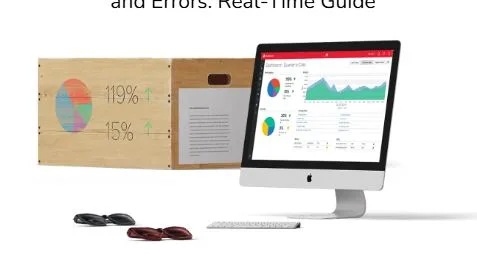
Inventory control plays a central role in B2B operations. When inventory data is inaccurate or delayed, the impact spreads quickly across purchasing, fulfillment, and customer relationships. Errors often begin with small issues, such as delayed updates or incorrect counts. But their effects compound over time.
Many B2B organizations manage thousands of products across multiple locations. Understanding how top inventory software ends B2B stockouts and errors requires a close look at how real-time systems operate and where traditional methods fall short.
Real-time inventory software reduces reliance on estimates. Instead of reacting after problems surface, businesses gain the ability to respond while changes are happening. This shift lowers fulfillment delays, improves delivery reliability, and stabilizes inventory levels.
What Is Real-Time Inventory Software?
Real-time inventory software keeps an ongoing record of all inventory actions. Thus, stock levels are automatically updated whenever products are sold, returned, transferred, or received. Consequently, no time lag exists between the actual movement of goods and the record in the system.
Main features:
- Shows the present amounts of stock without any manual refresh.
- Alerts for low or surplus stock according to pre-set limits.
- Reduces errors that would be caused by delayed reporting.
- Links up inventory data with the accounting, ERP, and CRM systems.
By having constant visibility, the teams can change their purchasing, fulfillment, and distribution decisions according to the situation. This means less speculation and, more importantly, small inaccuracies will not develop into larger problems that affect the operations.
Understanding Stockouts and Inventory Errors
Stockouts are instances where the demand suddenly exceeds the available inventory. In the B2B sector, stockouts commonly result in late delivery of goods or discontinuance of the service agreement. Uncertain reliability may force the customers to seek other suppliers.
There are a number of reasons that add up to stockouts. First, the forecasting errors and secondly, slow reorder processes together with incomplete sales data can be seen as their contributors. When inventory levels are updated and checked infrequently, shortage is often found when it is already too late for correction.
The installation of real-time inventory software solves both problems by keeping accurate records and notifying of stock risks at an early stage. The automated alerts and ongoing updates control the time lag between the movement of the inventory and the visibility of the system.
Best Real-Time Inventory Software Features That Prevent B2B Stockouts and Errors
Below are some of the best real-time inventory software features that prevent B2B stockouts and errors:
Live Tracking
- Live tracking records inventory movement across warehouses and distribution points as it happens. Each transaction updates system data immediately.
- This removes reliance on manual checks. Inventory status remains consistent across departments and locations.
Reorder Alerts
- Reorder alerts activate when stock reaches predefined thresholds. Notifications prompt purchasing actions before shortages develop.
- This approach supports stable stock levels without unnecessary overordering.
Demand Forecasting
- Demand forecasting comes to a conclusion through the study of past sales figures and the identification of seasonal trends. The forecasts thus created support the companies in making the right decisions about the timing and size of their stock orders.
- Although forecasts are approximations, the incorporation of real-time data increases their dependability as compared to static reports.
Multi-Location Sync
- Multi-location syncing keeps inventory records aligned across warehouses, retail outlets, and distribution hubs.
- This prevents overselling at one location while unused stock remains elsewhere.
Barcode & RFID
- Barcode and RFID systems reduce manual entry during receiving and shipping. Scanning verifies product identity and quantity.
- Faster processing lowers error rates during high-volume operations.
Batch & Lot Tracking
- Batch and lot tracking records, production groups, and expiration timelines. This feature is critical for regulated industries.
- Traceability supports recalls, audits, and quality control requirements.
ERP/CRM Integration
- Integration connects inventory systems with accounting, sales, and customer records. Data flows between platforms without duplication.
- Departments operate using consistent information rather than isolated reports.
Mobile Access
- Mobile access allows inventory updates from handheld devices. Staff can check stock or confirm movements without returning to workstations.
- This is particularly useful in large warehouses or field-based operations.
Safety Stock Controls
- Safety stock controls maintain minimum inventory buffers for high-risk items. These thresholds protect against sudden demand changes.
- The system alerts managers before safety levels are breached.
Cycle Count Automation
- Cycle counting replaces infrequent full audits with scheduled partial counts. Automation assigns counts without disrupting daily operations.
- Accuracy improves through regular verification rather than annual correction.
Exception Alerts
- Exception alerts identify irregular activity, such as sudden inventory drops or repeated adjustments.
- These signals prompt investigation before errors escalate.
Inventory Dashboards
- Dashboards present inventory data visually. Stock levels, alerts, and trends appear in a single view.
- This reduces analysis time and supports quicker decisions.
Conclusion
Real-time inventory software plays a critical role in preventing B2B stockouts and reducing operational errors. Continuous tracking replaces delayed reporting, while automated alerts address risks early. Features such as demand forecasting, multi-location syncing, and barcode systems support accuracy at scale. Integration with ERP and CRM platforms aligns inventory data across departments. Safety stock controls and exception alerts add protection against unexpected disruptions. Dashboards provide clear visibility for informed decision-making. Selecting top inventory software that ends B2B stockouts and errors allows organizations to maintain control, reduce waste, and support consistent business performance.