How VR Training Boosts Engagement and Performance Across Industries
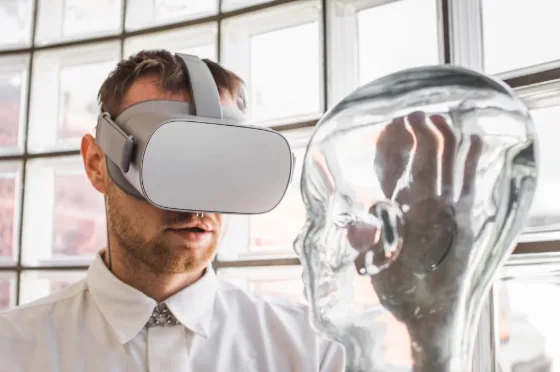
In today’s fast-paced professional world, effective training is no longer confined to traditional classrooms or online modules. Companies are increasingly turning to immersive technologies to upskill employees, enhance retention, and drive measurable performance improvements. Among these technologies, VR Training has emerged as a powerful tool that engages learners, accelerates skill development, and transforms workforce training across industries.
From healthcare to manufacturing, retail to corporate environments, VR-based learning is proving to be more than just a novelty—it’s a solution that combines experiential learning, real-time feedback, and scalable training solutions.
Understanding VR Training
VR Training refers to the use of virtual reality environments to teach specific skills or simulate real-world scenarios. By wearing VR headsets, employees or trainees can immerse themselves in a fully interactive, 3D environment that replicates complex tasks, dangerous situations, or customer interactions without any real-world risk.
Unlike traditional training methods, VR allows learners to make mistakes, experiment, and repeat processes in a controlled setting. This hands-on approach increases engagement and accelerates the learning curve, making VR an ideal choice for industries that require precision, critical thinking, or compliance with strict operational standards.
How VR Training Enhances Engagement
Engagement is one of the biggest challenges in corporate learning and professional development. Traditional methods—textbooks, lectures, or even video tutorials—can often fail to capture attention or sustain interest over time. VR Training solves this problem in several ways:
1. Immersive Learning Environment
VR immerses trainees in realistic simulations that mimic their work environment. Whether it’s a virtual manufacturing floor, a hospital operating room, or a customer service scenario, learners feel present in the situation. This immersion captures attention more effectively than passive learning, fostering deeper engagement.
2. Interactive and Hands-On Experience
Instead of simply reading instructions or watching videos, trainees interact with virtual tools, machinery, or systems. This active participation promotes engagement by making learners an integral part of the scenario rather than passive observers.
3. Immediate Feedback and Reinforcement
VR platforms often provide real-time feedback, enabling learners to understand mistakes and correct them immediately. This instant reinforcement keeps trainees engaged and motivated, encouraging repeated practice and mastery of skills.
4. Gamification and Motivation
Many VR Training programs incorporate gamified elements, such as scoring, challenges, and rewards, to boost motivation. These elements create a sense of achievement, encouraging learners to improve performance and remain engaged throughout the training process.
Improving Performance Through VR Training
Beyond engagement, VR Training has a direct impact on performance. The combination of realistic simulations, hands-on practice, and iterative learning translates into tangible benefits for both employees and organizations.
1. Faster Skill Acquisition
VR allows employees to practice complex tasks repeatedly in a safe, controlled environment. Studies have shown that learners using VR can acquire skills up to four times faster than those trained through traditional methods. This accelerated learning is particularly valuable in industries where rapid onboarding or upskilling is critical.
2. Enhanced Retention and Recall
The immersive and interactive nature of VR creates stronger cognitive connections, helping learners retain knowledge longer. Unlike passive learning, where information may be forgotten quickly, VR ensures that learners can recall skills accurately when performing real-world tasks.
3. Reduced Errors and Safety Risks
In high-stakes industries like healthcare, aviation, and manufacturing, errors can be costly or dangerous. VR Training enables trainees to practice hazardous tasks in a risk-free environment, reducing the likelihood of mistakes in real-life situations. This not only protects employees but also improves overall operational efficiency.
4. Customizable and Scalable Training
VR Training modules can be customized to address specific job roles, scenarios, and learning objectives. Organizations can scale these programs to train multiple employees simultaneously across locations without additional infrastructure, ensuring consistent skill development and performance standards.
Applications of VR Training Across Industries
VR Training is not limited to a single industry; its applications span a wide range of sectors:
1. Healthcare
Medical professionals use VR Training to practice surgeries, patient interactions, and emergency response procedures. By simulating real-life medical scenarios, VR enables doctors, nurses, and surgeons to refine their skills without risking patient safety.
2. Manufacturing and Industrial Training
In manufacturing, VR Training helps employees operate complex machinery, perform maintenance, and follow safety protocols. Trainees can experience high-pressure production scenarios virtually, building competence before entering the actual workplace.
3. Corporate and Soft Skills
Companies are adopting VR Training for onboarding, leadership development, and customer service training. By simulating client interactions or workplace conflicts, employees develop soft skills, empathy, and decision-making abilities more effectively.
4. Aviation and Transportation
Pilots, train operators, and logistics staff use VR Training to simulate emergency scenarios, navigation, and vehicle operation. This prepares professionals for rare or high-risk situations in a safe, controlled manner.
5. Retail and Customer Experience
Retail staff can practice store layouts, customer engagement techniques, and product demonstrations in VR, enhancing customer satisfaction and operational efficiency.
Benefits of Implementing VR Training Programs
Organizations that invest in VR Training experience a range of benefits that extend beyond individual skill development:
- Reduced Training Costs: While initial setup costs may be high, VR reduces the need for physical materials, travel, and instructor-led sessions.
- Improved Employee Confidence: Repeated practice in realistic scenarios builds confidence and reduces anxiety during actual job performance.
- Consistent Training Standards: VR ensures that every employee receives the same high-quality training, regardless of location or instructor.
- Data-Driven Insights: Many VR platforms track performance metrics, providing organizations with valuable data to assess progress and identify skill gaps.
Challenges and Considerations
While VR Training offers substantial benefits, organizations should consider certain challenges:
- Initial Investment: VR hardware and software development can be costly, though ROI is typically realized through reduced training time and improved performance.
- Technical Expertise: Effective implementation requires skilled personnel to design, maintain, and update VR modules.
- User Adaptation: Some employees may experience motion sickness or discomfort using VR headsets, requiring gradual adaptation or alternative training options.
By planning carefully and addressing these considerations, organizations can maximize the value of VR Training while minimizing potential drawbacks.
The Future of VR Training
The potential of VR Training continues to expand as technology evolves. Integration with Artificial Intelligence (AI), augmented reality (AR), and haptic feedback systems promises even more immersive, adaptive, and effective learning experiences. AI-driven analytics can personalize training pathways, while haptic feedback allows users to feel virtual objects and tools, further enhancing realism and skill transfer.
As industries increasingly prioritize employee engagement, performance, and safety, VR Training is set to become a standard tool in workforce development strategies.
Conclusion
VR Training represents a transformative approach to professional development, offering immersive, interactive, and safe learning experiences that boost both engagement and performance. Across industries—from healthcare to manufacturing, corporate environments to aviation—VR-based training equips employees with the skills, confidence, and knowledge needed to excel.
By adopting VR Training, organizations can reduce errors, accelerate skill acquisition, maintain consistent training standards, and create a more motivated, capable workforce. As technology continues to evolve, VR Training will remain at the forefront of innovative learning solutions, redefining how employees acquire skills and contribute to organizational success.
Investing in VR Training today is not just about modernizing learning—it’s about empowering employees, enhancing operational efficiency, and preparing organizations for the challenges of tomorrow.