How to Create an Animated Video From an Image Using AI (Fast Workflow With Lanta AI)
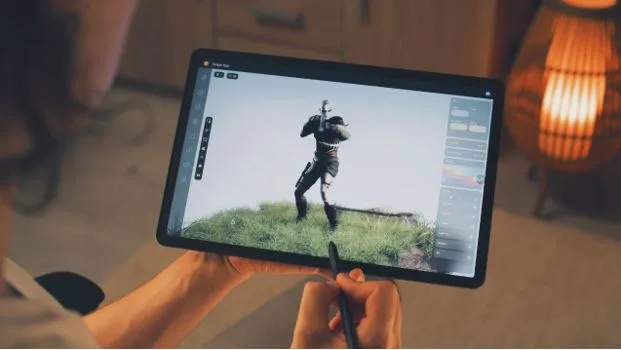
If you post online, you already know the problem: a great photo can still feel “static.” An animated clip—subtle motion, gentle camera movement, a small environmental effect—often communicates more emotion and context than a single frame.
The fastest way to do this in 2026 is AI image to video : you upload an image, describe the motion you want, and generate a short video you can use for social, ads, product pages, or storytelling. This guide shows a practical workflow using Lanta AI—including a prep checklist, prompt templates, and fixes for common issues (flicker, face drift, warping).
What you need before you start (2-minute prep checklist)
Pixelbin’s guide emphasizes that results depend heavily on input quality and quick prep steps. That’s true across tools: a clean image makes the model spend compute on motion—not on “repairing” messy pixels.
Complete prep checklist
- A sharp image (ideally 1080p or higher)
If your input is soft or compressed, motion artifacts show up faster. - Clear subject separation
Busy backgrounds confuse motion boundaries (hair edges, hands, clothing lines). - Consistent lighting
Avoid mixed color temperatures (neon + daylight) unless you want stylized results. - A simple motion idea
Write one sentence like: “Slow push-in, gentle breeze, natural light.” - A “no-change” list
Decide what must stay locked: identity, face shape, logo text, product geometry.
Recommended image types (easy wins)
- Product shots with clean lighting
- Portraits with uncluttered backgrounds
- Landscapes with a clear depth layer (foreground / mid / far)
The Lanta AI workflow (Image → Motion → Video)
Here’s the workflow you can reuse for most use cases:
- Choose your best source image
- Decide the motion (camera movement + subject movement + environment)
- Generate a short clip
- Pick the best variant (plan to generate several)
- Refine prompt and constraints
- Export + repurpose (crop to vertical, add captions, etc.)
Publishing tip: In your Lanta AI blog, internally link “Image-to-Video” and “AI Video Generator” pages in the first half of the article (not in the footer/sidebar) to match common editorial preferences.
Step-by-step: Create an animated video from one image in Lanta AI
Step 1 — Upload a high-quality image
Pick the clearest version you have. If your image is a product shot, use the original file (not a screenshot of a screenshot). If it’s a portrait, choose a photo with natural skin texture (avoid heavy beauty filters).
Image to include here
- Screenshot of the Image-to-Video upload panel
Alt text: “Upload an image to create an animated video using AI”
Step 2 — Choose a motion style (keep it subtle)
Most “bad AI animation” comes from motion that’s too aggressive. Start with one of these:
- Slow push-in (zoom in) for emotion and focus
- Slow pan left/right for landscapes
- Parallax depth (foreground moves faster than background)
- Gentle environmental motion (breeze, steam, light flicker)
Step 3 — Use a prompt formula that prevents random changes
Use this prompt structure:
Prompt formula
- Subject: what’s in the image
- Motion: camera move + small environmental effect
- Look: lighting + mood + realism level
- Locks: what must not change
- Quality: high detail, stable, no flicker
Copy-paste prompt template
Animate this single image into a short video.
Camera: slow push-in, steady and smooth.
Motion: subtle natural movement only (gentle breeze / slight cloth movement).
Lighting: consistent with the original image, no exposure shifts.
Keep subject identity, face shape, hair, text/logos, and background composition unchanged.
No warping, no flicker, no extra objects, no style change.
High detail, clean edges, stable frames.
Step 4 — Generate multiple variants (this is normal)
Even great tools produce a mix of “usable” and “almost.” Plan for 4–8 generations, then pick the best.
Image to include here
- 2×2 grid of extracted frames from four variants
Alt text: “Comparison of AI-generated animation variants from one image”
Step 5 — Refine with constraints (the “lock list”)
If you see unwanted changes, add explicit locks:
- “Do not change eye color / makeup / hairstyle”
- “Do not change product shape / label text”
- “No morphing, no melting edges”
- “No camera shake, no jitter”
Prompt examples (ready to use)
Pixelbin’s post includes prompt examples and practical “what to do before you start.” Following that spirit, here are Lanta-friendly prompts by scenario.
1) Product photo → ad-style animated clip
Animate the product photo into a clean studio video.
Camera: slow orbit 10 degrees, very smooth.
Lighting: softbox studio lighting, consistent reflections.
Keep product geometry and label text perfectly unchanged.
Background remains the same. No extra props.
Crisp detail, no flicker, no distortion.
2) Portrait → subtle “alive” motion
Animate the portrait with minimal motion.
Camera: slow push-in.
Motion: subtle breathing and slight hair movement from a gentle breeze.
Keep face identity, skin texture, and eye shape unchanged.
No beauty smoothing, no stylization, no color shift.
Stable frames, no jitter.
3) Travel photo → cinematic parallax
Create a cinematic animated video from this landscape photo.
Camera: slow pan right with depth parallax (foreground moves faster than background).
Add subtle cloud movement and gentle atmospheric haze.
Keep composition and colors consistent with the original.
No flicker, no warping, high detail.
4) Poster / design → motion without ruining text
Animate this poster into a subtle motion graphic video.
Camera: slow push-in.
Motion: gentle light sweep, minimal background movement only.
Keep all text perfectly readable and unchanged.
No letter deformation, no artifacts, no blur.
Clean edges, stable frames.
Common issues (and how to fix them fast)
Problem: Flicker / shimmering edges
Why it happens: the model re-interprets textures frame-to-frame.
Fix:
- Reduce motion intensity (“subtle”, “minimal”, “steady”)
- Add “stable frames, no flicker”
- Avoid overly complex backgrounds
Problem: Face drift (identity changes)
Fix:
- Add a lock list: “keep identity, face shape, eye shape unchanged”
- Avoid strong camera rotation
- Use gentle motion instead of full-body movement
Problem: Warping hands / clothing
Fix:
- Avoid “dynamic dancing” instructions from a single image
- Keep motion environmental (breeze, light) rather than anatomical
- Add “no morphing, no melting edges”
Problem: Unwanted style change (suddenly looks like anime)
Fix:
- Add “photorealistic, keep original style”
- Remove style keywords (“cinematic anime”, “illustrated”, etc.)
Where this fits in your Lanta AI ecosystem
Once you have the basic image-to-video clip, you can reuse it in other flows:
- Short-form marketing: generate several variations, choose the best, add captions
- Video effects: apply a themed effect workflow (e.g., space zoom-out, stylized looks)
- Video-to-animation: convert the generated clip into an animated style if that’s the goal
This is exactly how “tool-first” content turns into a reusable creation pipeline: one input asset, multiple outputs.
FAQ (indexable, snippet-friendly)
Can I do this without editing skills?
Yes. The point of image-to-video tools is that your “edit” is mostly the prompt + constraints, which is why a simple workflow and checklist matter.
What image works best?
Clean, sharp images with clear subjects and consistent lighting. Avoid tiny, heavily compressed images.
How long should my clips be?
For social and ads, short clips are usually better. Start small (a few seconds), then iterate.
Can I use the results commercially?
In general: it depends on your rights to the input image, platform policies, and the specific content. If the image is yours (or properly licensed) and the output complies with policy, you’re in a safer zone. For brand work, keep inputs and prompts documented.
How do I keep the output “tasteful” and safe for platforms?
Avoid explicit content, use PG-13 phrasing, and respect consent/rights for any real-person likeness.