Integrating Warehouse Workflow with Same Day Delivery Scheduling
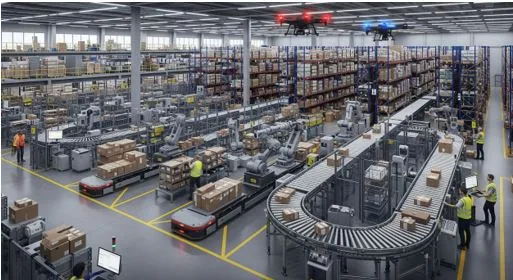
Same day delivery scheduling is about getting the orders a customer wants to their door on the same day that the order was placed.
But products don’t just materialise, and they certainly don’t just end up in a delivery truck on the way to its address.
It’s good then that there was ways to integrate better warehouse management into your businesses same day delivery order offerings.
Why warehouse and delivery alignment matters
Same day delivery compresses timelines across every stage of fulfilment. There is little room for handover delays or miscommunication between teams.
Bottlenecks start inside the warehouse
If orders are not picked, packed and staged on time, even the most efficient delivery routes cannot recover lost time.
Small delays inside the warehouse often lead to rushed dispatch decisions and suboptimal routes.
Customer promises depend on internal coordination
Accurate delivery windows are only achievable when warehouse and delivery teams are working from the same information.
Misaligned schedules can result in missed cut offs and broken customer expectations.
Understanding the warehouse role in same day delivery
The warehouse is the starting point for every select same day delivery order.
Order intake and prioritisation
Same day orders must be identified quickly and prioritised appropriately.
Clear visibility of order urgency allows warehouse teams to adjust picking sequences and allocate resources where they are needed most.
Picking and packing efficiency
Efficient picking paths, accurate packing and clear labelling all contribute to faster handover to dispatch. Errors at this stage often result in delays, rework or failed deliveries.
Staging for dispatch
Staging areas organised by route or delivery window reduce confusion during loading. This preparation supports faster departures and smoother driver workflows.
Connecting warehouse systems with delivery scheduling
Integration starts with data flow between systems.
Shared order delivered visibility
When warehouse and delivery platforms share real time order information, both teams can work from a single source of truth.
As soon as an order is confirmed, it can be reflected in both picking queues and delivery schedules.
Automatic job creation
Integrated systems allow delivery jobs to be created automatically as orders reach specific warehouse milestones.
This reduces manual data entry and speeds up scheduling decisions.
Improving scheduling accuracy through warehouse data
Warehouse activity has a direct impact on delivery timing.
Realistic departure times
Knowing when orders will be ready for dispatch allows scheduling systems to plan more accurate routes. This prevents drivers from waiting at the warehouse or leaving with incomplete loads.
Additionally, keeping this clear and transparent builds trust from the get-go.
Smarter route planning
When pick and pack times are factored into scheduling, routes can be built around realistic readiness windows. This leads to fewer midroute adjustments and more reliable ETAs.
Supporting last minute same day orders
Last minute orders place extra pressure on both warehouse and delivery teams.
Dynamic reprioritisation in the warehouse
Integrated systems allow urgent orders to be flagged instantly. Warehouse teams can adjust picking priorities without relying on manual communication.
Real time scheduling updates
As soon as a last minute order is packed and ready, delivery schedules can be updated automatically. This ensures new jobs are inserted efficiently rather than disruptively.
Enhancing driver loading and departure
The transition from warehouse to vehicle is a critical moment in same day delivery.
Route-based loading
Loading vehicles in route order reduces time spent searching for parcels and minimises unloading delays at each stop. This simple change can significantly improve driver efficiency.
Clear load visibility for drivers
When drivers can see their full load and route details before departure, they are better prepared for the day. This reduces errors and supports smoother deliveries.
Reducing errors and rework
Integration helps eliminate common points of failure.
Fewer manual handovers
Manual data entry and handovers increase the risk of mistakes. Automated data sharing between systems reduces duplication and improves accuracy.
Improved accountability
Clear status updates at each stage of the workflow make it easier to identify where issues occur. This transparency supports faster resolution and continuous improvement.
Real time visibility across the operation
Visibility connects warehouse and delivery teams.
Monitoring order progress
Operations teams can track orders from picking through to delivery in real time. This end-to-end view makes it easier to manage exceptions and keep customers informed.
Proactive issue management
When delays occur in the warehouse, delivery schedules can be adjusted before drivers are affected. This proactive approach helps protect same day delivery promises.
Data insights for continuous improvement
Integrated workflows generate valuable data.
Identifying process gaps
Analysing handover times, pick rates and dispatch delays highlights where improvements can be made. Small changes in the warehouse can have a significant impact on delivery performance.
Planning for peak periods
Historical data helps businesses prepare for demand spikes. Staffing levels, pick strategies and delivery capacity can all be adjusted based on proven patterns.
Scaling same day delivery operations
As same day delivery volumes grow, integration becomes even more important.
Supporting higher order volumes
Integrated systems handle increased complexity without adding manual effort. This allows businesses to grow same day services while maintaining accuracy and speed.
Consistency across locations
For businesses with multiple warehouses or distribution centres, integration ensures consistent processes and service levels across all sites.
Building a connected fulfilment operation
Integrating warehouse workflow with same day delivery scheduling is not about adding complexity. It is about removing friction.
When warehouse and delivery teams work from shared data and aligned processes, same day delivery becomes more predictable, efficient and scalable.
For Australian businesses looking to strengthen their same day offering, a connected fulfilment operation is a strong foundation for long term success.