The Importance of Separation in Hazardous Waste Removal
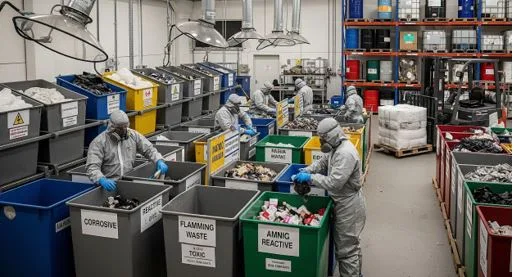
Hazardous waste services do more than just remove waste materials. The entire waste management process is not this simple.
Waste separation is value for most waste streams. It’s how waste services treat different waste types so that they can be managed more efficiently, effectively, and safely.
When it comes to hazardous waste disposal, separation is key. Without it, hazardous materials can infect non-hazardous materials can make processes like resource recovery much more challenging.
We explore the importance of waste segregation in hazardous waste disposal and removal below.
What separation means in hazardous waste removal
Separation in hazardous waste removal refers to keeping different waste streams apart based on their general characteristics.
This can include separating liquids from solids, oils from water, or high strength hazardous waste from lower strength streams.
Rather than treating hazardous waste as a single mixed output, separation recognises that different wastes behave differently.
Managing them individually allows each stream to be handled in the most suitable way possiblly available.
Common hazardous waste streams that benefit from separation
Many Australian sites generate multiple hazardous waste streams at the same time.
- Process wastewater
- Wash-down and cleaning liquids
- Oily water and hydrocarbons
- Concentrated chemical residues
- Sludge and solid by-products
When these streams are combined, removal becomes more complicated and less predictable, so waste separation helps maintain control from the point of generation through to final removal.
Additionally, different waste types – think industrial waste, general liquid waste, electronic waste (e waste) – all require slightly different disposal methods.
Working with proper disposal services in Australia ensures regulatory compliance and safe disposal, so it’s important to find the right one.
Why mixed hazardous waste creates problems
Combining hazardous waste streams may seem convenient, but it often leads to avoidable challenges had you used an expert.
Increased volume and handling effort
When incompatible hazardous waste streams are mixed, the total volume requiring removal often increases, something that shouldn’t come as a surprise.
Clean or technically lightly contaminated liquids become part of the hazardous waste stream, driving up already complex handling and removal requirements.
Reduced predictability
Mixed hazardous waste tends to vary more in composition, making removal planning more difficult and increases the risk of delays or disruptions when conditions inevitably change.
Higher costs over time
Handling large volumes of mixed hazardous waste can increase storage, transport and treatment costs, so waste separation helps limit hazardous waste removal to only what genuinely requires it.
Operational benefits of separation for hazardous waste disposal
Separating hazardous waste streams delivers practical benefits that are felt across daily operations.
More efficient hazardous waste removal
Separated hazardous waste is easier to manage. Removal can be scheduled more accurately, volumes are easier to predict and systems are less likely to be overloaded.
Especially for high volume sites, this efficiency can make a noticeable difference to overall site performance.
Improved system reliability
When hazardous waste streams are separated, removal systems operate under more stable conditions. This reduces the likelihood of things like blockage or unplanned downtime.
Better use of existing infrastructure
Separation allows existing tanks, pumps and removal equipment to be used more effectively, so instead of upgrading everything to handle worst-case conditions, systems can be matched to the specific waste stream.
Waste separation at the source
The most effective separation happens as close as possible to where hazardous waste is generated.
Designing processes with separation in mind
Production and cleaning processes can often be adjusted to keep hazardous waste streams separate from the outset.
Simple changes such as dedicated drains, collection points or holding tanks can have a significant impact.
Reducing cross contamination
Cross contamination is an unfortunately common issue on busy sites, even with the most precise manager.
Luckily, practices like clear labelling, consistent procedures and basic operator awareness all help maintain separation and support smoother hazardous waste removal, and aren’t that different to usual business practices.
Supporting hazardous waste removal downstream
Separation does not stop at collection. It continues to deliver benefits throughout the removal process.
Easier storage and scheduling
Separated hazardous waste streams can be stored more efficiently and removed on schedules that suit their volume and characteristics.
This allows it to reduce pressure on storage capacity and avoids unnecessary handling.
Simplified removal processes
When hazardous waste is consistent and predictable, removal becomes more straightforward. This helps minimise delays and reduces the risk of operational interruptions.
Separation without unnecessary complexity
Separation does not need to be overly technical or difficult to implement.
Start with practical changes
Many sites achieve meaningful improvements by separating just one or two key hazardous waste streams. Even partial separation can reduce volumes and improve removal efficiency.
Use simple physical separation
Gravity separation, basic screening or dedicated storage tanks are often sufficient. Complex systems are not always required to see benefits.
Build on what already exists
In many cases, separation can be achieved by making better use of existing infrastructure rather than installing new equipment.
Separation and long term hazardous waste management solutions
Separation plays an important role in long term hazardous waste removal strategies.
Adapting to changing operations
As production changes, separated hazardous waste streams are easier to manage and adjust. This flexibility supports long term operational stability.
Supporting cost control
By limiting the volume of hazardous waste requiring removal, separation helps control ongoing costs. This becomes increasingly important as waste volumes grow.
Australian site considerations
Australian industrial sites often operate under challenging conditions, including remote locations, limited space and variable water availability.
Reliability in everyday operations
Simple separation approaches tend to be more reliable in these environments. Fewer moving parts and clearer processes reduce the risk of operational issues.
Making the most of resources
Separating hazardous waste streams can support better resource use, particularly where water reuse or internal recycling is part of site operations.
Conclusion
Separation is a foundational step in effective hazardous waste removal.
By keeping hazardous waste streams apart, Australian sites can reduce volumes, improve reliability and simplify daily operations.
Importantly, separation does not need to be complex or technical to deliver results.
So practical and considered separation strategies support smoother hazardous waste removal and contribute to more efficient site performance over the long term.