Can Mirrored Cabinets for Bathrooms Make the Room Larger?
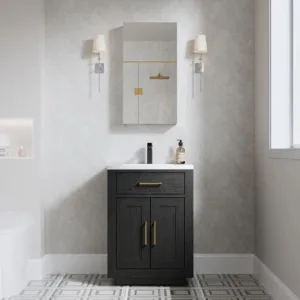
Understanding Visual Space in Bathroom Design
Bathrooms can be among the smallest rooms in a household, yet they should feel clean, open, and comfortable. Mirrored cabinets for bathrooms are among the most effective visual tools designers use to create the illusion of space, making a dramatic impact even when the room size remains unchanged.
Visual space is not determined by physical measurements alone. It is influenced by light, color, reflection, and proportion. That is why two bathrooms of the same size can feel completely different—one cramped, the other spacious and welcoming—due to smart design choices.
Mirrors work by reflecting light and their surroundings, creating the perception of depth. When reflective surfaces are combined with storage and functionality, aesthetics and practicality blend seamlessly, defining modern bathroom design.
The Miracle of Spaces through Mirrors
Mirrors don’t add physical space but enhance perceived depth, reflecting walls, fixtures, and light. This effect is especially valuable in small bathrooms.
The reflection of a light source, whether natural or artificial, on a mirrored surface increases brightness. Consequently, the dark parts become softer, the shadows become less, and the room becomes more open in general. This is why designers usually suggest using mirrors in front of windows or vanity lights.
Reflective cabinets go beyond flat mirrors by combining depth and reflection. Recessed, frameless cabinets integrate into the wall and keep storage visually minimal.
What are Bathroom Mirrored Cabinets?
Bathroom mirrors are multifunctional mirrors with an internal storage compartment and are designed to serve as mirrors. They are usually mounted over sinks and vanities and serve as both a grooming mirror and a storage solution.
Comparison of regular mirrors and cabinets
The normal mirror is reflective only. It is pretty, but it does not address storage issues. An alternative is a medicine cabinet with shelves behind mirrored doors. This two-use design minimizes countertop clutter, creating a bigger bathroom right away.
Since cluttered spaces aesthetically reduce space, hidden storage is highly valued in the perception of space. When the essentials that people use every day are put in order, the room feels cleaner, more relaxing, and more spacious.
Psychology of Reflection and Light
Mirrors are not effective solely because of psychology. Humans naturally associate brightness and openness with comfort and cleanliness. When a room is well-lit, the brain perceives it as more spacious and pleasant, especially when reflective elements, such as a bathroom medicine cabinet, are incorporated into the design. The use of mirrored surfaces creates visual continuity. Instead of stopping at a solid wall, the eye perceives an extension of space. This effect reduces the feeling of confinement, which is particularly important in small bathrooms where walls are close together.
Additionally, mirrored cabinets help establish symmetry and balance. Balanced spaces appear more organized, and organized spaces are consistently perceived as larger and more comfortable.
Lighting in the Improvement of Spaciousness
Mirrors work best when paired with proper lighting. Each enhances the other’s effect, increasing the sense of space.
Natural Light and Artificial Light
Natural light is ideal, reflecting in mirror cabinets to open up the bathroom. In spaces without windows, artificial light fulfills this role.
Medicine cabinets with lights, especially LEDs, spread soft, shadow-free light. Reflected, distributed light adds depth and keeps bathrooms feeling open.
Mirrored cabinets not only make the room appear bigger but also make it feel more pleasant.
Traditional vs Mirrored Cabinets storage
A small toilet may be fitted with conventional storage, such as open shelves or large cupboards. They occupy the scene and make themselves prominent.
Mirrored cabinets reflect their environment and blend into the wall, making them ideal for compact layouts.
A recessed medicine cabinet is particularly effective. It is placed within the wall’s hollow and does not extend beyond it. The result? Straight edges, lack of visual sophistication, and a smooth and contemporary appearance.
Selecting the Right Size and Location
Size matters. A cabinet that’s too big may overwhelm the wall, while one that’s too small won’t create an impression of space.
The placement is also a key issue. It is customary to install mirrored cabinets at eye level over the vanity; however, by matching them with lighting fixtures, one can create greater symmetry and reflection.
Wall-Mounted and Recessed
Wall-mounted cabinets are easier to install and still work. On the other hand, recessed cabinets have a smooth finish. Their inbuilt nature, as they are flush with the wall, helps keep the room’s flow, which is essential for making the bathroom look bigger.
Recessed mirrored cabinets are often worth the added effort, especially when they can be renovated.
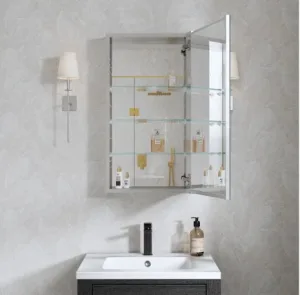
Contemporary Bathroom Designs and Storage Systems
Bathrooms of modern times are minimalist. Clean surfaces, hidden storage, and reflective materials characterize the modern trends. Mirrored cabinets align with this philosophy.
Most homeowners have started to prefer frameless designs that have soft-close doors and adjustable shelves. These options make it convenient without being cluttered with visuals.
Reflective surfaces, according to design professionals at Houzz, remain the best option for optimizing space in areas with limited space, particularly in bathrooms where functionality and beauty must coexist.
Beyond Visual Space Benefits
In addition to making a room appear larger, mirrored cabinets offer several added benefits:
. Improved organization
. Enhanced lighting distribution
. Increased property value
. Easier daily routines
These advantages will improve the user experience. And, speaking of which, when a bathroom works, it becomes larger, as well.
Frequent Designing Follies to Shun
The greatest ideas may fail miserably when not implemented properly. Common mistakes include:
Choosing cabinets with heavy frames
. Poor lighting placement
. Installing oversized units
. Ignoring wall proportions
By avoiding these traps, one can ensure that mirrored cabinets add space rather than burden it.
Do the Mirrored Cabinets Fit in the Small Bathrooms?
Absolutely. Indeed, small bathrooms are the greatest beneficiaries. Mirrored cabinets reflect and store their contents together, thus reducing the need for individual mirrors and large cupboards.
They simplify the layout, lessen visible noise, and make the most of vertical wall space. When selected thoughtfully, mirrored shelves don’t just make small lavatories healthy—they remodel them.
Conclusion
Mirrored cabinets can make bathrooms appear larger by combining reflection, storage, and thoughtful design. They enhance the bathroom experience beyond basic storage.
With the right style, size, and placement, homeowners can enjoy a bathroom that feels brighter and more inviting. It’s a simple design choice with a big impact.
FAQ’s
Do reflected cabinets surely make a bathroom appear larger?
Yes, they mirror light and environment, creating the phantasm of depth and openness.
Are reflected cabinets realistic for day-to-day use?
Definitely, they offer storage while serving as a grooming mirror, making them exceptionally useful.
Is a medicinal drug cabinet better than open shelves?
In most instances, sure. A concealed garage reduces clutter, which visually enlarges the space.
Can reflected shelves paintings in windowless lavatories?
Yes. With the right lights, they extensively improve brightness and perceived area.
Are recessed shelves worth the funding?
If possible, sure. They offer a continuous appearance and maximize spatial efficiency.