Why a Truck Loading Safety Platform is an Effective Investment
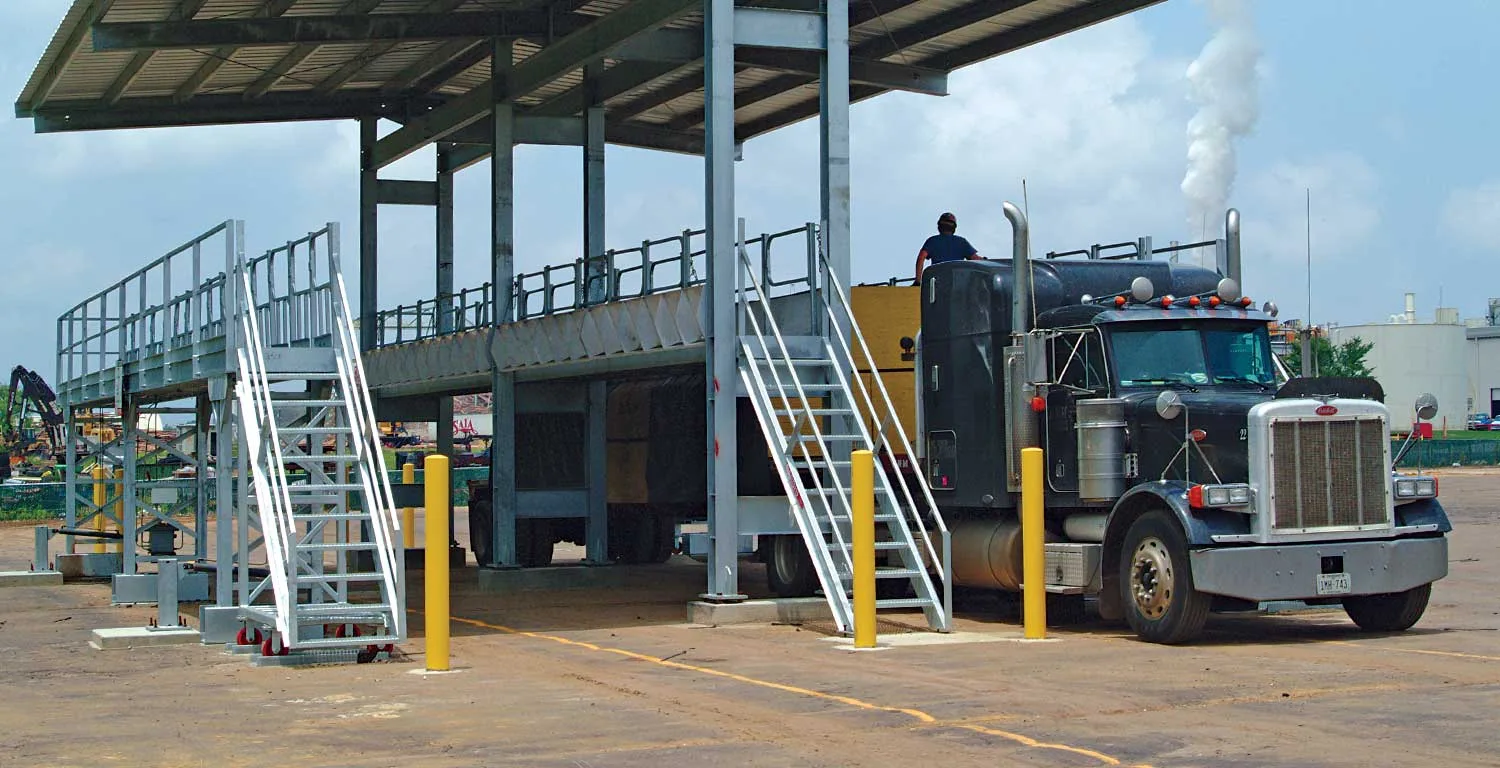
Protect your workforce by installing a truck loading safety platform. Learn how loading platforms for trucks and integrated systems minimize fall risks and boost productivity.
Implementing a truck loading safety platform is a critical step for any logistics or manufacturing facility aiming to achieve a zero-accident workplace. In high-traffic loading bays, workers are frequently required to climb onto flatbeds or tankers to secure loads, pull tarps, or inspect cargo. Without a dedicated truck loading safety platform, these employees are exposed to significant fall risks, especially in inclement weather where surfaces become slick.
By integrating a permanent or mobile safety solution, site managers can eliminate the need for dangerous improvised climbing methods. This investment does more than just ensure compliance; it streamlines operations by providing workers with a stable, confident environment to perform their tasks quickly and securely.
The Core Benefits of a Truck Loading Safety Platform
The primary function of a safety platform is to provide a fall-protection envelope around the work area. When workers feel secure, the speed of loading and unloading increases, directly impacting the facility’s overall throughput.
Eliminating Fall Hazards and Liability
Falls from heights are among the most common causes of workplace injuries in the transportation sector. A truck loading safety platform acts as a physical barrier, ensuring that even if a worker slips, they are contained within a guarded area. This drastically reduces the potential for long-term disability claims and the heavy legal liabilities associated with site accidents.
Enhancing Worker Confidence and Speed
Efficiency in a loading dock is often hampered by the physical caution workers must exercise when moving across uneven or narrow trailer edges. With a stable platform and guardrails in place, technicians can move freely and use both hands for their tasks, which significantly reduces the time required to process each vehicle.
Versatile Loading Platforms for Trucks
Not every facility has the same layout or vehicle requirements, which is why modern loading platforms for trucks are designed with modularity in mind. Whether you are dealing with standard box trailers, flatbeds, or specialized tankers, there is a configuration tailored to the specific geometry of the vehicle.
Mobile vs. Fixed Loading Solutions
For facilities with changing workflows, mobile loading platforms for trucks offer the flexibility to move safety measures where they are needed most. These units are typically equipped with heavy-duty casters and leveling jacks. Fixed platforms, on the other hand, are ideal for high-volume, dedicated bays where the vehicle type remains constant, providing the highest level of structural stability.
Adjustable Height Features for Diverse Fleets
A major challenge in logistics is the varying deck heights of different truck models. Advanced loading platforms for trucks often include telescopic or stair-adjusted heights. This ensures that the gap between the platform and the truck is minimized, preventing “step-across” hazards that are common with older, static equipment.
Implementing Integrated Truck Loading Platform Systems
For large-scale industrial operations, standalone ladders are insufficient. Comprehensive truck loading platform systems integrate multiple safety components—such as gangways, tracking systems, and folding stairs—into a single, cohesive unit.
Gangways and Folding Stairs
The most critical point of any safety system is the transition from the platform to the vehicle. Modern truck loading platform systems utilize self-leveling folding stairs or spring-balanced gangways. These components “lock” onto the truck’s surface, providing a seamless transition that adjusts as the truck’s suspension shifts during loading.
Overhead Fall Arrest Integration
In some scenarios, a platform is used in conjunction with overhead lifelines. Integrated truck loading platform systems can be designed to support a rigid rail or cable system, providing 360-degree protection for workers who must move along the entire length of a large trailer.
Platform Type Best Use Case Key Safety Feature Single-Sided Fixed Dedicated Loading Bays Full Length Guardrails Mobile Access Variable Site Locations Locking Casters & Outriggers Tanker Platforms Liquid/Chemical Loading Self-Leveling Gangways Multi-Station Systems High-Volume Terminals Centralized Access Control
Optimizing Safety for Specialized Cargo
Certain industries, such as fuel transport or bulk chemical handling, require even more specialized truck loading platform systems to manage hazardous materials.
Explosion-Proof and Non-Sparking Designs
In environments with flammable vapors, aluminum construction and non-sparking treading are mandatory. This prevents a simple foot-slip from creating a spark that could lead to a fire or explosion. These technical nuances are what separate professional-grade platforms from generic scaffolding.
Chemical-Resistant Coatings
For facilities handling acids or caustic cleaning agents, platforms may require epoxy coatings or stainless steel components. This prevents the chemical runoff from weakening the structural integrity of the loading platforms for trucks over time.
The decision to install a truck loading safety platform is a hallmark of a mature, safety-conscious organization. By moving beyond basic ladders and adopting integrated truck loading platform systems, companies protect their most valuable asset: their people. Furthermore, the operational gains in speed and reduced downtime from injuries create a clear path to a high return on investment. Whether you are managing a single bay or a national distribution network, prioritizing high-quality loading platforms for trucks is the most effective way to ensure that your logistics operations remain both safe and profitable.