Can Laser Hair Removal Treat Light or Fine Peach Fuzz Hair on the Lower Back?
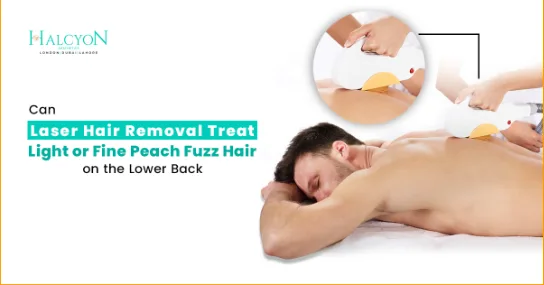
Can I get rid of peach fuzz hair using laser treatment? It is a question that people ask us all the time. Although laser hair removal works incredibly well for black, coarse hair, it may not work as well for light colored or thinner strands. Because very blond, grey, or white hair lacks pigment, the laser light will not pick it up.
Therefore, it’s critical to comprehend both the possibilities and the constraints before scheduling an appointment. And in this guide, you’ll learn whether laser hair removal is suitable for light-colored or fine hair, and if not, what alternatives are available to treat these kinds of conditions. Let’s get started.
Understanding the Peach Fuzz Hair on the Lower Back
So, what is peach fuzz Hair on the lower back? The extremely fine, light, downy hair that can be found on the face, lower back, and occasionally even the chest is called vellus hair, or peach fuzz. The majority of your body has peach fuzz hair.
But what’s the difference between vellus hair and thicker body hair? Here is the answer. Vellus hair is shorter, thinner, and has a very low melanin content. On the other hand, terminal hair, like leg or underarm hair, is coarser, darker, and more suitable for laser hair removal.
So, what’s the function of fine hair and why they develop? Peach fuzz protects the body and aids in maintaining body temperature. Genetics, hormonal fluctuations, skin type, and normal hair growth patterns are some of the causes of peach fuzz development on the lower back.
Although it’s completely normal and natural, some people would rather remove it for smoother skin or a more refined look. So, let’s come back to the question of whether laser hair treatment is effective or not.
How Does Laser Hair Removal Work on Fine or Peach Fuzz
The contrast between skin tone and hair color is essential for removing hair using the laser technique. The pigment in the hair absorbs the light energy from the laser, damaging the follicle to prevent further growth.
Because peach fuzz is thin and light, there isn’t enough pigment for the laser to target, which reduces the treatment’s effectiveness. Furthermore, the impact of the laser is also reduced due to the peach fuzz’s delicate texture, which makes it less effective at absorbing laser energy than coarser hair.
For this reason, when treating peach fuzz in areas such as the lower back, many individuals experience little reduction or slower results.
However, laser hair removal may still have certain advantages for some conditions. Fine hairs that are somewhat darker or seem lighter but have some pigment may react better, especially when treated with advanced laser technology under expert supervision.
But it’s better to have realistic expectations. Because, instead of completely removing peach fuzz, laser hair removal may reduce visibility or slow down regrowth.
What Are the Potential Outcomes of Laser Peach Fuzz?
Many customers report softer skin texture, a more radiant complexion, and improved absorption of skin care products. You may have brief, minor redness following your laser treatment. Over time, however, hair growth becomes less dense and lighter.
It is advised to have six to ten sessions spaced four to six weeks apart in order to remove peach fuzz. Smoother, hair-free skin requires regular treatments since fine hair responds more slowly.
Risks Associated with Laser Treatment for Vellus Hair
Although laser hair removal is widely regarded as a reliable and safe technique, there are a few possible disadvantages associated with using it on light-colored hair.
Reduced Effectiveness
Laser radiation may not sufficiently penetrate or harm the hair follicle because light or fine hair has very little melanin. This may result in several sessions with little to no progress, which would reduce the treatment’s cost-effectiveness.
Paradoxical Hypertrichosis
Paradoxical hypertrichosis is another possible hazard. After laser therapy, fine hair may become thicker or darker. This risk, while rare, is more frequently linked to treating vellus hair, emphasizing the significance of choosing the appropriate treatment for your hair type.
Skin Irritation
After treatment, some people may also have temporary skin irritation, such as redness, slight edema, or sensitivity. These effects are often transient, but when delicate pigmented hair is treated, they may be more apparent.
So, what to do to remove vellus hair on the lower back? Here are some options that you can consider for removing peach fuzz.
Alternative Options to Laser Hair Removal for Treating Light-Colored or Fine Peach Fuzz Hair
There is still hope, even though this may not be the solution you were searching for. Peach fuzz can be temporarily removed in many ways. Below, we have discussed each alternative in detail so that you can develop a better understanding of the procedure. Have a look.
1. Laser Hair Bleaching
It is a cosmetic procedure that makes hair less noticeable. This treatment lightens the color of fine hair so that it more closely resembles the surrounding skin rather than focusing on the hair follicle.
Laser hair bleaching can be an effective option for people with light-colored or fine peach fuzz on the lower back, particularly if the hair is too light to react well to laser hair removal.
However, it’s crucial to remember that this technique doesn’t stop hair growth and that the benefits are just temporary. So, you need ongoing maintenance treatments. So, these are the methods you can choose to remove fine, light-colored hair in place of laser hair reduction.
2. Dermaplaning
Dermaplaning involves softly sweeping a surgical blade across the skin’s surface while holding it at a precise angle. Dermaplaning may seem daunting, but when done by a qualified professional, it is completely safe. Vellus hairs will be removed by dermaplaning, giving the skin a glassy-smooth appearance.
3. Waxing
Waxing extracts peach fuzz from the root and works well for temporary elimination. The effects can be uncomfortable and irritating, and they last for just a few weeks.
4. Threading
This traditional technique removes hair at the follicle level by using twisted threads. It works well and precisely for peach fuzz on the face.
5. Topical Hair Removal Creams
These creams remove hair from the skin’s surface. Although they are simple to use, they could trigger allergic or sensitive problems.
6. Electrolysis
The only FDA-approved permanent hair removal technique is electrolysis, which works incredibly well on all hair types, including blonde, white, and extremely fine hair. This method is a great choice for those who are not good candidates for laser hair removal because it works by directly transferring electrical energy into individual hair follicles.
Electrolysis provides consistent, long-lasting effects, even though it is a slower procedure that may need several sessions—especially for places like the lower back, where accuracy is crucial.
7. Epilation
Multiple hairs are mechanically grasped and pulled out by epilators. Although they can be painful, they produce benefits that last longer than shaving.
Conclusion
By now, you have understood that laser hair removal is not very effective for removing fine hair or peach fuzz. This blog has covered the alternative options you can choose to get rid of the light-colored hair. However, you must consult with a professional for a customized plan based on your skin and hair type.
Halcyon Aesthetics Clinic in Dubai is the ideal solution for these kinds of treatments, as they have a team of professionals and experts who have a wide range of experience in dealing with these situations. So, you can choose the ideal customized approach for smooth, self-assured skin by consulting with a skilled practitioner.