Beyond Single Peptides: Synergistic Effects of GHK-Cu and BPC-157 on Wound Closure Rates
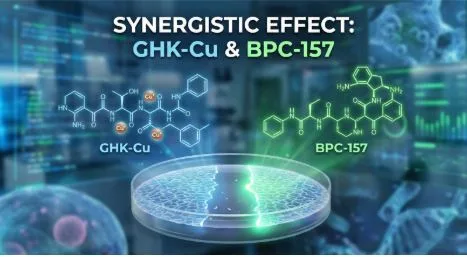
A comparative look at using the GLOW peptide blend (Copper + BPC) versus single peptides in scratch assays (petri dish wound models).
The Evolution of Regenerative Models
In the rapidly evolving landscape of regenerative biology, the focus of research has shifted from identifying singular active agents to understanding the complex, symphonic interactions of combined signaling pathways. For decades, the standard approach in tissue engineering and wound healing models involved isolating a specific growth factor or peptide to observe its solitary effect on a cell line. While this reductionist approach has yielded invaluable data regarding individual mechanisms of action, it often fails to replicate the multifaceted reality of biological repair.
Tissue regeneration is not a linear process triggered by a single switch; it is a dynamic cascade involving inflammation modulation, extracellular matrix (ECM) synthesis, angiogenesis, and cellular migration. Consequently, modern in-vitro research is increasingly turning toward synergistic protocols, combining multiple bioactive agents to observe how they amplify or modulate each other’s effects. Among the most compelling of these combinations is the pairing of the copper-complex peptide GHK-Cu with the gastric pentadecapeptide BPC-157.
This article delves into the comparative efficacy of these peptides in laboratory scratch assays, exploring how a blended approach, often referred to in research circles as the “GLOW” model, may offer superior gap closure rates compared to single-peptide administration. Before diving into the specific mechanisms, it is essential to establish what these compounds are. Research peptides are synthetic or naturally derived amino acid chains used in laboratory settings to study cellular signaling. They are strictly chemical reagents intended for in-vitro and ex-vivo experimentation, allowing scientists to model physiological processes without human or animal introduction.
The Limitations of Single-Vector Research
To understand the hypothesis behind synergistic efficacy, researchers must first understand the distinct, yet limited, roles of the individual components.
GHK-Cu: The Architect of the Matrix
Glycyl-L-Histidyl-L-Lysine-Cu (GHK-Cu) is a naturally occurring copper peptide with a high affinity for copper ions. In the context of wound healing models, GHK-Cu is primarily viewed as a remodeling agent. Its primary mechanism involves the modulation of matrix metalloproteinases (MMPs) and the stimulation of fibroblasts. In fibroblast cultures, GHK-Cu has been observed to significantly upregulate the expression of collagen (Types I and III), elastin, and glycosaminoglycans.
Think of GHK-Cu as the “architect” of the tissue. It provides the instructions and raw material regulation necessary to rebuild the structural scaffolding of the skin or tissue sample. However, a scaffold alone does not constitute living tissue. Without adequate vascularization to supply nutrients, or the rapid migration of cells to cover the breach, the structural integrity provided by GHK-Cu remains static.
BPC-157: The Supply Line
On the other side of the spectrum lies Body Protection Compound-157 (BPC-157). Derived from a protein found in gastric juice, this peptide is chemically unique due to its stability in acidic environments. In research models, specifically those involving endothelial cells, BPC-157 is renowned for its angiogenic properties. It acts heavily on the Vascular Endothelial Growth Factor (VEGF) pathway, promoting the formation of tube-like structures in endothelial assays.
If GHK-Cu is the architect, BPC-157 is the logistics manager building the supply lines. It ensures that the newly forming tissue has the potential for blood flow and metabolic exchange. Furthermore, BPC-157 has demonstrated a profound ability to modulate the Early Growth Response 1 (Egr-1) gene, a transcription factor pivotal in the initial response to injury. However, while BPC-157 excels at vascular signaling and cytoprotection, its direct impact on collagen cross-linking is distinct from the metalloproteinase modulation seen with GHK-Cu.
The Synergistic Hypothesis: Why 1 + 1 > 2
The limitation of using GHK-Cu or BPC-157 in isolation becomes apparent in comprehensive wound closure assays. A scratch assay treated solely with GHK-Cu may show dense collagen deposition but slower re-epithelialization due to a lack of migratory urgency. Conversely, a sample treated only with BPC-157 may show rapid vascular signaling but lack the structural density required for a stable extracellular matrix.
The “GLOW” research model hypothesizes that by introducing both peptides simultaneously, researchers can trigger a convergent pathway response. The presence of GHK-Cu ensures the immediate upregulation of structural proteins, while BPC-157 ensures the endothelial readiness required to sustain that new structure. Additionally, many “GLOW” blend formulations in research settings include a third component: Thymosin Beta-4 (TB-500). TB-500 acts as an actin-sequestering molecule, essentially providing the mechanical fuel for cell motility.
When these three mechanisms align, specifically collagen synthesis (GHK-Cu), angiogenesis (BPC-157), and cytoskeletal motility (TB-500), the theoretical result is a non-linear acceleration of wound closure. The cells are not just building faster; they are moving faster and establishing a more viable vascular network simultaneously.
Methodology: The In-Vitro Scratch Assay
To test this synergy, the standard gold-standard method is the in-vitro scratch assay (or wound healing assay). This is a straightforward, low-cost method to measure cell migration in vitro.
- Preparation: A confluent monolayer of cells (typically keratinocytes or dermal fibroblasts) is grown in a multi-well plate.
- The “Wound”: A precise “scratch” is created through the cell layer using a sterile pipette tip, creating a cell-free zone (the gap).
- Treatment Groups: The wells are divided into groups:
- Control: Vehicle solution only (e.g., bacteriostatic water).
- Group A: GHK-Cu (50mg equivalent concentration).
- Group B: BPC-157 (10mg equivalent concentration).
- Group C (The Blend): A combined solution of GHK-Cu, BPC-157, and TB-500.
- Observation: The plate is placed under time-lapse microscopy. Images are captured at 0, 12, 24, and 48 hours to measure the rate at which cells migrate into the gap.
Analyzing the Data: Single vs. Blend
In typical observations of such assays, Group A (GHK-Cu) often demonstrates a “densification” of the cell border. The fibroblasts at the edge of the scratch appear more metabolically active, producing higher levels of ECM components. However, the speed of migration into the center of the gap is often only moderately faster than the control.
Group B (BPC-157) typically shows a different phenotype. The cells exhibit upregulated nitric oxide (NO) signaling and, if co-cultured with endothelial cells, significant tube formation markers. The migration rate is generally faster than GHK-Cu alone due to the modulation of the focal adhesion kinase (FAK) pathway, which influences cell movement.
Group C, the synergistic blend, frequently outperforms both. Researchers often observe that the gap closure percentage at the 24-hour mark is significantly higher in the blend group. This is attributed to the “Actin-Collagen” dual mechanism. The GHK-Cu stimulates the fibroblasts to lay down the fibronectin and collagen “track,” while the TB-500 component allows the cells to assemble their actin filaments rapidly to crawl along that track, all while BPC-157 maintains cellular viability under the stress of the assay.
This complex interaction is why many labs are moving toward pre-formulated blends for their consistency in replicating these multi-pathway environments. For researchers looking to procure high-purity reagents for these specific multi-peptide models, identifying a supplier that offers verified concentrations is critical. You can find the GLOW Peptide Blend for Sale Online from specialized suppliers like GenoScience, which provides the precise 50mg/10mg/10mg ratio often utilized in these comparative studies.
The Role of Concentration and Stability
A critical variable in these comparative studies is the stability of the reagents. GHK-Cu is a transition metal complex, and its interaction with other peptides in a solution requires careful pH management. In a lyophilized (freeze-dried) state, the stability is preserved, but upon reconstitution, the clock starts ticking.
One of the fascinating aspects of the GHK-Cu/BPC-157 pairing is the potential for chemical stability. BPC-157 is famously stable in gastric juices, and emerging data suggests it may confer some stability benefits to co-solutes, protecting them from rapid enzymatic degradation in ex-vivo media. This is a crucial area of ongoing investigation. If BPC-157 can indeed protect the copper complex from oxidation or dissociation in culture media, it would further explain the superior performance of the blend in longer-duration assays (48+ hours).
Furthermore, the concentration curve matters. In single-peptide assays, researchers often have to push the concentration of GHK-Cu high to see rapid migration, which runs the risk of cytotoxicity (copper toxicity). By blending it with BPC-157 and TB-500, researchers can theoretically use lower, safer concentrations of each individual component while achieving a higher net effect due to the non-overlapping mechanisms of action. This “sparing effect” is a fundamental principle in pharmacology and reagent optimization, allowing for more efficient use of expensive substrates.
Sourcing High-Purity Reagents for Reproducible Data
The validity of any scratch assay or Western Blot analysis hinges entirely on the purity of the input reagents. Impurities in peptide synthesis, such as trifluoroacetic acid (TFA) salts or truncated amino acid sequences, can induce cytotoxicity that mimics “poor healing” or inflammation, skewing the data. For example, if a GHK-Cu sample is contaminated with free copper ions that are not complexed to the peptide, it can kill the fibroblast culture, leading to a false negative result regarding the peptide’s efficacy.
Therefore, sourcing is not just a logistical detail; it is a methodological imperative. Researchers must utilize reagents that are synthesized in cGMP-compliant facilities and backed by transparent HPLC (High-Performance Liquid Chromatography) and Mass Spectrometry data. The presence of a 99% purity report ensures that the migration rates observed are due to the peptide sequence itself, not an artifact of contamination.
For laboratories based in the United States, utilizing domestic suppliers can mitigate the risks associated with thermal degradation during international shipping. Long transit times without cold-chain protection can denature sensitive peptides like TB-500. Establishing a relationship with a vendor that guarantees domestic cold-chain logistics is vital for maintaining the integrity of your data. If your lab is setting up a new series of regenerative models, you can buy research peptides online in USA through GenoScience to ensure your substrates meet the rigorous standards required for publication-quality results.
Future Directions in Multi-Peptide Research
The move “Beyond Single Peptides” is just beginning. As our understanding of the secretome, the complex mix of proteins secreted by stem cells, expands, the demand for sophisticated peptide blends will only grow. The “GLOW” blend of GHK-Cu, BPC-157, and TB-500 represents a first-generation attempt to mimic the regenerative cocktail found in nature.
Future research will likely explore the addition of mitochondrial-derived peptides, such as MOTS-c, to this blend to investigate how cellular energy metabolism influences the speed of ECM construction. If the fibroblast is the factory that builds collagen, then MOTS-c would be the power plant supplying the electricity. Combining structural instructions (GHK-Cu), vascular support (BPC-157), and metabolic upregulation (MOTS-c) could unlock new frontiers in ex-vivo tissue engineering.
While the scientific community has spent decades mapping the individual effects of peptides like GHK-Cu and BPC-157, the future lies in synergy. The data emerging from scratch assays and tissue culture models suggests that the “GLOW” protocol, combining matrix remodeling, angiogenesis, and cytoskeletal activation, offers a superior model for studying rapid tissue repair.
By utilizing high-purity, synergistic blends, researchers can more accurately replicate the complex, multi-pathway environment of living tissue. As we move forward, the focus will inevitably shift from “what does this peptide do?” to “how does this peptide cooperate with others?” This shift promises to accelerate our understanding of regenerative biology significantly. Researchers are encouraged to verify the purity of their reagents and continue pushing the boundaries of these combinatorial models.