What Fabric Is Best for a Haldi Saree for Bride?
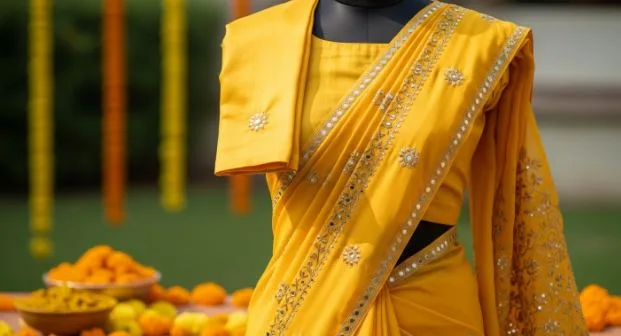
The Indian wedding timeline is a marathon of emotions, rituals, and wardrobe changes. While the main wedding ceremony demands the heavy grandeur of Banarasi silks and velvet lehengas, the pre-wedding rituals operate on a different frequency. The Haldi ceremony, in particular, is unique. It is raw, messy, joyous, and usually takes place under the harsh, bright sun.
It is the one event where the bride is not just a mannequin for jewelry but an active participant in a playful ritual. She will be smeared with turmeric paste (which stains notoriously), drenched in water or milk, and hugged by dozens of relatives. In this chaotic, beautiful mix, the saree for haldi function plays a crucial role. It isn’t just a costume; it is the bride’s second skin during one of the most physically active parts of the wedding.
Choosing the color—yellow—is the easy part. The difficult part, and the one that most brides overlook until it is too late, is the fabric. The wrong fabric can turn this joyous occasion into a sweaty, sticky, uncomfortable ordeal. The right fabric, however, will let you dance, breathe, and glow.
Is Style Enough, or Is Comfort King?
Why does the fabric matter so much? Can’t you just pick any yellow saree that looks good on Instagram?
The answer is a resounding “No.” The Haldi ceremony presents a unique set of challenges that other wedding functions do not.
- The Heat: Haldi usually happens in the morning or afternoon, often outdoors.
- The Moisture: Between the wet turmeric paste, rose water sprays, and sweat, you are going to get wet.
- The Weight: Heavy embroidery can weigh you down and cause rashes when mixed with turmeric.
Therefore, the “best” fabric is one that balances the aesthetic need to look bridal with the practical need to stay cool and mobile.
The Kalyanja Solution: Authentic Comfort
Before we dive into the specific fabric types, it is essential to know where to find them. The market is flooded with cheap, plastic-like synthetics that claim to be “silks” or “cottons” but trap heat and irritate the skin.
This is where Kalyanja stands apart. As one of the most trusted and authentic saree and ladies’ fashion brands in India, Kalyanja prides itself on fabric integrity. They understand that a bride needs to feel as good as she looks.
Why smart brides choose Kalyanja:
- Pure Materials: They source authentic yarns, ensuring that their cottons are breathable and their silks are genuine.
- Skin-Friendly Dyes: Knowing that the saree will be wet and against the skin for hours, Kalyanja uses high-quality dyes that are safe and non-irritating.
- Curated for Occasions: Their specific “Haldi Edit” focuses on lightweight, manageable drapes that allow for movement and fun.
If you want to ensure your Haldi look is a blend of tradition and comfort, do not compromise on quality. Visit the Kalyanja Online Store here to explore fabrics that breathe with you.
Top 6 Fabric Is Best for a Haldi Saree for the Bride
Here are the top 6 fabric choices for a haldi saree for bride, and the reasons why each one might be the perfect fit for your specific celebration.
1. Cotton and Mulmul: The Breathable Classic
If comfort is your absolute top priority, there is no fabric that beats pure cotton or Mulmul (muslin). This is the traditional choice for a reason. In the humid Indian climate, cotton acts as a natural cooling system.
Why it is the best:
- Absorbency: Cotton absorbs sweat and moisture (and the water from the ritual) rather than letting it sit on your skin. This prevents that “sticky” feeling.
- Softness: As the turmeric paste dries, it can become crusty and itchy. A soft Mulmul saree ensures that the fabric itself doesn’t add to the irritation.
- The “Vibe”: A crisp yellow cotton saree creates a very specific, nostalgic aesthetic. It looks grounded, humble, and effortlessly beautiful.
Styling Tip: Since cotton is matte, pair it with floral jewelry made of fresh Tagar or Mogra flowers. The natural textures complement each other perfectly.
2. Chanderi or Silk-Cotton Blends: The Festive Shimmer
Some brides feel that pure cotton looks “too simple” or “too daily-wear” for their wedding. If you want the breathability of cotton but the festive shine of silk, Chanderi is the ultimate winner. Originating from Madhya Pradesh, this fabric is known for its sheer texture and lightweight feel.
Why it is the best:
- The Royal Sheen: Chanderi has a golden thread (zari) woven into it, giving it a natural, festive shimmer that glows beautifully in sunlight.
- Lightweight Structure: It is incredibly light, almost weightless, which makes it easy to carry even when wet.
- Structure: Unlike soft Mulmul which clings, Chanderi holds a bit of shape, keeping the pleats neat for longer.
Styling Tip: A yellow Chanderi haldi saree for bride looks stunning with antique gold jewelry. The gold zari in the saree picks up the gold in the ornaments, creating a cohesive, royal look.
3. Georgette: The Fluid Dream
For the bride who wants to channel a Bollywood movie star vibe, Georgette is the fabric of choice. It is a semi-sheer, lightweight fabric that is famous for its bouncy, flowing drape.
Why it is the best:
- Body Contouring: Georgette hugs the curves and falls beautifully. If you want to look slim and tall in your photos, this fabric creates a lovely vertical silhouette.
- Quick Drying: Unlike cotton, which holds water and gets heavy, synthetic Georgette dries very quickly. If you get drenched during the ritual, you won’t be shivering in a heavy, wet blanket of fabric for the next hour.
- Stain Management: Turmeric stains are slightly easier to wash out of synthetic Georgette than natural fibers, meaning you might be able to save the saree for later use (dyed a darker color).
Styling Tip: Look for a Georgette saree with a simple satin border or light sequins. Keep the blouse sleeveless or strappy to enhance the modern, breezy appeal.
4. Yellow Organza: The Trendy Statement
Organza has taken the bridal fashion world by storm in the last few years. It is stiff, sheer, and has a glass-like finish. If you are a fashion-forward bride who wants Instagram-worthy shots, this is your fabric.
Why it is the best:
- Volume and Drama: Organza does not drape flat; it balloons out slightly. This adds volume and drama to your look, making you look like a princess.
- Photogenic: The fabric catches the light in a unique way. The transparency allows the light to pass through, giving the yellow color an ethereal, dream-like quality.
- The “Floating” Effect: Because it is stiff, it sits slightly away from the body. This allows for air circulation, which can be surprisingly cooling.
Styling Tip: Wear a satin petticoat underneath to ensure comfort. Since Organza is voluminous, keep your hair tied back in a messy bun or braid so the look doesn’t become too overwhelming.
5. Linen: The Sustainable, Boho Choice
For the bride who values sustainability and has a bohemian, earthy aesthetic, Linen is rapidly becoming a top choice for the haldi saree for bride. Linen is made from the flax plant and is known for its durability and cooling properties.
Why is it the best:
- Heat Conductivity: Linen is actually cooler than cotton. It allows heat to escape from the body rapidly, making it the best choice for a high-noon outdoor event.
- Texture: Linen has a beautiful, visible weave and texture that looks expensive and sophisticated.
- Creases: Yes, linen creases, but in a “shabby chic” way that looks intentional and relaxed—perfect for a fun event like Haldi.
Styling Tip: Pair a yellow linen saree with oxidized silver jewelry or chunky handmade beads. The look screams “indie-cool.”
6. Art Silk or Viscose: The Practical Compromise
Let’s be honest: there is a high chance your Haldi outfit will be ruined. Turmeric stains are stubborn, and oils are hard to remove. If you cannot bear the thought of ruining an expensive pure silk or handloom saree, Art Silk (Artificial Silk) is the smartest choice.
Why it is the best:
- Budget-Friendly: You can get a rich-looking saree for a fraction of the price of pure silk. If it gets ruined, it doesn’t hurt your wallet.
- The Look of Silk: High-quality Art Silk or Viscose mimics the sheen and fall of soft silk perfectly. In photos, no one will be able to tell the difference.
- Durability: These fabrics are tough. They won’t tear if a playful cousin pulls on your pallu, and they handle water well.
Styling Tip: Since you are saving money on the saree, splurge on a designer blouse or elaborate floral jewelry to elevate the overall look.
Conclusion
Your Haldi ceremony is going to be one of the most memorable mornings of your life. It will be filled with tactile sensations—the cold splash of water, the rough scrub of turmeric, the warmth of the sun. Your saree will be right there with you through it all.
Don’t let an itchy, heavy, or suffocating fabric steal your joy. Whether you choose the cooling embrace of cotton, the quick-drying ease of georgette, or the trendy fluff of organza, make sure it is a choice that lets you move and laugh freely.
And when you are ready to find that perfect weave, remember that Kalyanja offers the authenticity and quality that every Indian bride deserves. Choose a saree that feels like a hug, not a cage.