Why Off-Road Tents Are Replacing Traditional Camping Setups
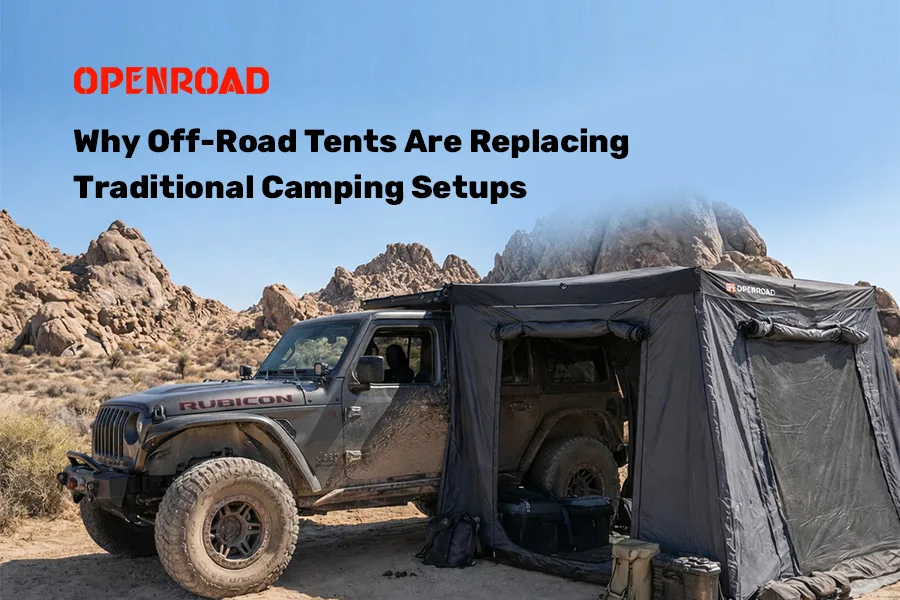
Recently, outdoor travel has changed considerably. Modern adventurers don’t want crowded campsites, complicated pitching systems, or weak shelters on difficult terrain. Explorers chose gear for ruggedness, mobility, and freedom. The off road tent significantly altered this progression. These innovative shelters and reliable OpenRoad gear are redefining outdoor recreation.
This article discusses why these sturdy shelters are replacing camping sites and how smart travelers utilize them with an off road winch to travel safer and more efficiently.
Off-road tents rise in modern adventure travel.
Camping used to mean transporting heavy gear, locating flat land, and fighting poles and pegs all day. Modern travellers want faster setups and more freedom. Explorers choose the off road tent because of its effectiveness and comfort.
Unlike ground tents, these are vehicle-mounted or rugged terrain-specific. They provide a stable resting spot wherever the trail leads by elevating sleepers over mud, insects, and uneven ground. Camping is now open to off-roaders. Desert plateaus, woodland clearings, and distant mountains can be overnight stops.
Offroad tents provide mobility advantages.
Campers primarily utilize offroad tents for mobility. Traditional setup entails clearing land, staking corners, and altering guy lines. Vehicle-mounted or rapid-deploy tents allow camping in minutes.
More than handy, speed increases safety. Rapid weather changes as daylight decreases can make shelter deployment the difference between comfort and exposure. Adventurers in unfamiliar terrain like fast shelter.
Mobility enables travelers move often without fatigue. Explorers spend more time driving routes, shooting views, and lounging at spectacular viewpoints than setting up and breaking down camps for hours.
Why Overlanders Trust Openroad4wd Gear
Off-roading requires solid gear. Therefore, experienced explorers prefer the openroad4wd gear. Off-roaders know the company for creating durable tools for real usage, not showroom displays.
Remote tent camping requires self-sufficient gear. Durable recovery equipment, strong mounting systems, and consistent performance keep every journey safe in tough conditions. Travellers feel confident exploring with a strong shelter and reliable tools.
Open Road Winch Engineering
An open road winch attribute is durability. Off-road equipment faces water crossings, dust clouds, vibration, and temperature variations. In these instances, gear failure might ruin a trip.
Quality winches include sealed motors, strong gears, and consistent pulling power. This helps drivers overcome obstacles without damaging their cars. In muddy woods or on steep climbs, non-jerking winches are useful. Off-road tent campers explore remote areas. Recovery equipment must be reliable under these settings.
Off road tent redefines comfort.
Adventure once cost comfort. Campers worried about soaked sleeping bags and rough terrain after rain. Modern off road tent designs changed that.
People sleep on elevated platforms to prevent cold and wet. Bed-like support comes from built-in mattresses or thick bases. Airflow and pest prevention are provided by ventilation panels. Some types have storage or changing annexes.
This comfort encourages longer travels. Because relaxation is simpler, tourists who previously limited trips to a few nights can now go longer. Good sleep restores energy for trekking, driving, and touring.
In open road winches, practical design counts.
Recuperation equipment should be easy to operate. Complex systems can be confusing under pressure. Explorers like the open road winches‘ simplicity.
Simple directions, controls, and consistent engagement speed and protection recovery. Stranded drivers want steady performance, not debugging. Practical design enables inexperienced off-roaders use the gear. This user-friendly method is great for off-road tents, which should simplify activities.
Why Campers Change: Durability vs. Tradition
Traditional camping gear struggles under rough weather. Pebbles shred tent fabric, wind bends lightweight poles, and hard earth destroys stakes. Replacing frequently is costly and frustrating.
In contrast, offroad tents are for rough terrain. Strong frames, weatherproof materials, and robust mounting methods prevent tent damage. Serious travellers choose durability over nostalgia. This move is practical, not tech-focused. Modern explorers value durability over camping style.
Independent and Secure on Wild Trails
Independent off-road camping is common. Tourists can plan their own trips to remote areas. Independent life is possible with good shelter and treatment. Camping culture changes as campers seek wilderness and fewer restrictions. The off road tent’s popularity shows this change. These shelters imply a new travel philosophy focused on mobility, resilience, and independence, not just a trend.
With the use of an off road winch or high-quality open road winches, adventurers may explore locations that conventional campers cannot. Adventurers redefine camping with comfort and capability.
Conclusion
Off-road tents are replacing camping because they solve modern travellers’ difficulties. Easy to set up, challenging terrain, and comfy. When combined with rugged openroad4wd gear, including a trustworthy open road winch, they offer a complete adventure system for exploration rather than limitation.
Off-road camping will rise as more people discover the benefits of portable shelter and effective recovery gear. The future of camping is on the trail for freedom, rural views, and self-reliance.