The Strategic Landscape of Ship Chartering in Asia
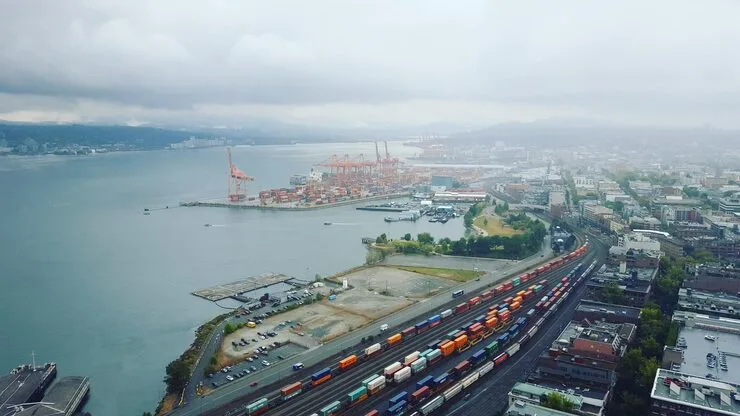
Asia has become the gravitational center of global maritime activity. It is the world’s largest manufacturing base, a rapidly expanding consumer market, and the most interconnected shipping region on the planet. Ship chartering in Asia reflects the complexity of this environment, shaped by shifting supply chains, dense port networks, and evolving vessel deployment strategies. For charterers, operators, and brokers, succeeding in this region requires more than intuition. It demands real‑time visibility into trade flows, vessel movements, port behavior, and regulatory conditions. Understanding how Asia’s maritime ecosystem functions is now essential for anyone involved in global chartering.
Why Does Asia Play Such a Central Role in Global Ship Chartering?
Asia’s dominance in global chartering begins with its dual identity as both a manufacturing powerhouse and a fast‑growing consumption market. China remains the anchor of global production, but manufacturing has diversified across Southeast Asia, with Vietnam, Indonesia, Thailand, and the Philippines emerging as major export hubs. This diversification has reshaped cargo flows. Instead of relying solely on China‑centric routes, chartering activity now spans a wider network of intra‑Asia trades, regional feeder services, and flexible bulk and tanker deployments.
Asia’s ports amplify this influence. Shanghai, Ningbo‑Zhoushan, Qingdao, Shenzhen, Singapore, Busan, and Yokohama form a dense web of high‑connectivity gateways that handle enormous volumes of container, bulk, and tanker traffic. These ports act as convergence points for global trade, but they also introduce operational complexity. Congestion patterns, anchorage behavior, and turnaround times vary significantly between ports and even between terminals. Because Asia sits at the intersection of the world’s most important maritime corridors, any shift in its chartering conditions whether vessel availability, port delays, or regulatory enforcement can ripple across global freight markets.
What Are the Key Trade Routes That Shape Ship Chartering in Asia?
The region’s chartering landscape is defined by several major route categories, each with its own dynamics. Intra‑Asia trade is one of the fastest‑growing segments, driven by manufactured goods, dry bulk commodities, and refined petroleum products moving between neighboring economies. These routes involve shorter voyages, frequent port calls, and high sensitivity to congestion. Charterers operating here must manage rapid demand shifts and tight scheduling windows, making real‑time vessel tracking and port intelligence indispensable.
The Asia–Europe corridor remains a backbone of global shipping. While container trades dominate headlines, bulk and tanker movements along this route also play a critical role. These long‑haul voyages involve larger vessels, higher fuel exposure, and greater regulatory scrutiny, especially around emissions compliance. Market shifts along East–West routes influence global vessel availability and freight rates, making them closely monitored by charterers worldwide.
Bulk and commodity‑driven routes further shape the region. Asia is a major importer of iron ore, coal, LNG, crude oil, and refined products, while also exporting agricultural and industrial commodities. These trades are shaped by seasonal cycles, port infrastructure constraints, and weather‑related disruptions. For bulk chartering, accurate AIS data and historical port call information are essential for assessing vessel suitability and predicting delays.
How Are Market Trends Reshaping Ship Chartering in Asia Today?
Recent years have brought significant shifts to chartering patterns across Asia. Southeast Asia’s rising role as both a manufacturing base and consumer market has redistributed cargo volumes across multiple origins and destinations. This diversification reduces reliance on single‑hub strategies and increases the need for regional flexibility. Freight‑rate volatility has also intensified, driven by global supply‑demand imbalances, fuel price fluctuations, and regulatory pressures. Charterers now navigate recovery cycles that require precise timing and careful risk management.
Vessel deployment strategies are evolving as well. Operators are increasingly favoring mid‑size and versatile tonnage that can serve secondary ports and adapt to fluctuating cargo volumes. This flexibility is particularly valuable in Asia’s diverse port landscape, where draft limitations, congestion, and infrastructure variability can influence vessel selection. At the same time, environmental regulations have become central to chartering decisions. Voyages involving Asian ports must account for emissions compliance, fuel choices, and local environmental rules, all of which affect voyage planning and charter party negotiations.
How Is Digitalization Transforming Ship Chartering in Asia?
Chartering in Asia has historically relied on manual workflows and fragmented information sources. Today, the region is undergoing a rapid shift toward digital platforms that integrate AIS tracking, port intelligence, vessel databases, and market analytics. This transformation is driven by the need for real‑time visibility in a region where traffic density, frequent port calls, and congestion hotspots create constant uncertainty.
Live AIS data combined with updated port and anchorage information allows charterers to track open vessels, monitor ETAs, and assess congestion with far greater accuracy. For tanker and bulk trades, this visibility directly influences fixture quality, voyage profitability, and operational reliability. Digital adoption is enabling charterers to move from reactive decision‑making to proactive strategy, strengthening their ability to compete in the world’s most dynamic maritime region.